




can a snail survive years without food or water?
yes, some can.
spud explains
 told by spud · · 1 min read
the short answer
yes. in 1960 a man in england planted a spiderwort in a giant glass bottle, watered it one last time in 1972 and sealed it, and it was still growing more than forty years later. inside the glass, the water goes round and round, and the plant trades oxygen and carbon dioxide with tiny bacteria in the soil.
this plant hasn't been watered since 1972. gary said it's dead. it's thriving. in 1960, a man in surrey, england planted a little spiderwort in a giant glass bottle. he watered it one more time in 1972. then he corked it shut. on purpose. forty years later, it was still growing.
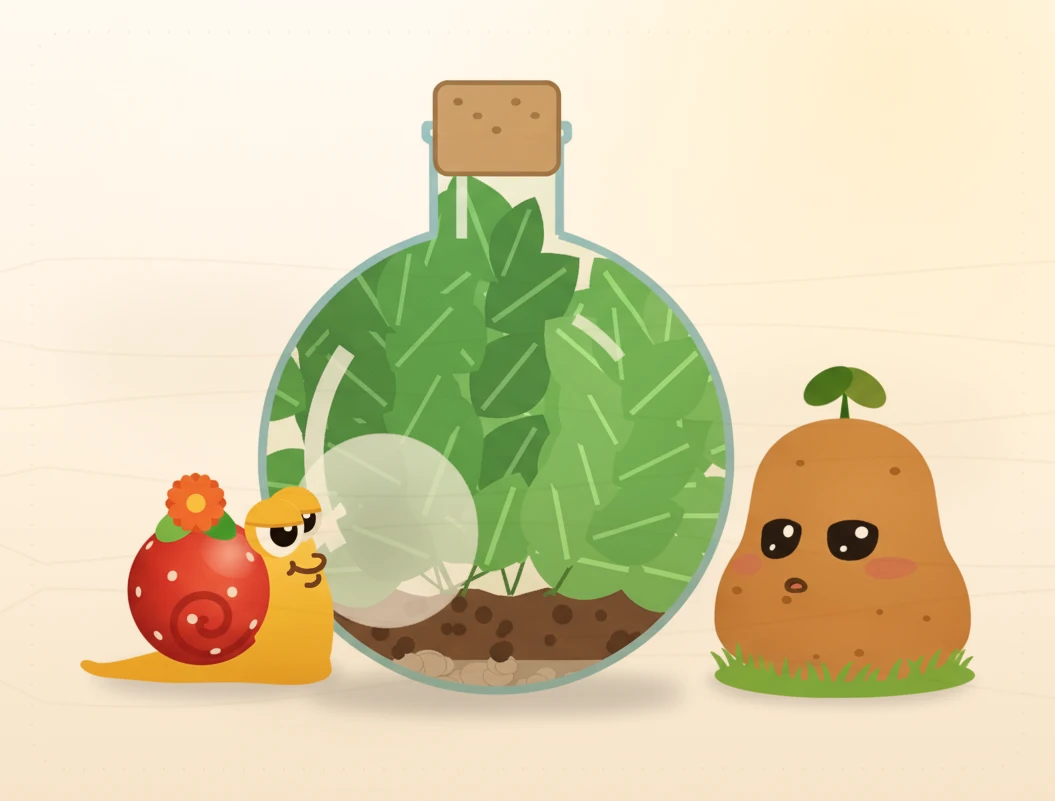
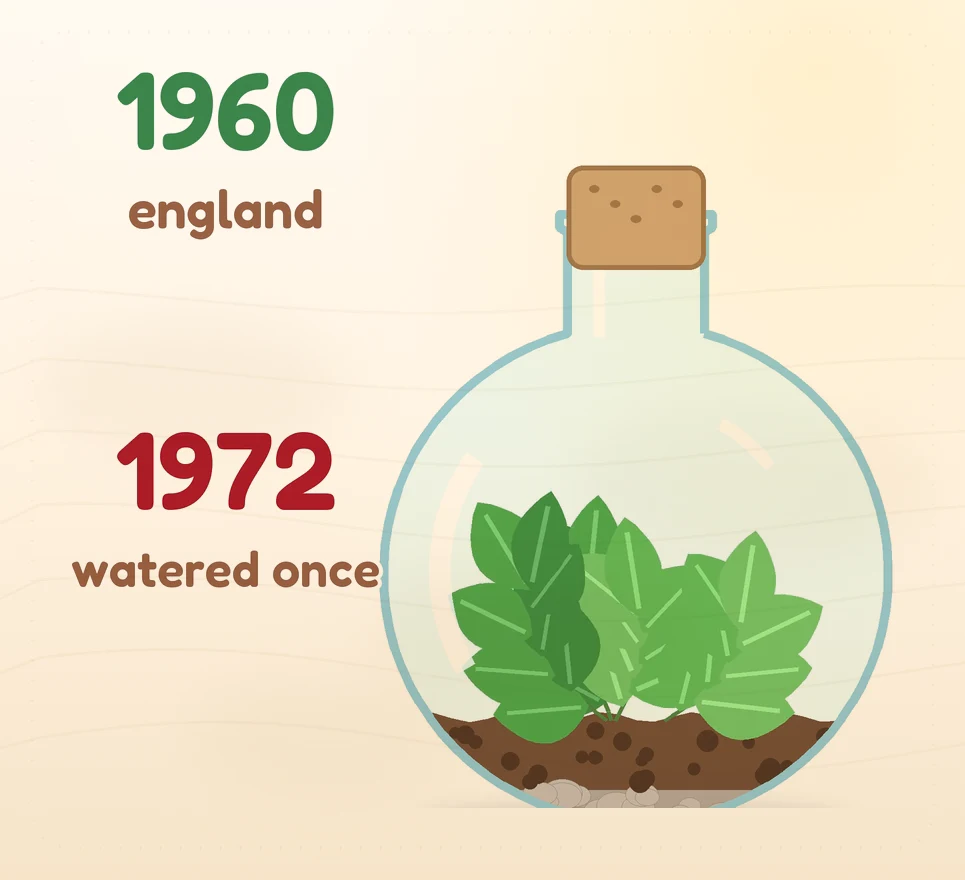
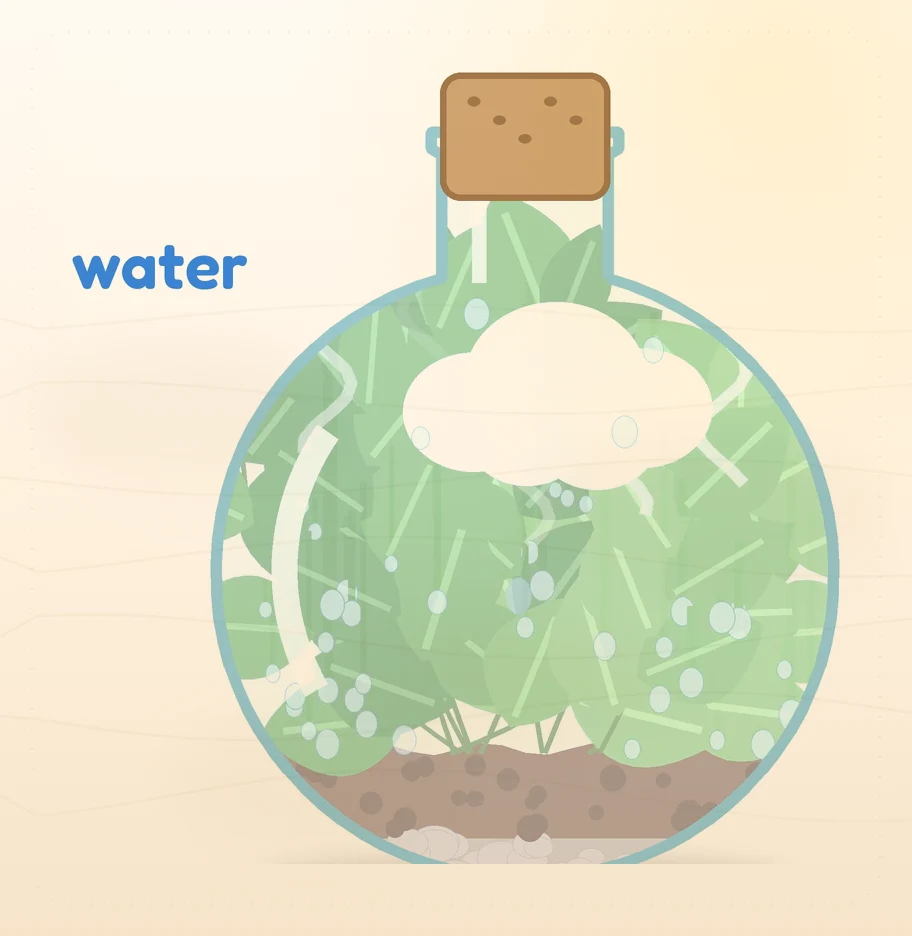
the roots drink water from the soil. the leaves breathe it back out into the air. it fogs up the glass, then runs back down into the soil. the same water, round and round. its own little rain. no umbrella needed.
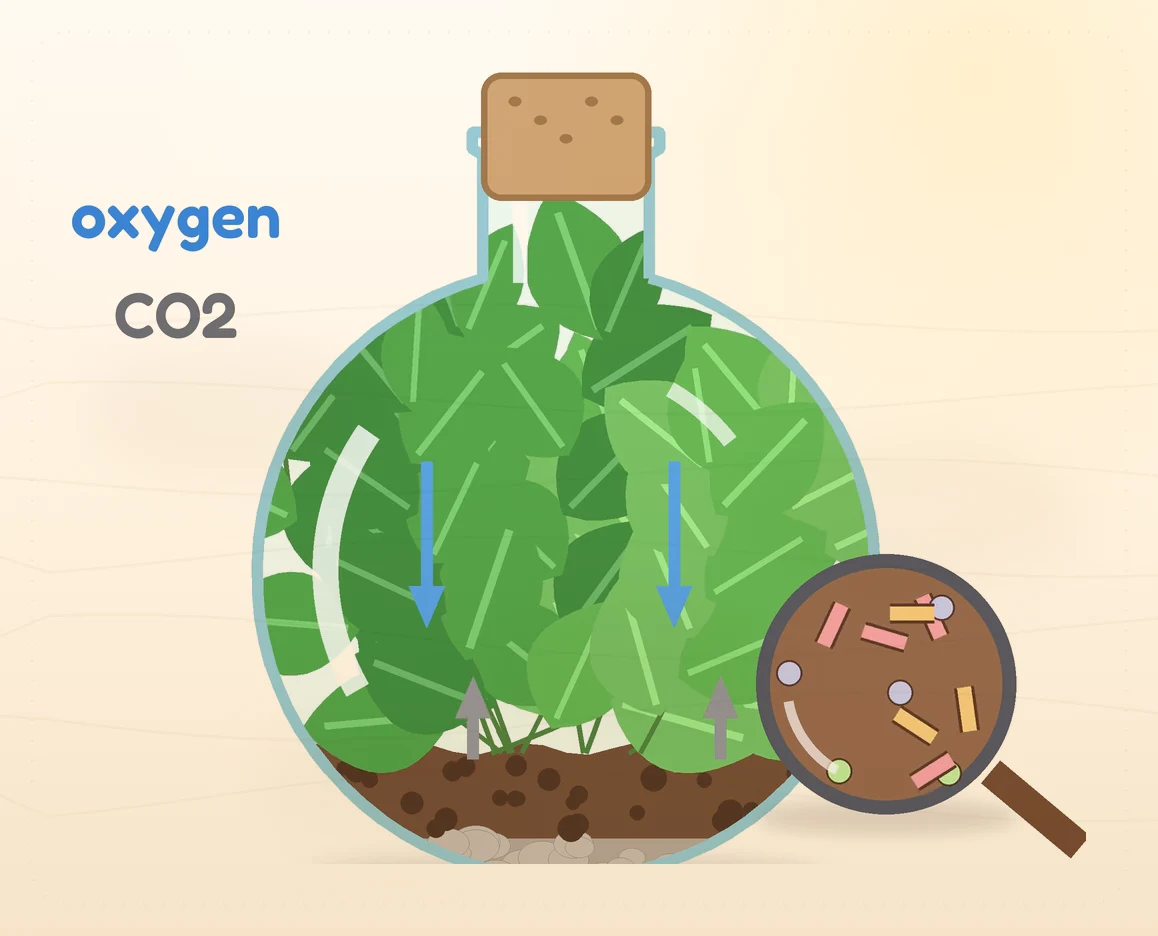
sunlight gives the plant energy, and it turns water and carbon dioxide into food and oxygen. tiny bacteria in the dirt breathe that oxygen. they eat the dead leaves that fall and breathe out carbon dioxide, which the plant needs again. so the old leaves become dinner.
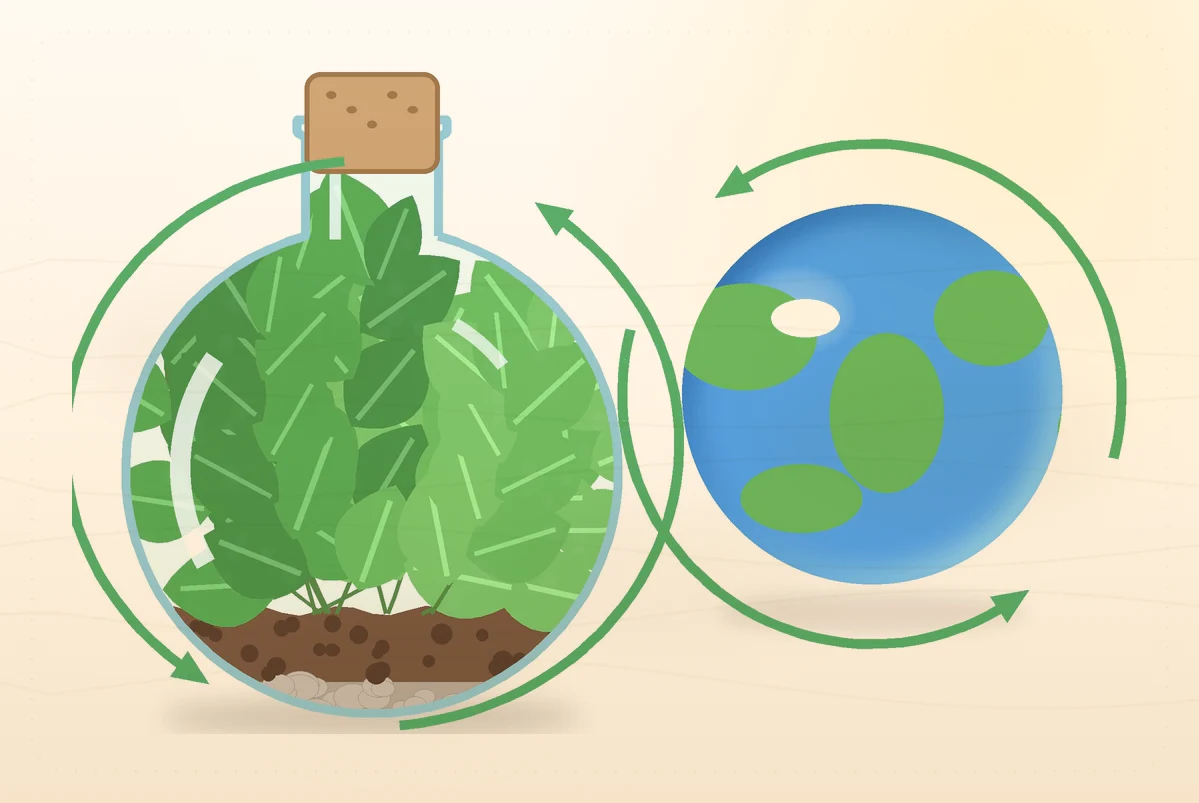
nothing gets in. nothing gets out. it just keeps going. like a tiny planet.
in 1829, a london doctor called nathaniel ward put a moth's chrysalis in damp soil in a bottle and closed the lid. a week later, a fern had sprouted in there. he wanted a moth. he got a garden.
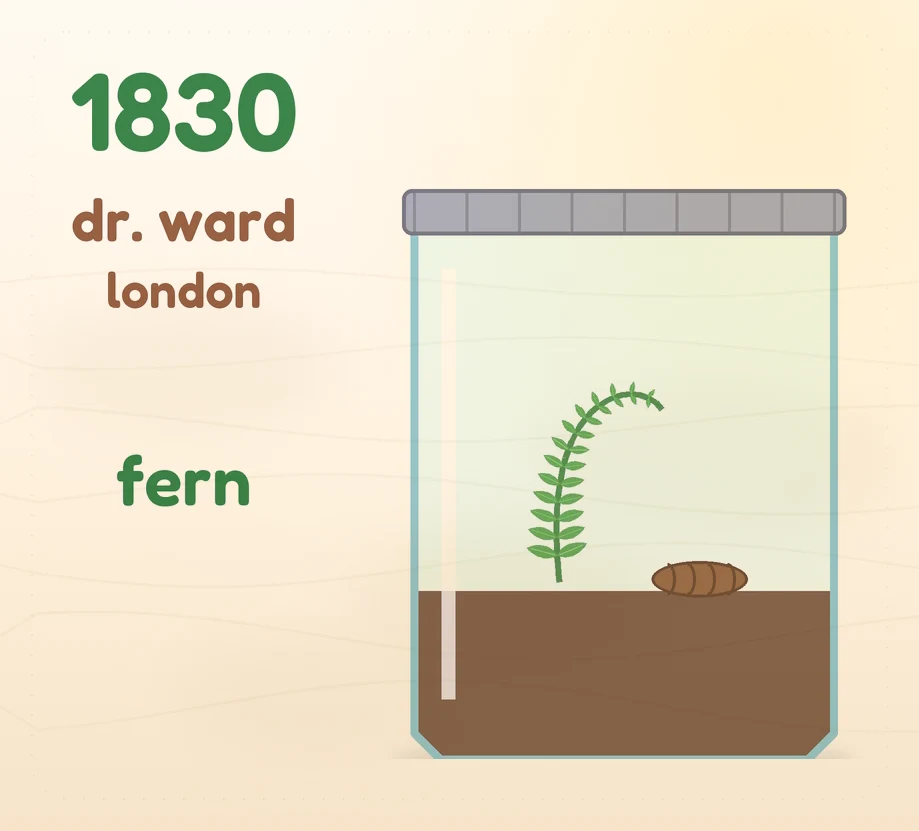
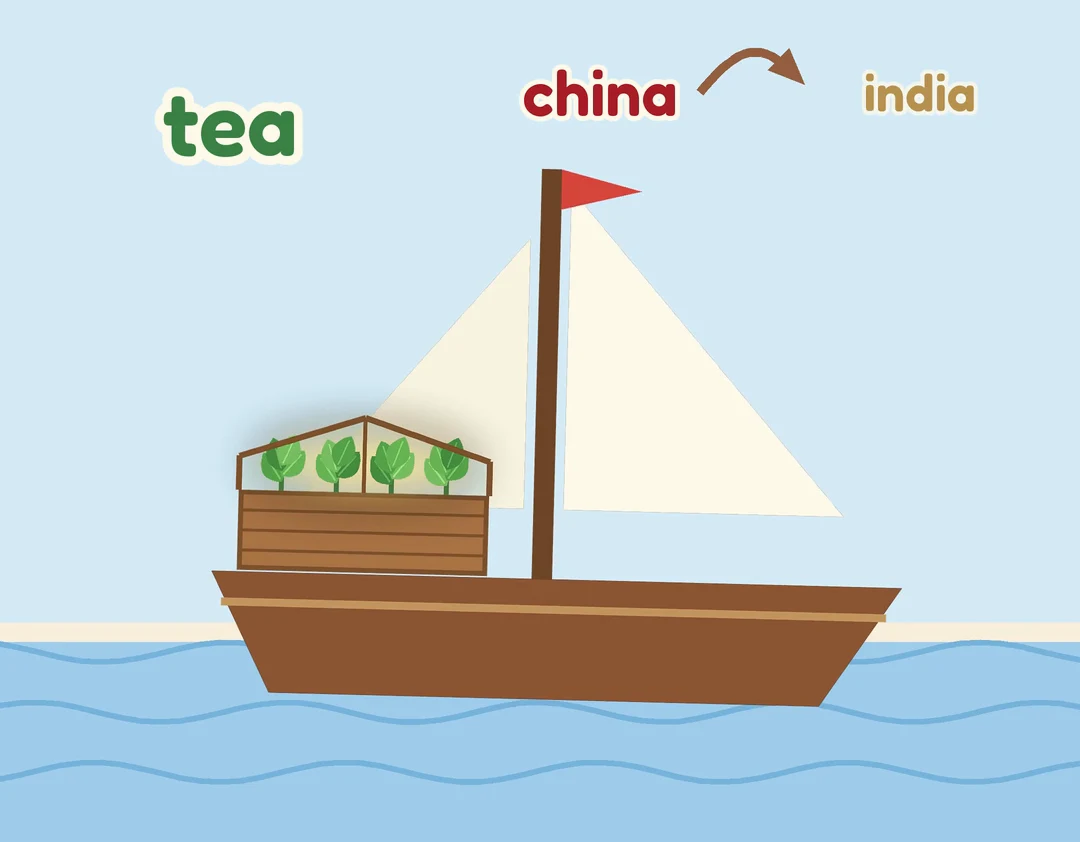
his sealed glass cases kept plants alive on long voyages, safe from salty sea spray. in the 1840s, about 20,000 tea plants crossed from china to india in them.
so you could seal anything in a jar and it keeps going. if it's a plant. gary says i have leaves. i have one sprout. i'm not going in the jar.
if you like little facts, i keep a field of them in spudnote. it's a notes app where every note grows into a sprout. i live there.
it keeps the same water. the plant's leaves give off water into the air, it condenses on the glass, and it runs back down into the soil for the roots to drink again.
bacteria in the soil use the oxygen the plant makes, break down the dead leaves that fall, and give off carbon dioxide, which the plant uses for photosynthesis.
yes. sunlight gives the plant the energy for photosynthesis. the bottle garden from 1960 was kept in a sunny corner.
the sealed glass plant case is credited to nathaniel bagshaw ward, a london doctor, who noticed a fern sprouting in a sealed bottle in 1829. his wardian cases were later used to carry plants by ship around the world.
sources checked nov 20, 2026.

spudnote
notes so simple a potato could use them