





everything spud explains

spud explains

what was tulip mania?

the short answer

tulip mania was a craze for tulips in 1630s holland. the most wanted tulips had stripes like flames, and at the peak some single bulbs sold for more than ten times a skilled worker's yearly pay, until prices crashed in february 1637. the stripes were a virus spread by aphids, and it kept the striped bulbs rare.

the 46 second version. sound on.

watch it oninstagramtiktokyoutube

the fanciest flower was sick

the most expensive flower in history was sick. not cool sick. virus sick. gary said that's very fancy. for an onion. it's not an onion. let me explain.

gary the snail gazing lovingly at a single sparkly tulip bulb on the grass, spud next to it looking doubtful
gary is in love. it's a bulb, gary.

holland goes tulip crazy

in the 1630s, people in holland went crazy for tulips. the most wanted ones weren't plain. they had stripes, like flames.
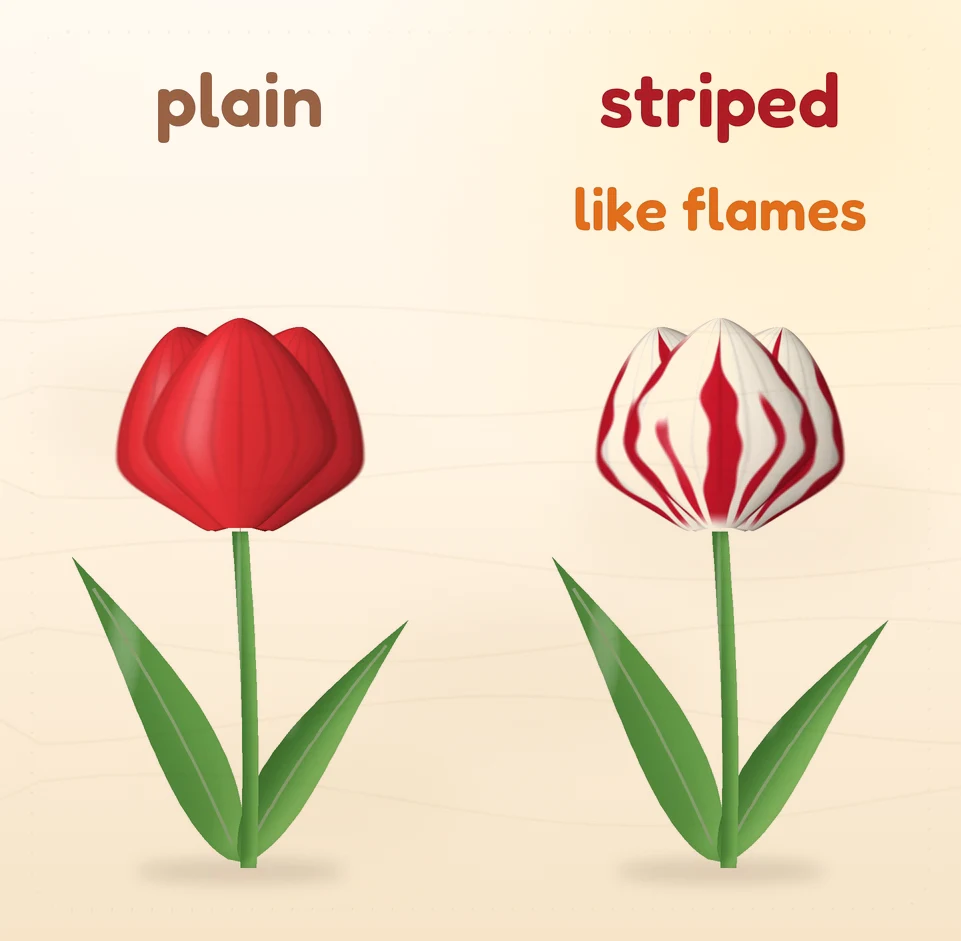
a plain red tulip labeled plain next to a white tulip with red flame stripes labeled striped, like flames
plain. striped. guess which one cost more.

at the peak, in february 1637, some single bulbs sold for more than ten times what a skilled worker earned in a year. for one bulb. you plant it in dirt.
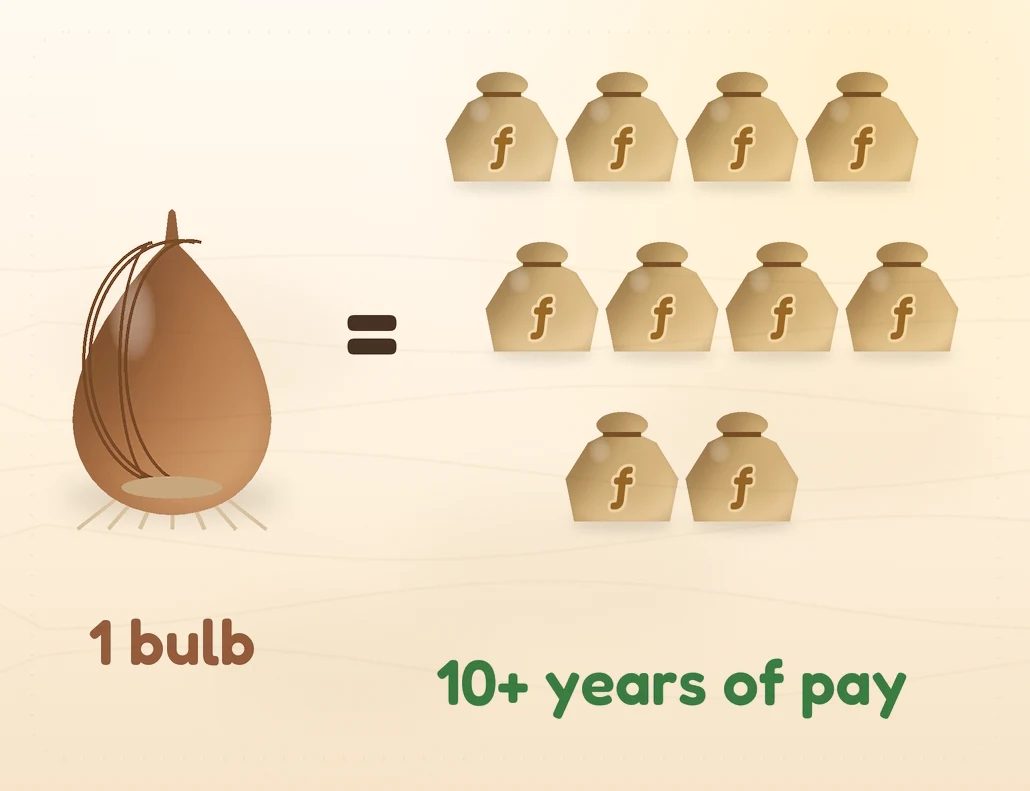
one tulip bulb, an equals sign and ten bags of coins, with the words 1 bulb and 10+ years of pay
one bulb. ten years of pay.

bugs did the painting

here's the thing. those stripes were a virus. aphids, tiny sap-sucking bugs, carried it from flower to flower, and a plain tulip it reached could come out striped.
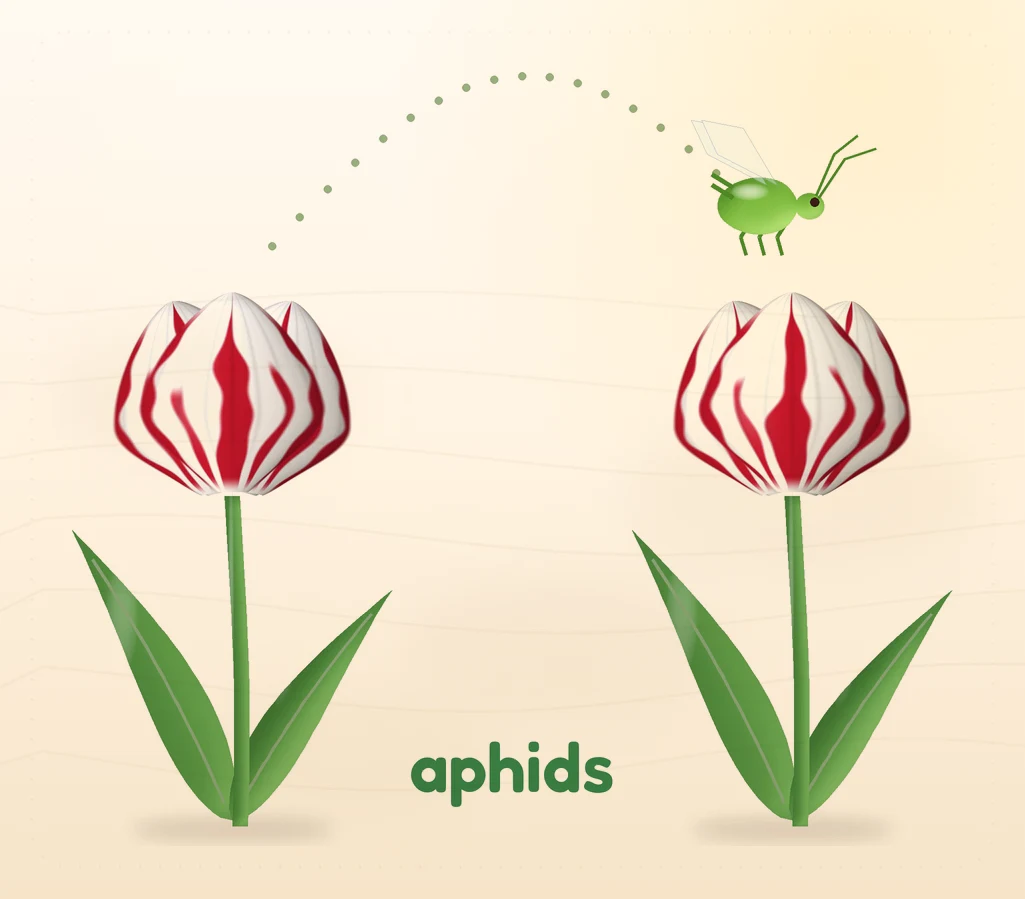
two striped tulips with a little green aphid flying from one to the other along a dotted line, labeled aphids
the bugs did the painting.

the virus also made the bulbs weak. a tulip bulb makes baby bulbs to multiply, and a sick one barely made any. so the striped ones stayed rare. and rare meant expensive.
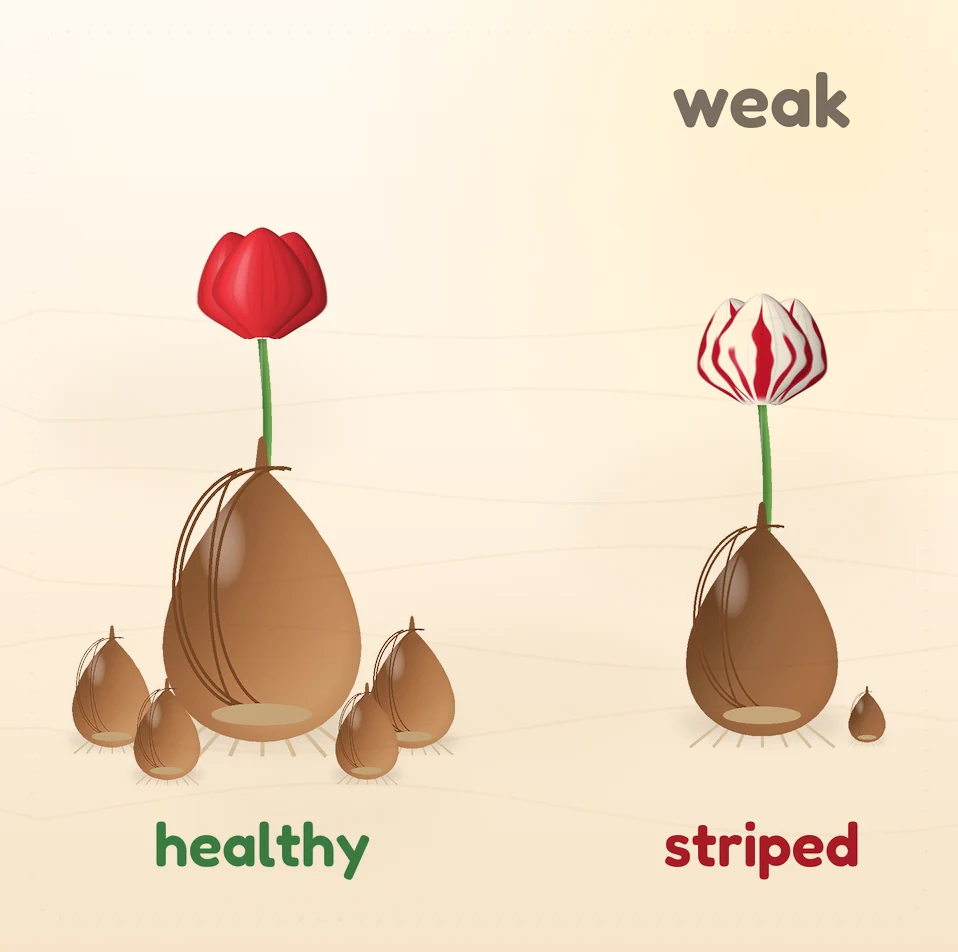
a healthy tulip bulb with four baby bulbs next to a weak striped one with one tiny baby bulb
healthy makes babies. striped barely does.

the crash

then in february 1637, prices crashed. the legend says everyone went broke. a historian went through the old records and found hardly anyone did.
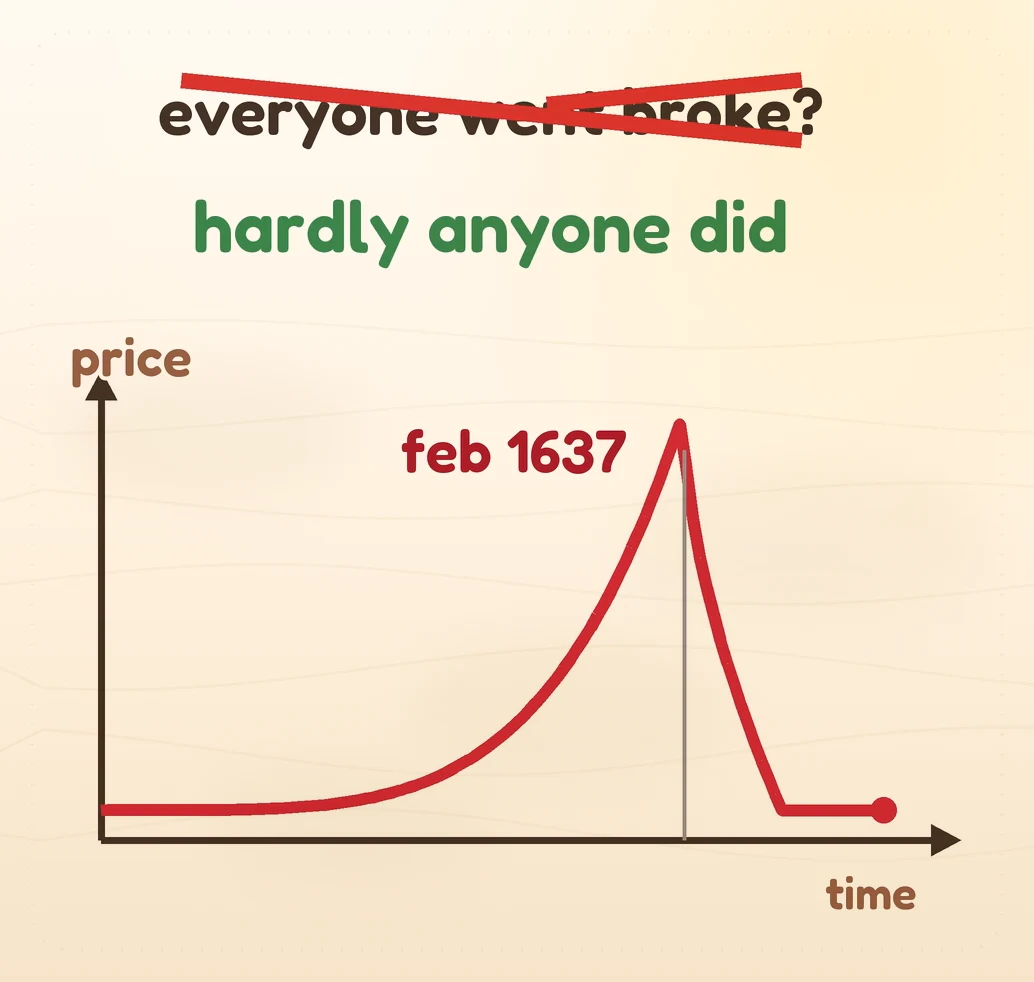
a price chart shooting up to feb 1637 and plunging, under the words everyone went broke crossed out and hardly anyone did
the legend. and the records.

nobody knew for 300 years

nobody worked out the stripes were a virus until 1928. almost three hundred years of very fancy, very sick flowers.
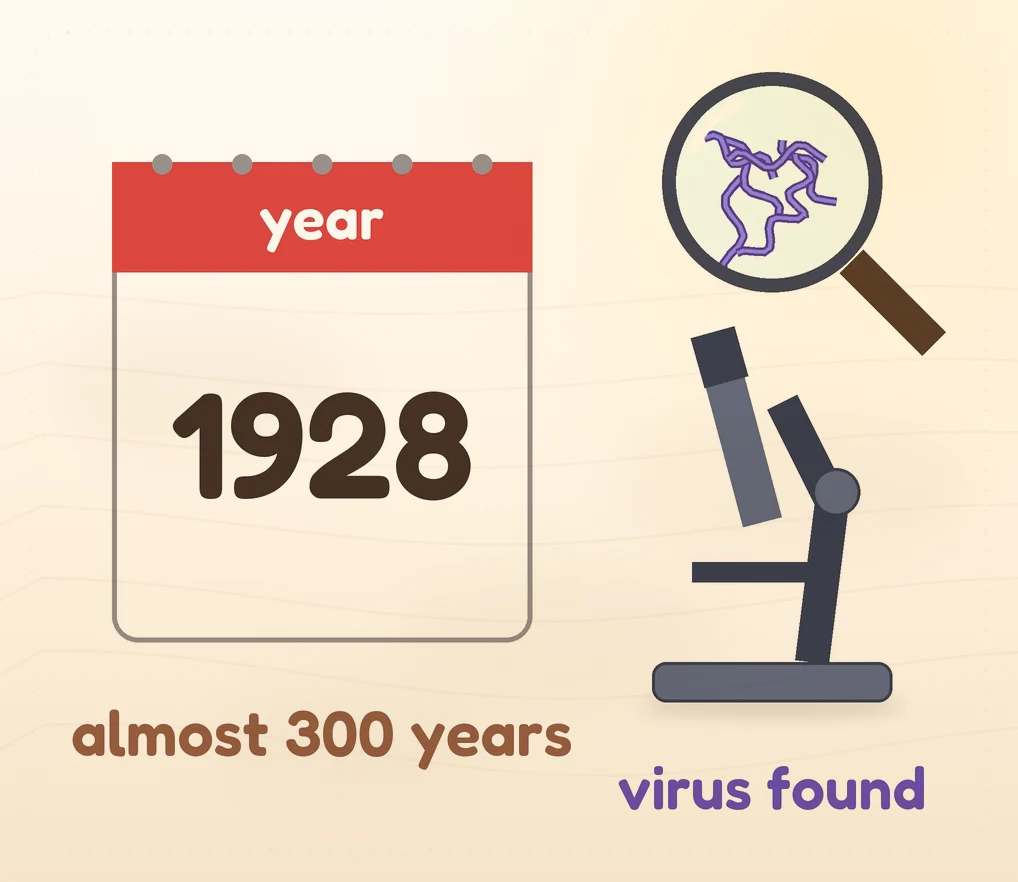
a calendar page showing 1928 with the words almost 300 years, and a microscope under a magnifier full of virus, labeled virus found
1637 to 1928. took a while.

today's striped tulips are bred to look that way, with no virus at all. and the us, the uk and other countries don't allow selling bulbs that are infected.

would i get sick for stripes?

honestly? i'd get sick for stripes. then an aphid landed on my sprout. i changed my mind.

if you like little facts, i keep a field of them in spudnote. it's a notes app where every note grows into a sprout. i live there.

people also ask spud

what caused the stripes on tulip mania tulips?

a virus, now called tulip breaking virus. it breaks the petal color into stripes, streaks and flames, and aphids spread it from plant to plant.

how much did a tulip bulb cost during tulip mania?

at the peak in february 1637, some bulbs sold for more than ten times the yearly pay of a skilled worker, who earned about 300 guilders a year.

did tulip mania ruin people?

hardly anyone. the popular story says lots of people went broke, but a historian who went through the records of the time couldn't find a single bankruptcy caused by the crash, and the wider economic damage was very limited.

are striped tulips today sick?

no. today's striped tulips, like rembrandt-type tulips, are virus-free hybrids bred to look like the old broken ones. the us, the uk and other countries don't allow selling bulbs that are infected.

where spud read this

  1. Tulip mania, Wikipedia (the craze sped up from 1634 and collapsed in february 1637; at the peak some bulbs sold for more than 10 times a skilled artisan's yearly income of about 300 guilders; the flamed tulips came from the tulip breaking virus, which impairs daughter bulbs; very few people had financial trouble and any economic fallout was very limited)
  2. Tulip breaking virus, Wikipedia (the virus breaks petal color into stripes, streaks and flames; at least four aphid species spread it; it weakens the bulb and slows its offsets; experiments begun in 1928 found the virus; today's broken-looking tulips are bred, and the US, Great Britain and other countries prohibit selling broken bulbs)
  3. Tulip history: the botanical mystery of tulipmania, Amsterdam Tulip Museum (in 1928 an aphid-borne disease was found to cause breaking; the virus weakens the bulb, cutting the number and strength of offsets, and hard propagation raised the value of broken tulips; breeders have made virus-free hybrids, known as rembrandt tulips)
  4. Tulip break, Pacific Northwest Plant Disease Management Handbook (tulip break is caused by aphid-spread viruses; petals get stripes, streaks, feathering or flames; infected bulbs gradually degenerate)
  5. The Real Story Behind the 17th-Century 'Tulip Mania' Financial Crash, History.com, 2020 (a historian's search of the records found no individual who went bankrupt after the tulip market crashed, and only 37 people who paid more than 300 guilders, a skilled craftsman's yearly pay)

sources checked nov 19, 2026.

spudnote

notes so simple a potato could use them

Download on the App Store