




everything spud explains

spud explains

can a snail survive years without food or water?

the short answer

yes, some can. in 1846 the british museum glued a desert snail from egypt to a card, thinking it was dead. in march 1850, almost four years later, they put it in lukewarm water and it came out alive. it lived about two more years.

the 33 second version. sound on.

watch it oninstagramtiktokyoutube

how long can gary sleep

i asked gary how long he can sleep. he said longer than i'd think. then he told me about a snail in london. i didn't believe him. so i checked. he was right. don't tell him.
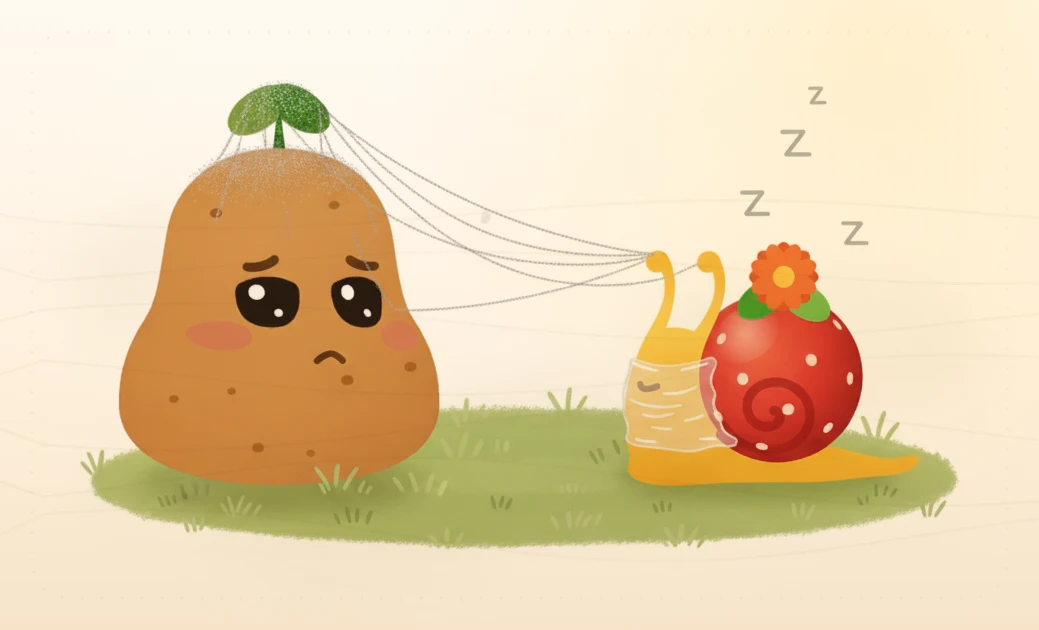
gary fast asleep under a thin clear film, while spud waits beside him covered in cobwebs and dust
i'm waiting for gary to wake up. it's been a while.

the shell that wasn't empty

in 1846 a museum in london got some snail shells from egypt, desert snails among them. one of them wasn't moving, so everyone thought it was dead.
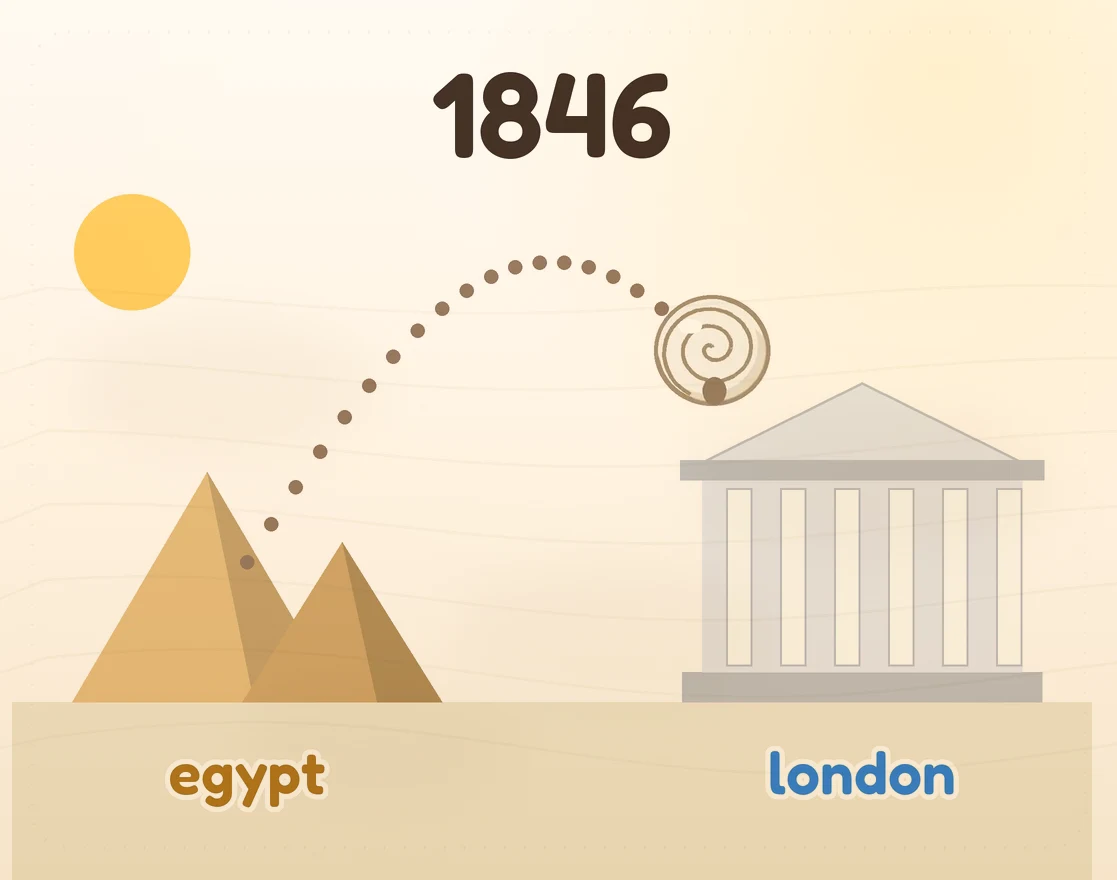
a snail shell flying in a dotted arc from the pyramids in egypt to a museum in london, under the year 1846
egypt to london, 1846.

on march 25, 1846, they glued it to a card, labeled it and put it in the collection. as a shell. just a shell.

a museum display case of shells on little cards, with the desert snail's card circled in yellow
one of these is not like the others.

the stain on the card

on march 7, 1850, almost four years later, someone noticed the paper under him was stained. he had come out of his shell at some point, trying to leave. then he gave up, went back in and sealed his door with a shiny film.
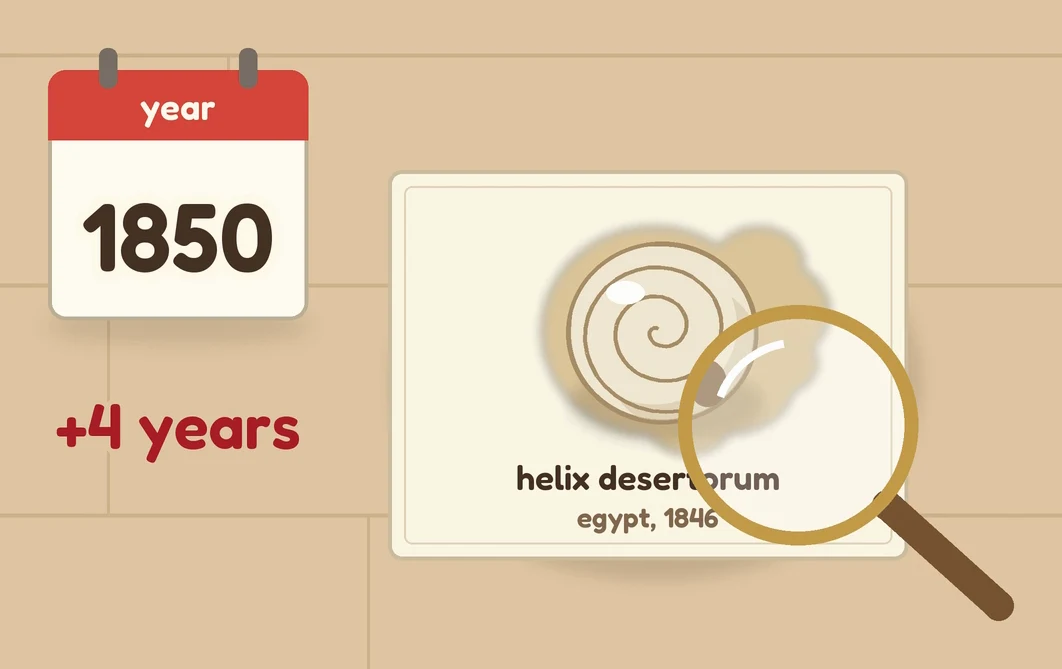
a magnifying glass over a stain on the snail's card, next to a calendar showing 1850 and the words plus 4 years
he'd been trying to leave.

that film is called an epiphragm. it's dried slime. land snails make one to keep from drying out while they rest.

a warm bath

so they took him off the card and put him in lukewarm water. soon his head came out. alive. very alive.
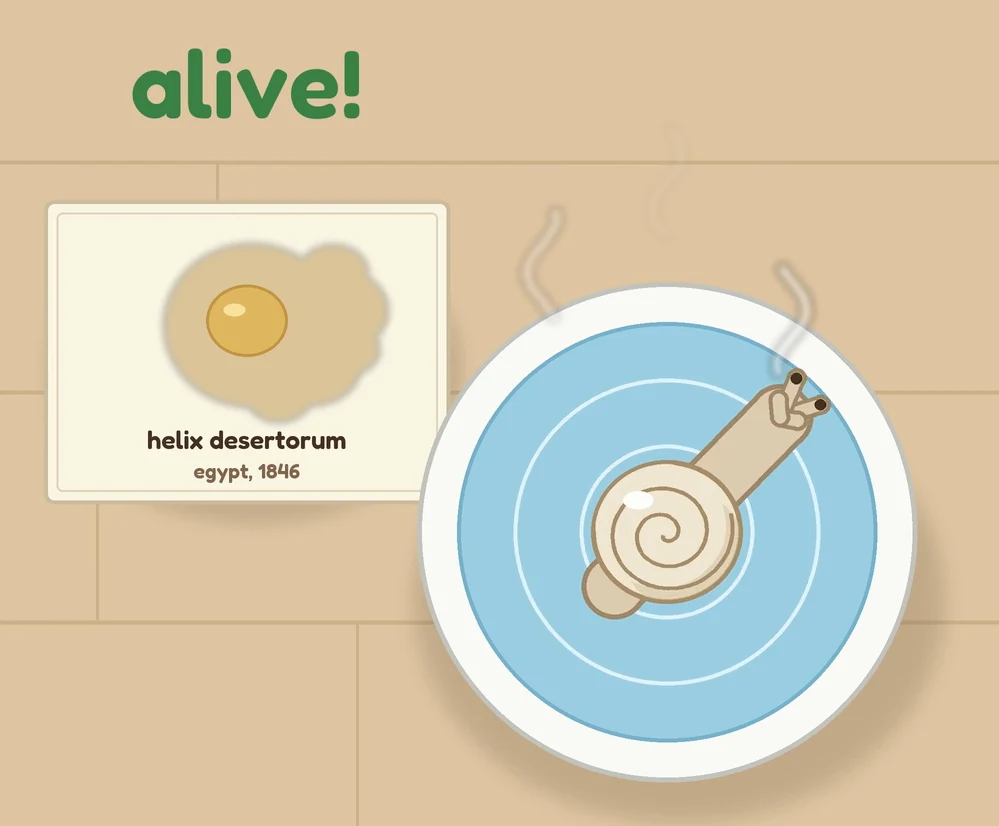
the snail coming out of its shell in a bowl of warm water, next to its stained card, under the word alive
he came right out.

he moved into a glass jar and ate cabbage leaves. an artist even drew his portrait for a book about mollusks. he lived about two more years, until 1852.
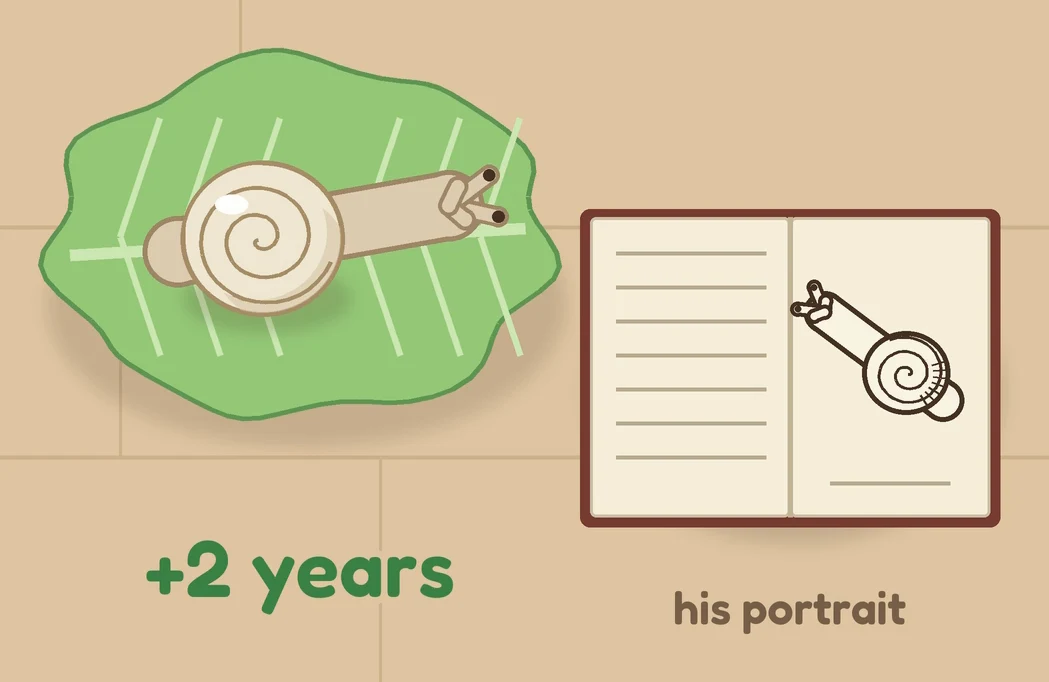
the snail on a green leaf with the words plus 2 years, next to an open book with his drawing in it, labeled his portrait
two more years. and a portrait.

four years. no food. no water.

desert snails are very good at waiting. in 1904, scientists put 40 of them in a tin box. about eight years later, 10 were still alive.
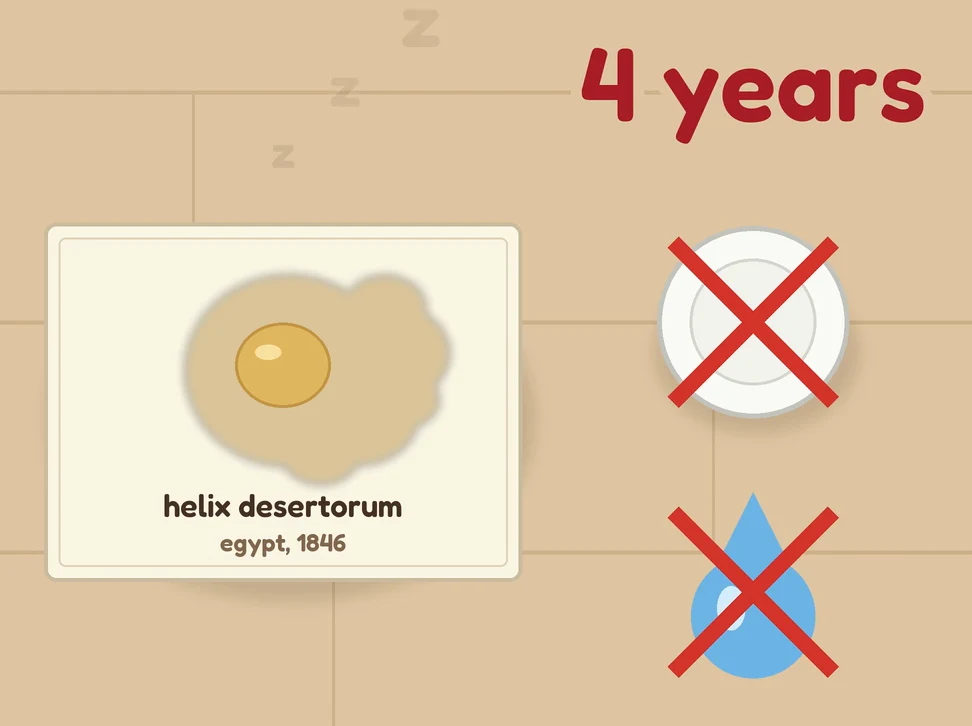
the snail's stained card under the words 4 years, next to a crossed-out plate and a crossed-out water drop
no snacks. no sips.

we call that a nap

gary says four years is just a nap. then he went into his shell. that was an hour ago. gary? gary.

if you like little facts, i keep a field of them in spudnote. it's a notes app where every note grows into a sprout. i live there.

people also ask spud

what was the snail that came back to life at the british museum?

a desert snail from egypt, then called helix desertorum (now eremina desertorum). it was glued to a card on march 25, 1846 and found alive on march 7, 1850, after a bath in lukewarm water.

how did they know the museum snail was alive?

the paper under it was stained, which showed it had come out of its shell and tried to get away. it had gone back in and sealed its opening with a shiny film, so they put it in lukewarm water and it came out.

how do snails survive without water?

land snails go inactive in dry weather and seal the opening of their shell with an epiphragm, a layer that is usually dried mucus. it cuts down how much water they lose while they rest.

how long did the museum snail live after it woke up?

about two more years. it lived in a glass jar, ate mostly cabbage leaves, and died in 1852.

where spud read this

  1. A Manual of the Mollusca, John Weale, London, 1851 (Internet Archive scan) (the desert snail from egypt was fixed to a tablet in the british museum on march 25, 1846; on march 7, 1850 the discolored paper showed it had come out trying to get away, then closed its opening with a glistening film; it recovered in tepid water; its portrait (fig. 2) was drawn from the living snail in march 1850)
  2. Eremina desertorum, Wikipedia (a specimen from egypt thought to be dead was glued to a card at the british museum in march 1846 and found alive in march 1850; it lived about two more years in a glass jar, mostly on cabbage leaves; in 1904, 40 snails were put in a tin box and 10 were still alive in 1912)
  3. The Strange Tale of the Snail that 'Rose from the Dead', Mental Floss, 2015 (the shells came from egypt in 1846 and were fixed to cardboard in the museum's collection; four years later the snail was put in a basin of tepid water and came out alive; it ate cabbage leaves, had its portrait drawn for a book on mollusks, and died in 1852)
  4. Epiphragm, Wikipedia (an epiphragm is a temporary layer, in most species dried mucus, that land snails make to seal their shell's opening and cut water loss while they're inactive in dry weather)

sources checked nov 21, 2026.

spudnote

notes so simple a potato could use them

Download on the App Store