




why can't birds feel spicy food?
birds can't feel capsaicin, the chemical that makes chilies hot.
spud explains
 told by spud · · 2 min read
the short answer
yes. wild almonds make amygdalin, which breaks down into cyanide when you chew them, and about 50 bitter almonds could kill an adult. the almonds we eat come from trees with a one-letter change in their dna that switched the poison off, and people have been planting those sweet trees for thousands of years.
gary offered me an almond. i said careful. wild almonds are poison. gary kept eating. gary always keeps eating.

wild almonds make a chemical called amygdalin. it's what makes them bitter. when you chew one, the amygdalin breaks apart, and one of the pieces is cyanide. one bitter almond can make 4 to 9 milligrams of it.
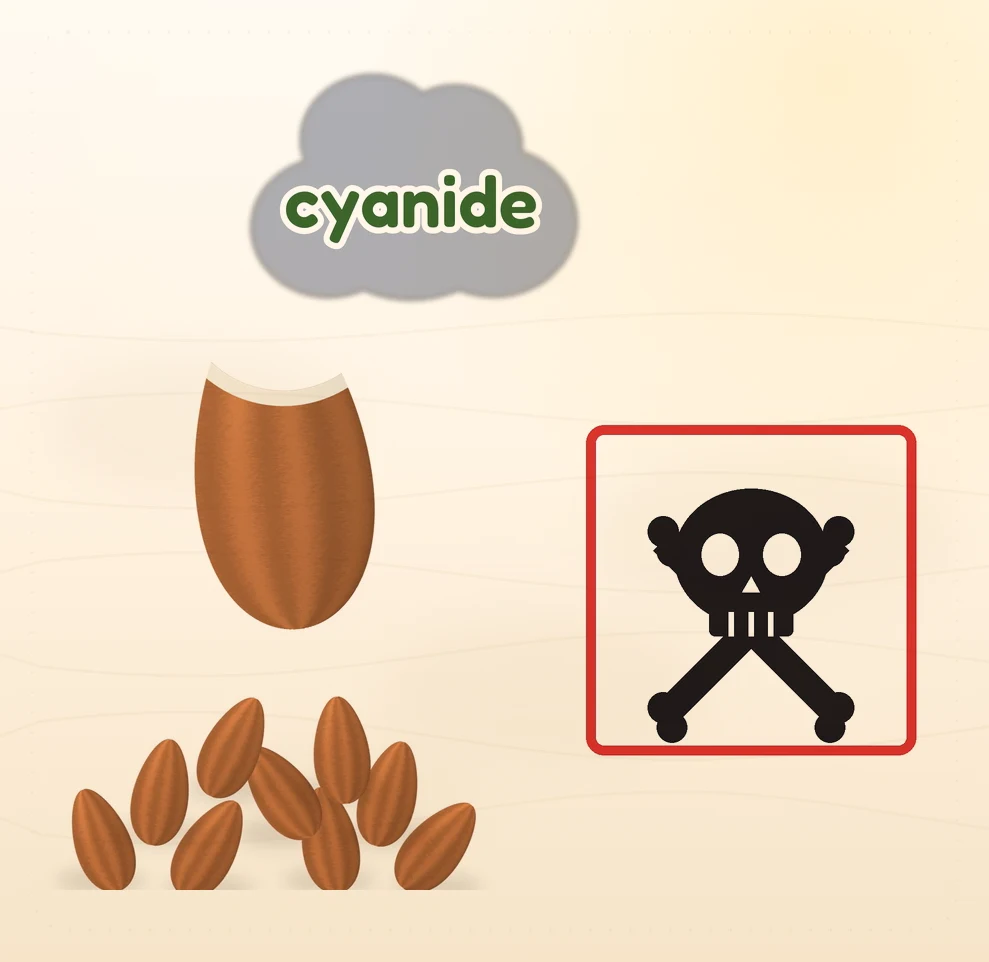
about 50 bitter almonds could kill a grown-up. for a small kid, 5 to 10 could be enough. so nobody was snacking on wild ones. please don't start.
thousands of years ago, one almond tree had a typo. one letter in its dna was different. that letter sits in a switch gene, the one that turns on the amygdalin-making machinery. with the typo, the switch doesn't work. no amygdalin. no poison. just a sweet almond.
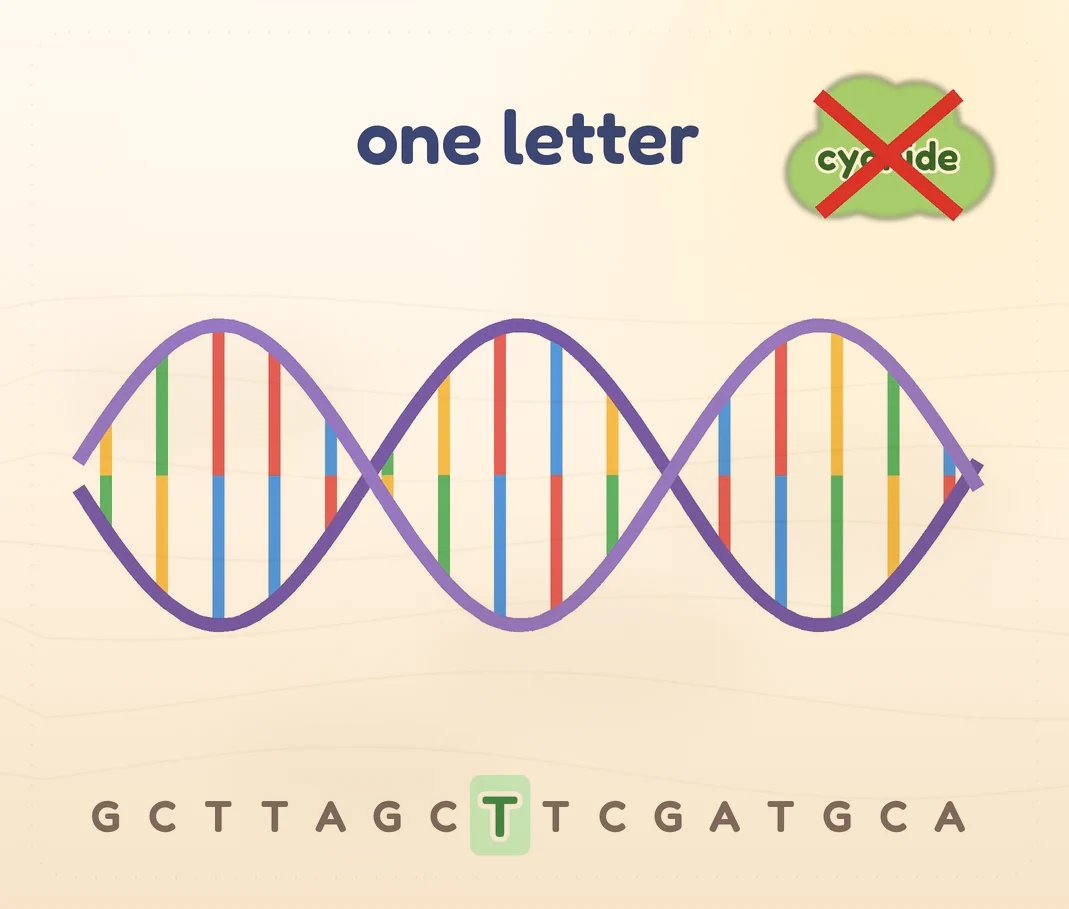
scientists found the exact letter in 2019, after they read the almond's whole genome.
people found the trees with sweet almonds and planted those. picking the sweet ones out of all the bitter wild ones is how almond farming started, in the early bronze age, about 4,000 to 5,000 years ago. there were almonds in king tut's tomb.
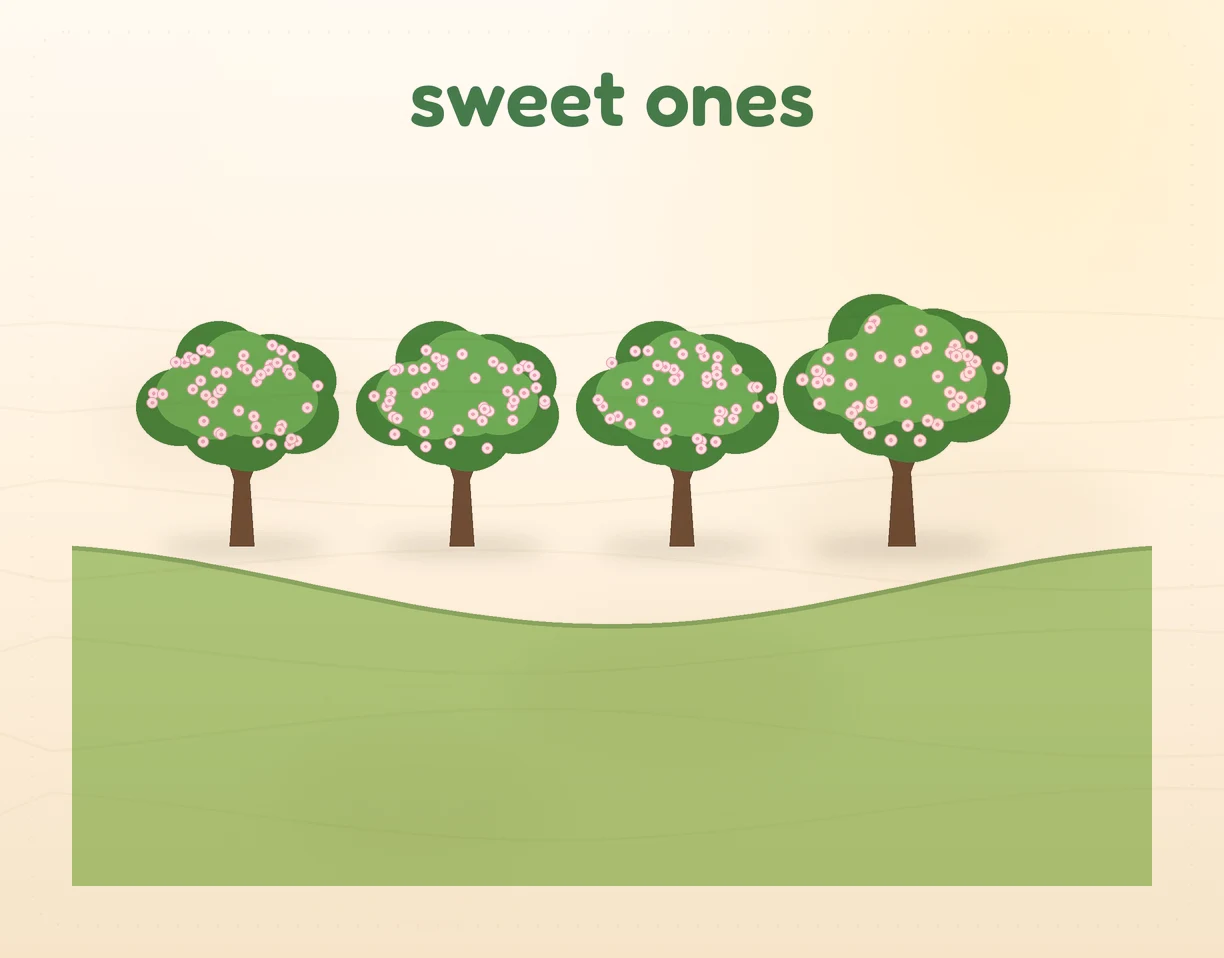
every sweet almond today comes from that typo. in the us, every almond grown to sell as food is a sweet one.
that almond flavor in cakes and cookies? that's the bitter almond taste. when amygdalin breaks apart, the piece that isn't cyanide is a chemical called benzaldehyde, and it smells like bitter almonds.
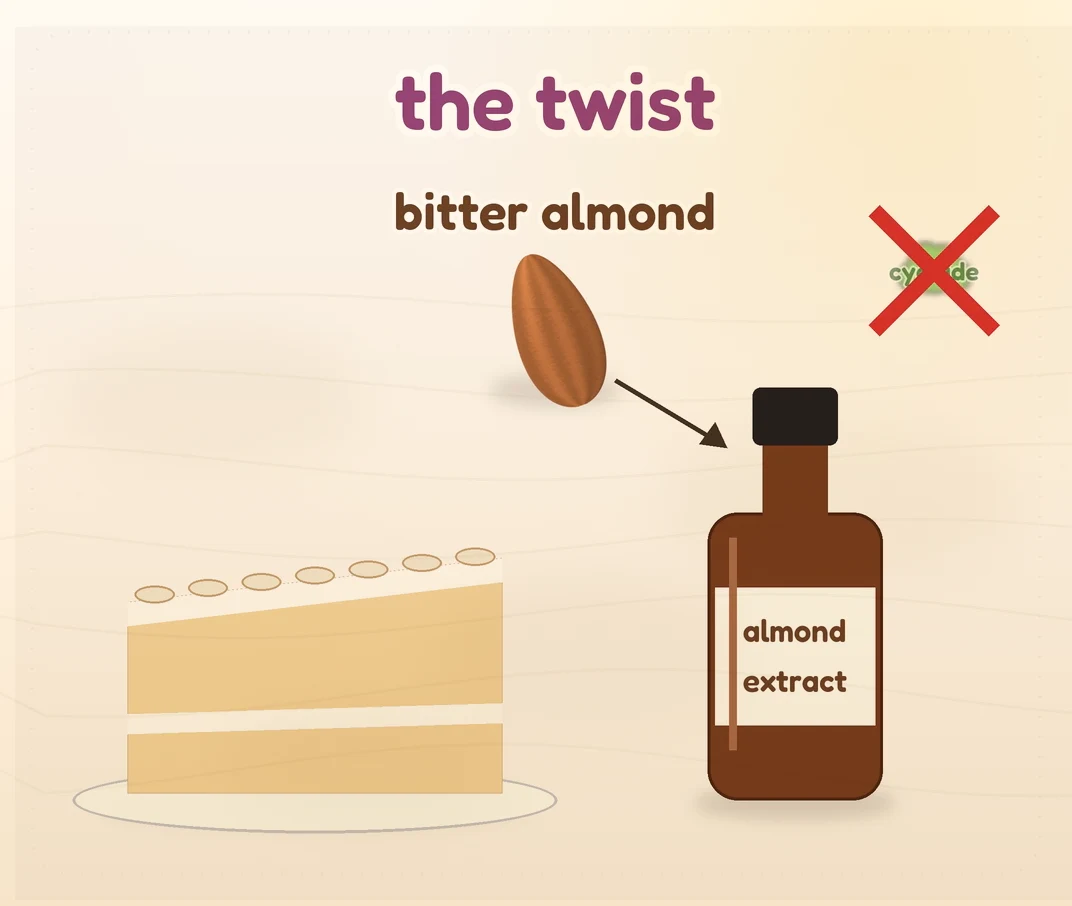
the bitter almond oil allowed in food in the us has to be free from prussic acid, which is an old name for cyanide. it can come from almonds, apricot pits or peach pits. imitation almond extract is benzaldehyde made in a lab.
i asked.
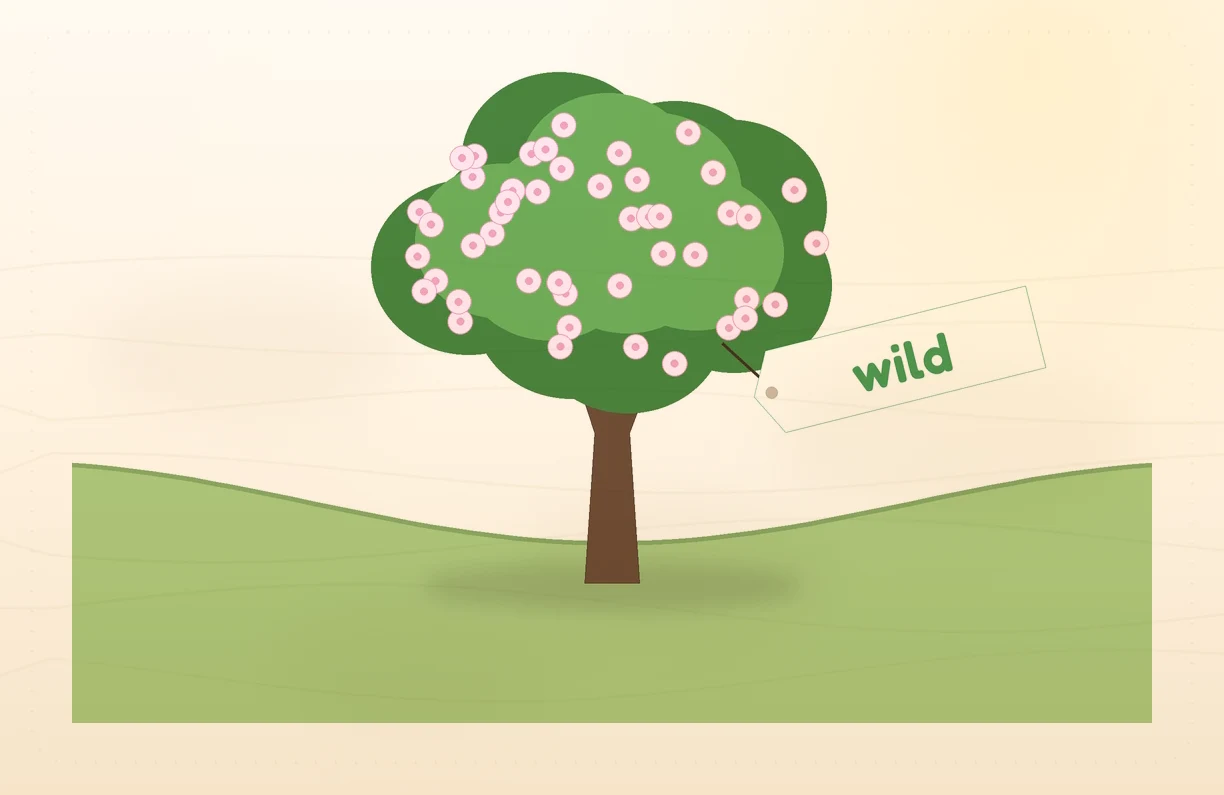
he says it tasted very almond. we're keeping an eye on gary.
if you like little facts, i keep a field of them in spudnote. it's a notes app where every note grows into a sprout. i live there.
no. the almonds sold as food are sweet varieties, which carry the one-letter change that switches off the poison. in the us, every almond grown to sell as food is a sweet one.
a bitter almond can make 4 to 9 milligrams of hydrogen cyanide. about 50 could kill an adult, and 5 to 10 could be fatal for a child.
it tastes like bitter almonds. the flavor is benzaldehyde, which comes from the same chemical that makes cyanide. food-grade bitter almond oil has the cyanide removed, and imitation extract uses benzaldehyde made in a lab.
sources checked nov 13, 2026.

spudnote
notes so simple a potato could use them