




are wild almonds poisonous?
yes.
spud explains
 told by spud · · 1 min read
the short answer
no. watermelon's closest wild cousin, the kordofan melon from sudan, has whitish flesh. over thousands of years, farmers kept seeds from the sweetest, reddest melons, and the red is lycopene, the same pigment that makes tomatoes red. even a painting from the 1600s shows a melon that's pale and barely red.
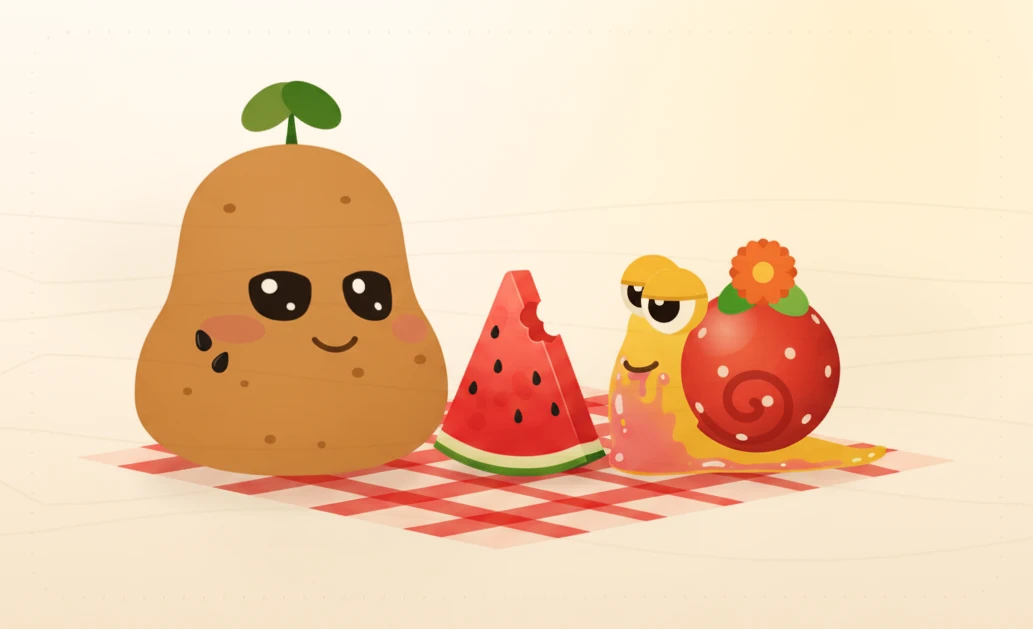
watermelons weren't always red. gary saw an old one and said it was broken. it's not broken. it's from a painting.
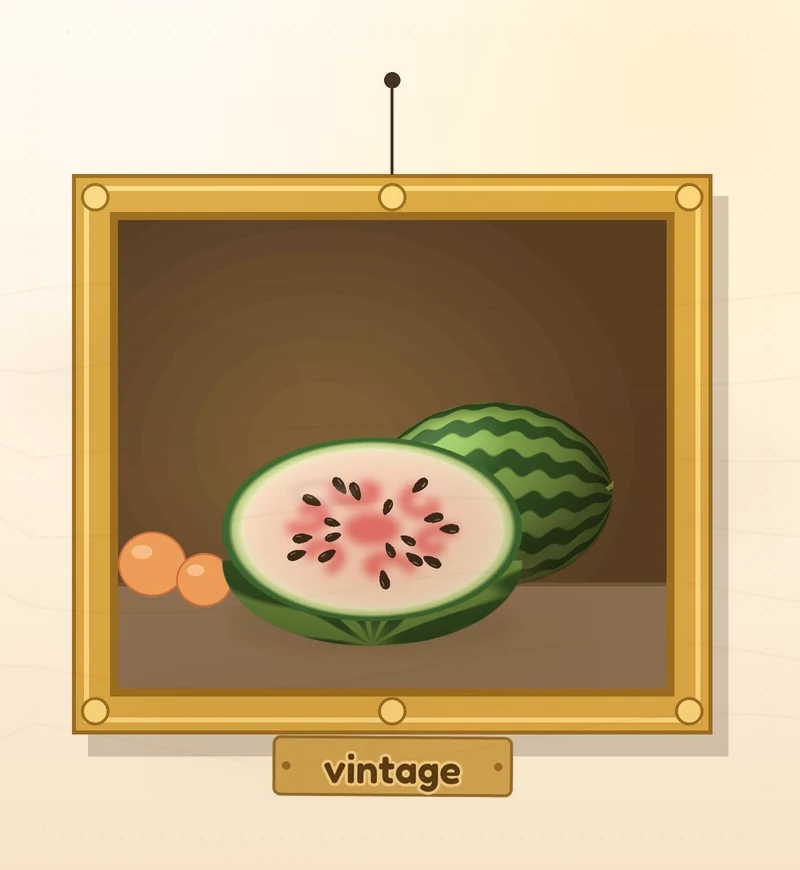
an italian painter named giovanni stanchi painted this watermelon sometime between 1645 and 1672, so it's over 350 years old. cut one open today and it's red all the way through. his is pale, swirly and barely red, packed with seeds.
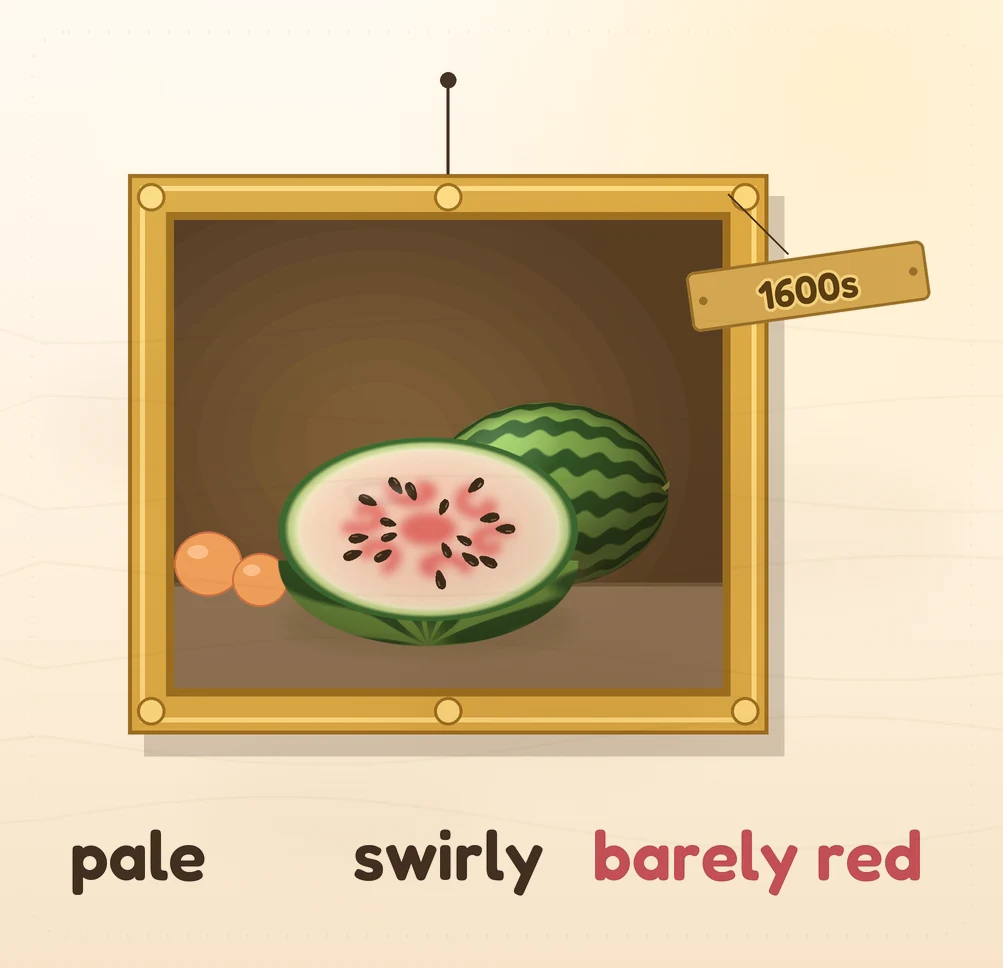
plant scientists like showing it to their students because it's a snapshot of a melon that hadn't finished being bred yet. it's one painting of one melon, so it's a clue, not proof. but it fits everything else we know.
the closest living wild cousin of the watermelon is the kordofan melon, from sudan in northeast africa. scientists read its whole genome in 2021 and found it's the nearest relative of the melons we eat. and inside, it's whitish. not red at all.
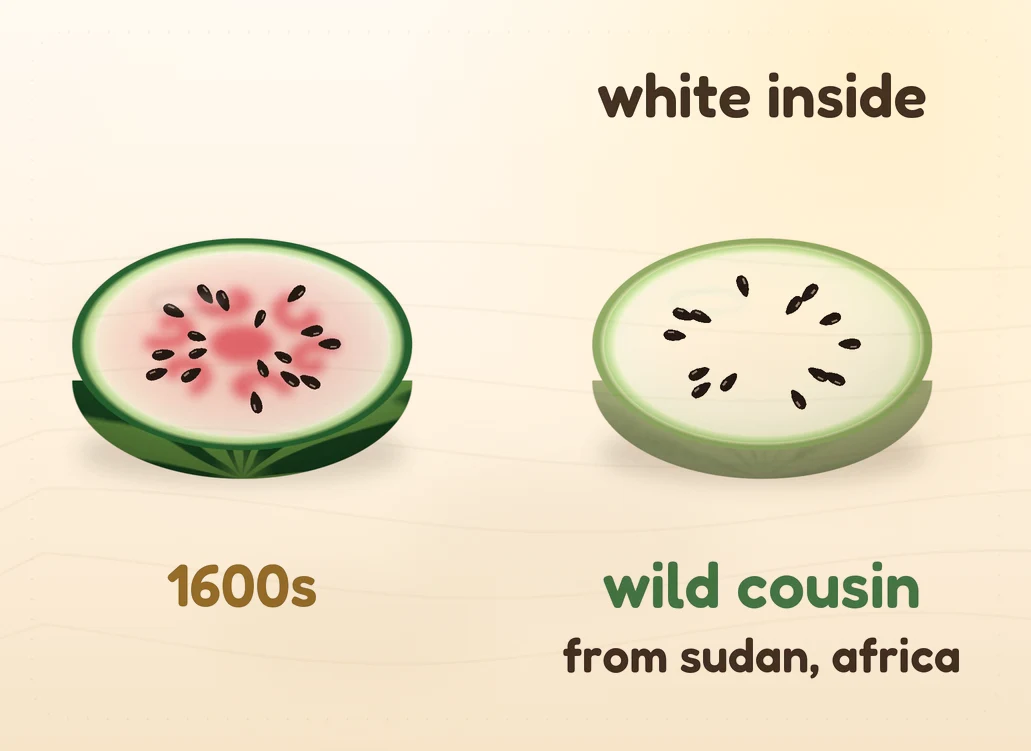
the same study found the red only became fixed in the watermelons people grew. the wild ones didn't have it.
farmers did it, slowly. every harvest, they kept the seeds from the sweetest, reddest melons and planted those. do that for thousands of years and the melons get redder, sweeter and juicier.
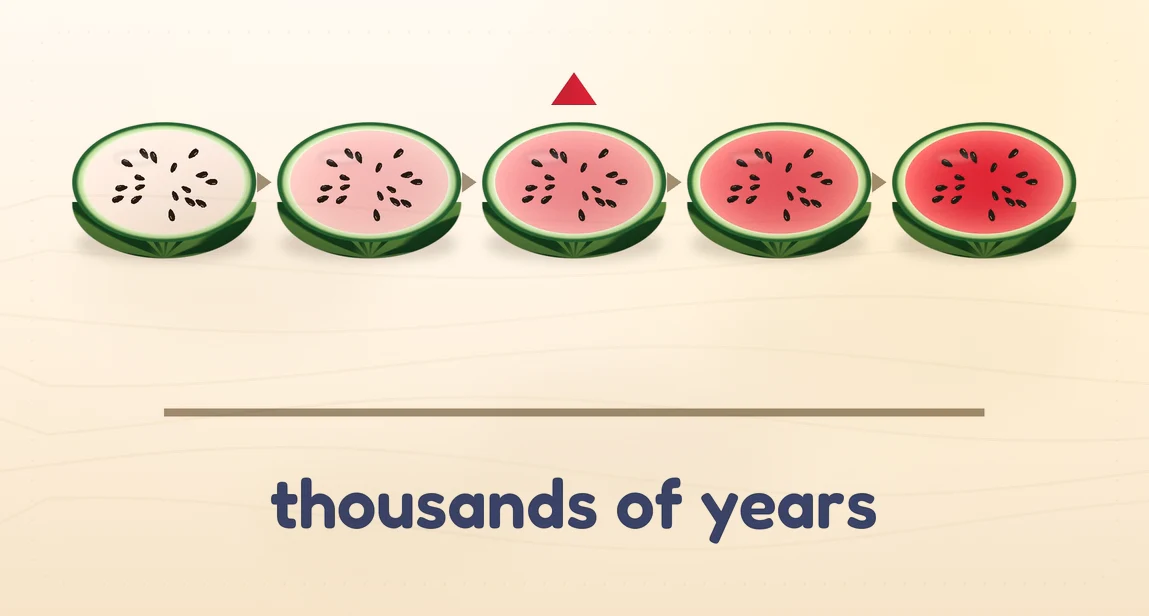
people in ancient egypt were already eating watermelon more than 4,000 years ago. it's an old project.
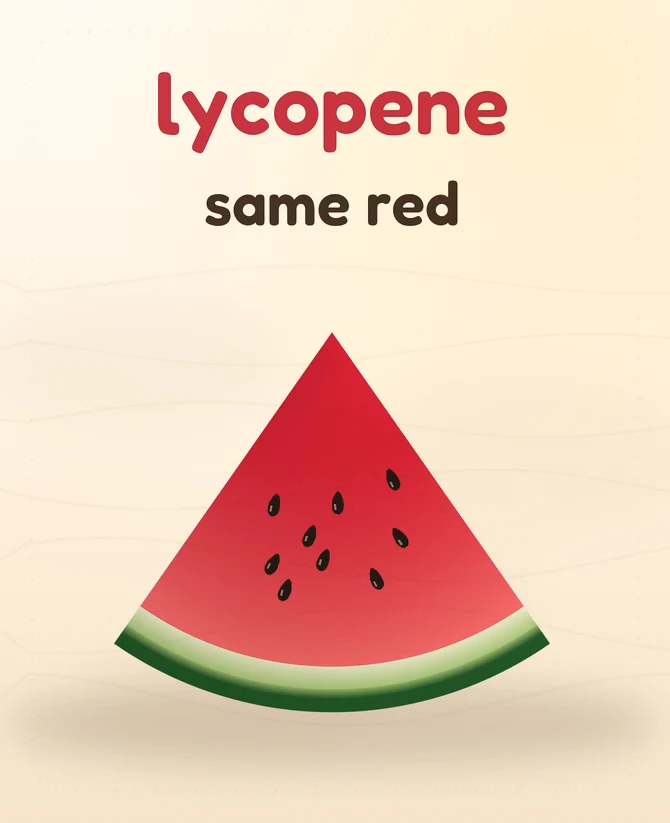
the red is lycopene. it's the same red that's in tomatoes. a ripe watermelon actually has about 40 percent more of it than a raw tomato.
so old watermelons weren't worse. they were vintage.
gary says i'm vintage too. i'm choosing to take that well.
if you like little facts, i keep a field of them in spudnote. it's a notes app where every note grows into a sprout. i live there.
pale. the kordofan melon from sudan, the watermelon's closest living wild relative, has whitish, non-bitter flesh. the deep red was bred in by farmers over thousands of years.
lycopene, the same red pigment that's in tomatoes. ripe red watermelon has about 40 percent more lycopene than raw tomatoes.
a still life by giovanni stanchi, painted in rome between 1645 and 1672. its watermelon has pale, pinkish flesh full of seeds, and plant breeding teachers use it to show how much watermelons have changed.
sources checked nov 12, 2026.

spudnote
notes so simple a potato could use them