




were watermelons always red?
no.
spud explains
 told by spud · · 2 min read
the short answer
kohlrabi is a stem. farmers kept picking the plants with the fattest stems until the stem swelled into a ball that sits above the ground. it's the same species as broccoli, cabbage, kale, cauliflower and brussels sprouts, all bred from one wild cabbage.
kohlrabi is a stem. gary says it looks like a planet. it's not a planet. it's a stem.
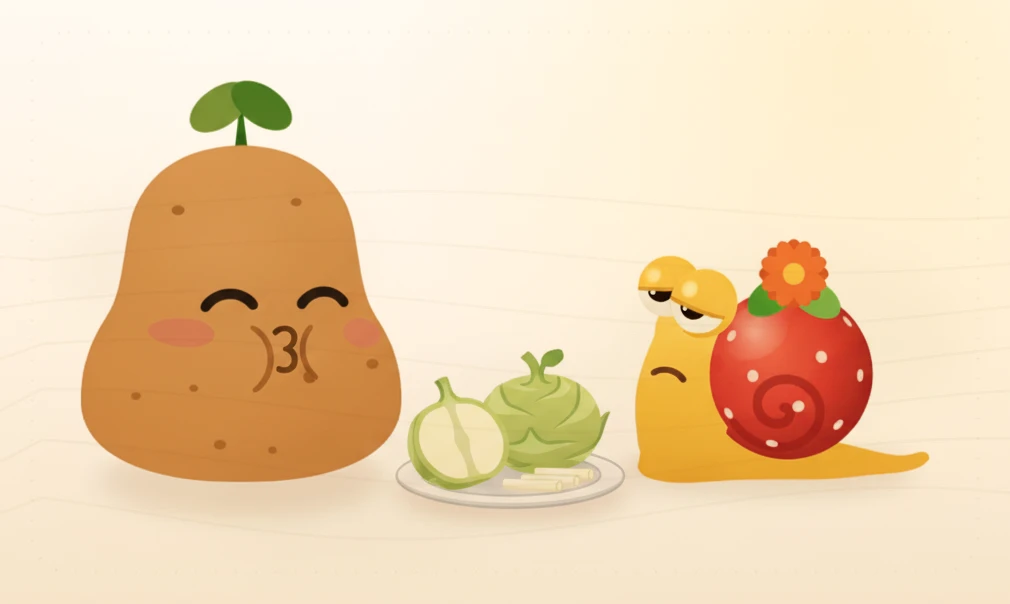
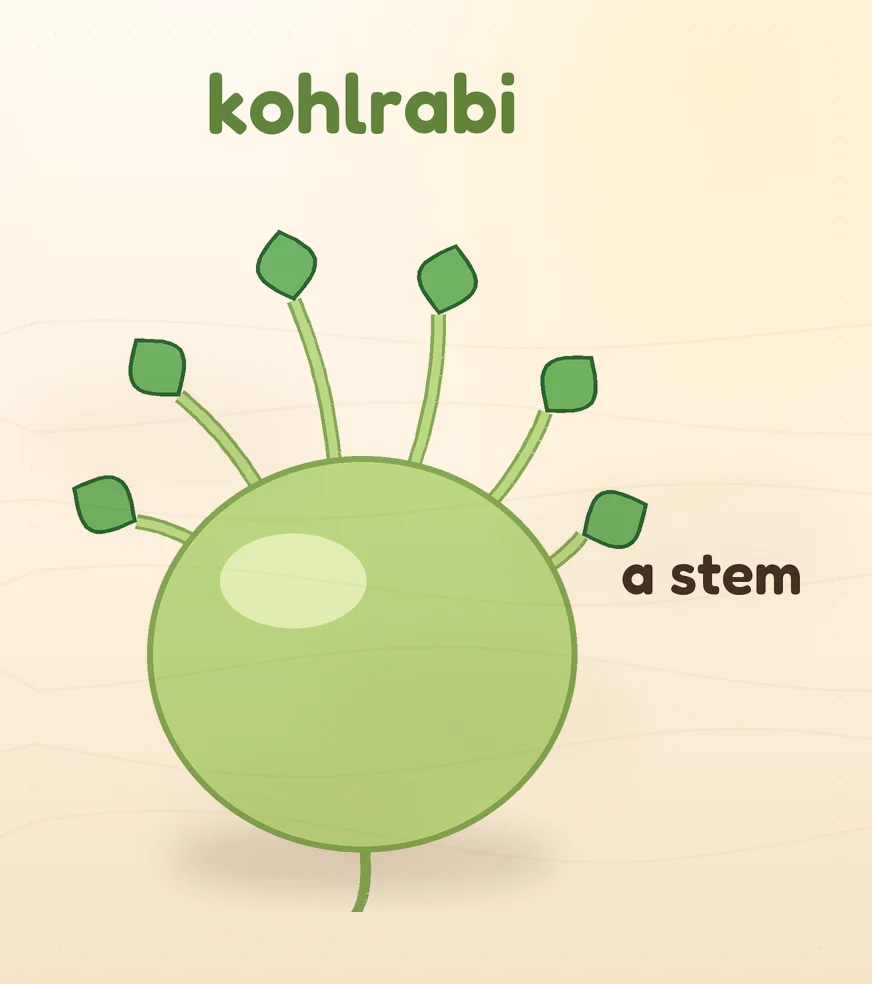
farmers kept picking the plants with the fattest stems, again and again, until the stem swelled up into a ball. it grows above the ground, with leaves poking out on long stalks. it's not a root, even though it looks a bit like a turnip.
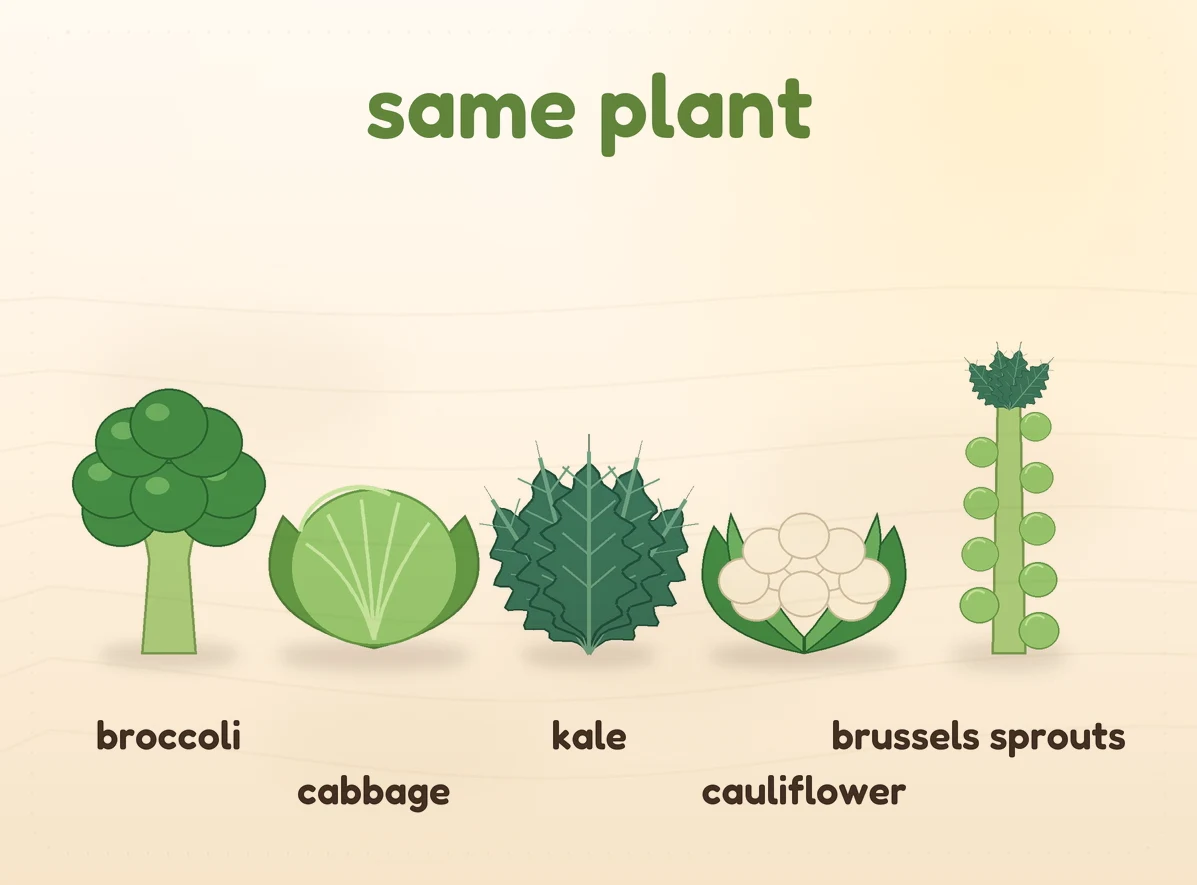
this is the weird part. kohlrabi is the same plant as broccoli. and cabbage. and kale. and cauliflower. and brussels sprouts. all one species, called brassica oleracea.
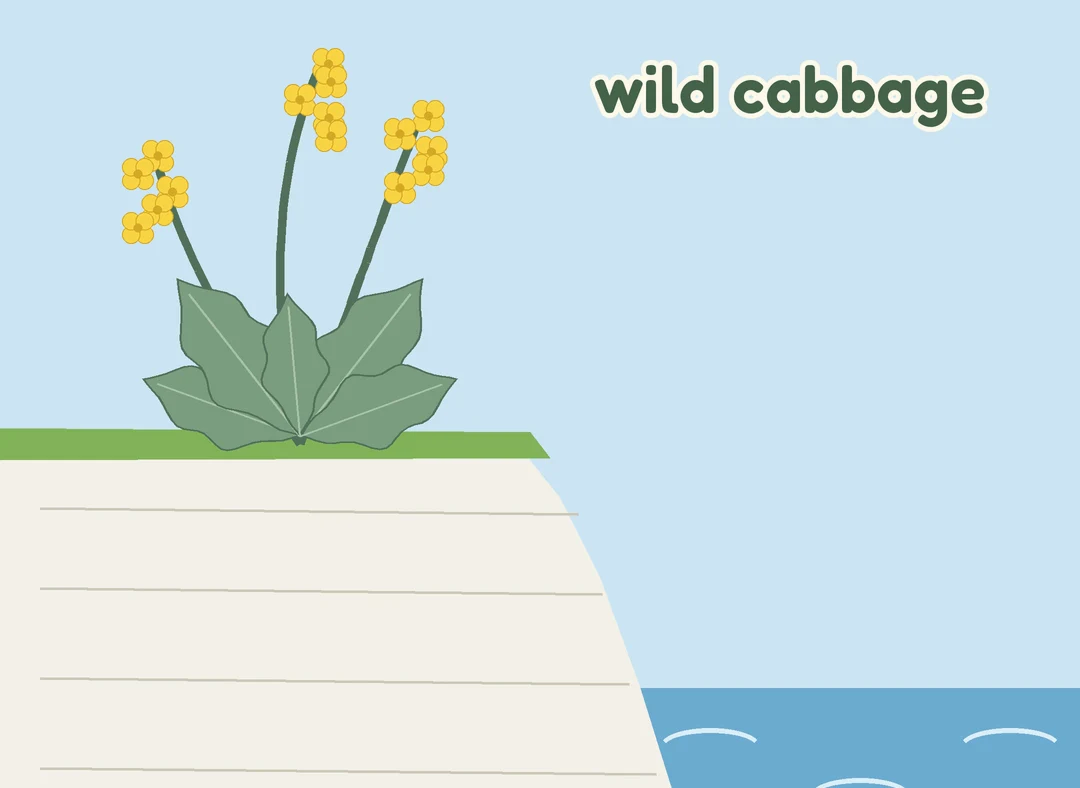
it all started as wild cabbage, a scruffy weed with yellow flowers that grows on sea cliffs in europe. it likes salt and chalk and hates sharing space with other plants, so cliffs suit it.
scientists still argue about exactly which wild plant came first. a big 2021 study found the closest living wild relative on the cliffs of the greek islands, so farming it probably started around the eastern mediterranean. some of the cabbages on other cliffs may even be garden ones that ran away.
for thousands of years, farmers grew it and kept the plants they liked best. each time they picked a different part to make bigger:
big leaves: kale. a big top bud: cabbage. flower buds: broccoli. flowers that got stuck before opening: cauliflower. little side buds: brussels sprouts. a fat stem: kohlrabi.
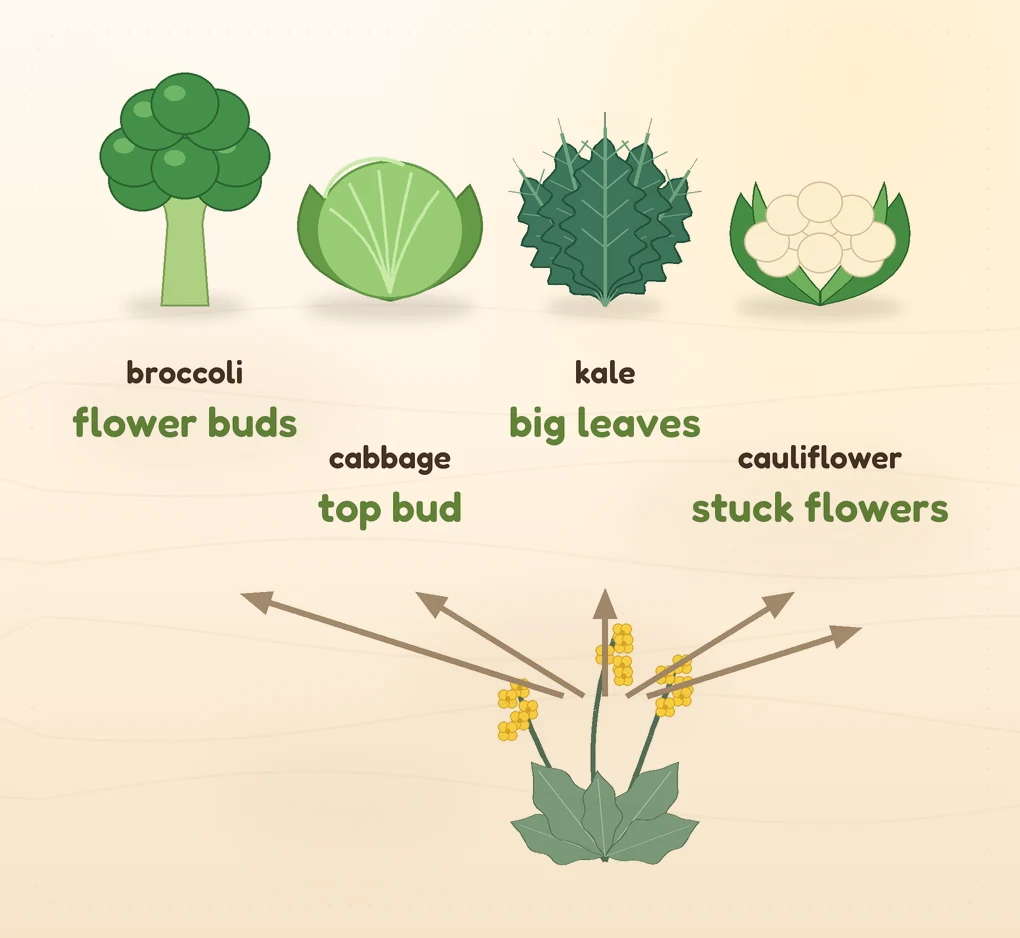
so they're not just cousins. they're the same guy with different haircuts.
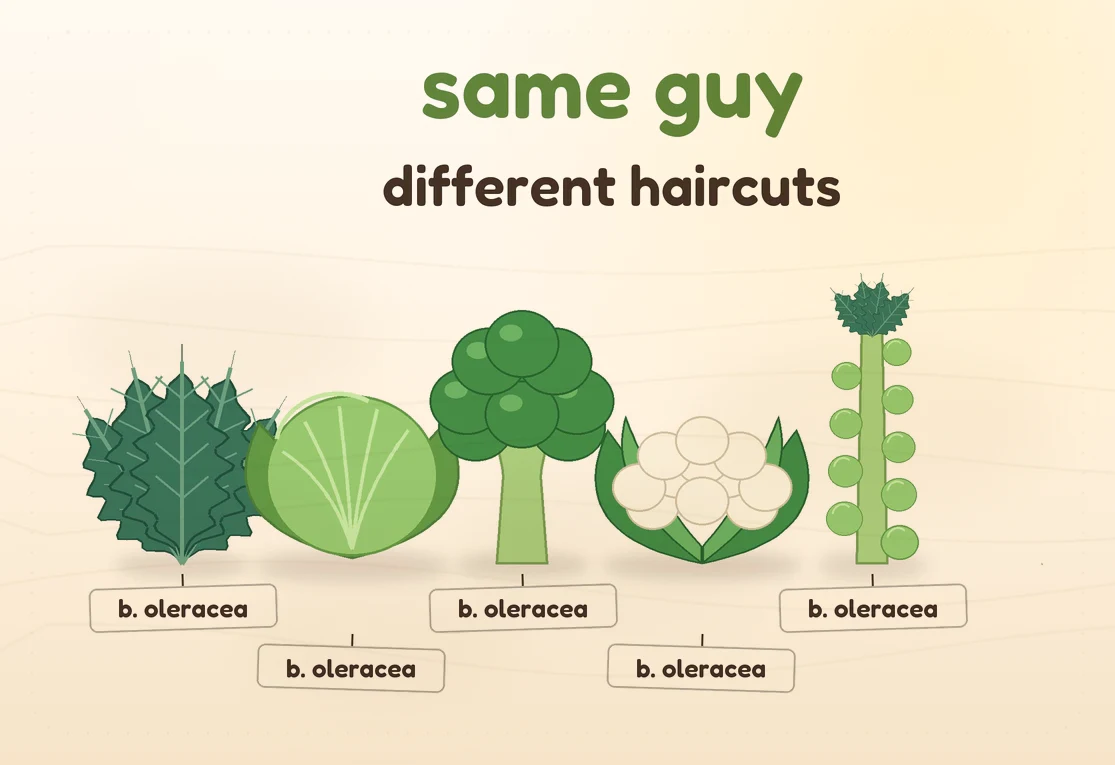
and kohlrabi is the one who only trains legs.
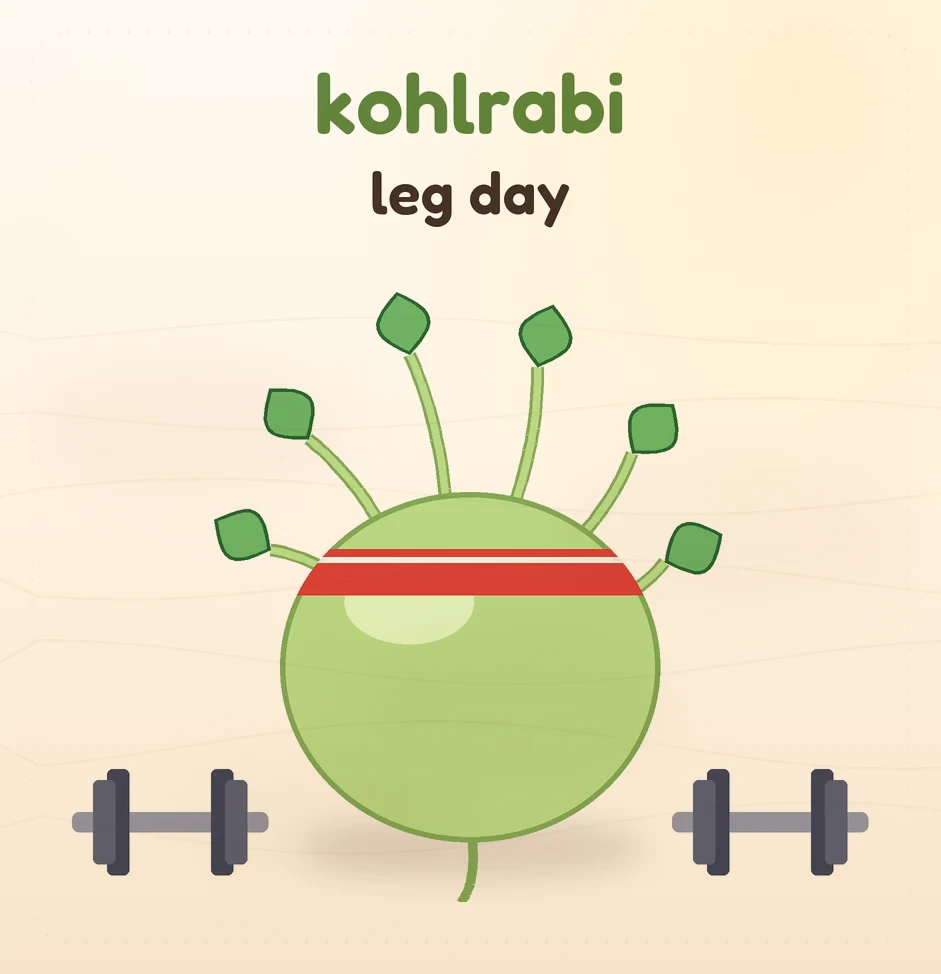
sweet and crunchy, like a milder turnip or a broccoli stem. you can peel it and eat it raw in a salad or slaw, or cook it lightly. pick it small, between golf ball and tennis ball size. big old ones go woody.
kale says kale is the favorite. kale would.
if you like little facts, i keep a field of them in spudnote. it's a notes app where every note grows into a sprout. i live there.
no. the ball is a swollen stem that grows above the ground. it looks a bit like a turnip, but it's the cabbage plant.
yes. peel it and slice or grate it into salads and slaws. it's also good lightly steamed, roasted or sauteed, and the young leaves can be cooked like greens.
it comes from german words for cabbage and turnip, which is about right: it's a cabbage that looks like a turnip.
sources checked nov 12, 2026.
spudnote
notes so simple a potato could use them