




do snails have blue blood?
yes.
spud explains
 told by spud · · 1 min read
the short answer
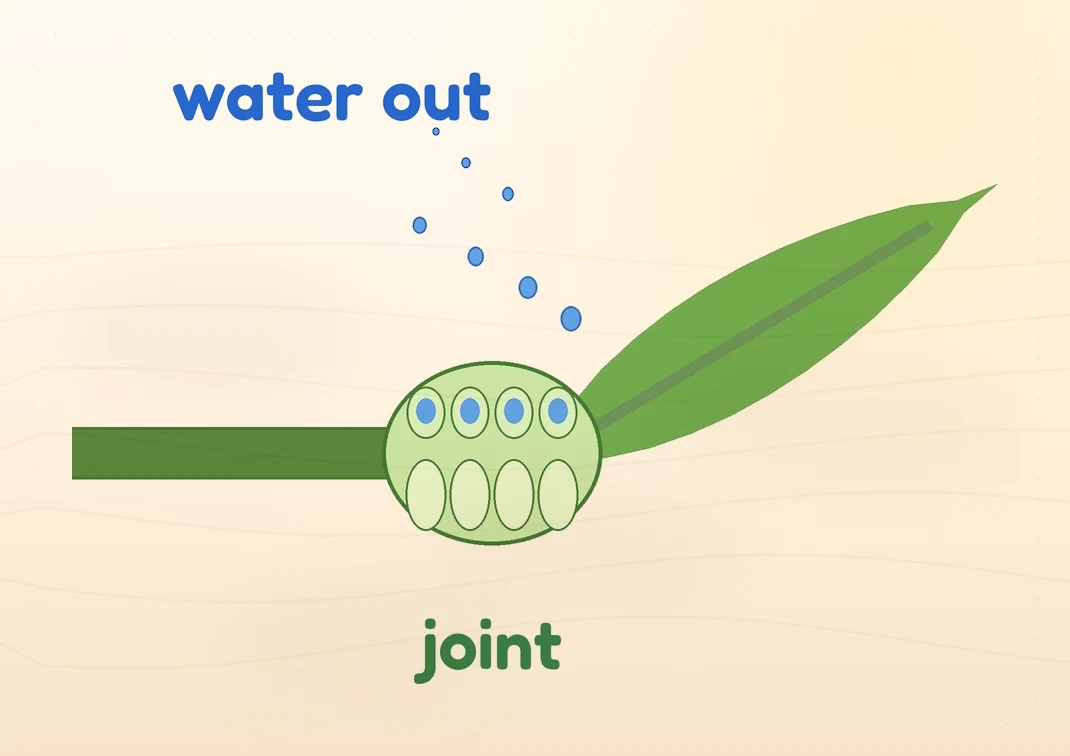
the mimosa folds its leaves when touched because of little joints at the base of each leaf, called pulvini. a touch makes potassium move inside the joint, water follows it, one side of the joint sags, and the leaf folds in seconds. nobody knows for sure why it does it. the main idea is that a folded plant puts off hungry animals.
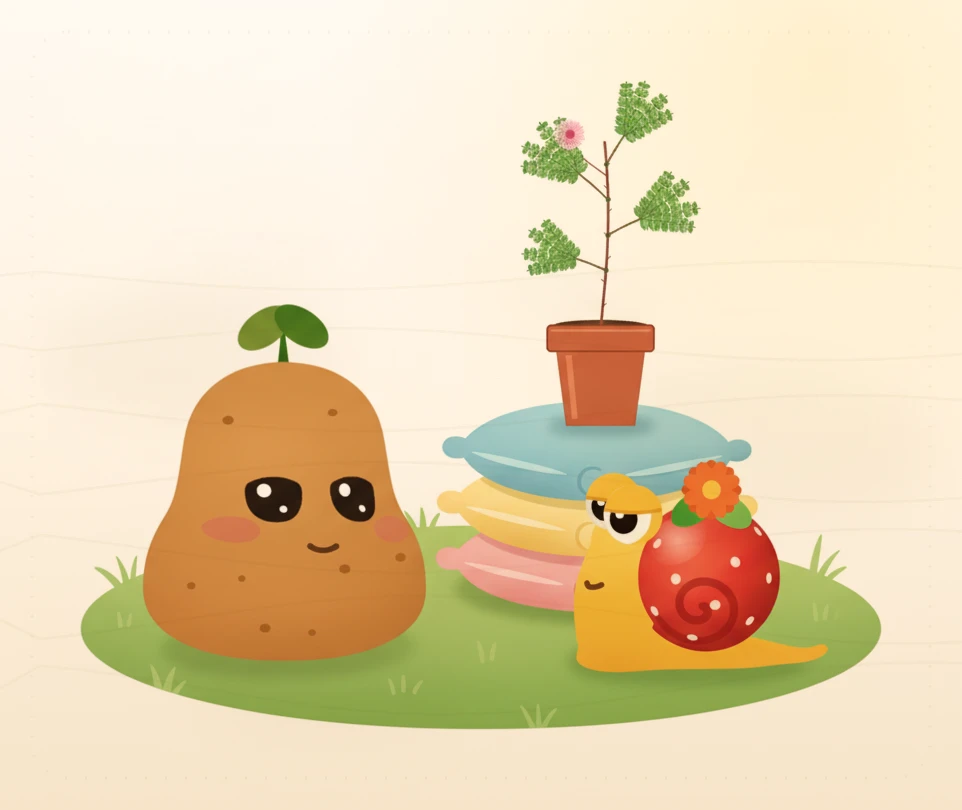
this plant faints when you touch it. it's a mimosa, the shy plant. gary touched it. it folded up and flopped. gary said "dramatic."
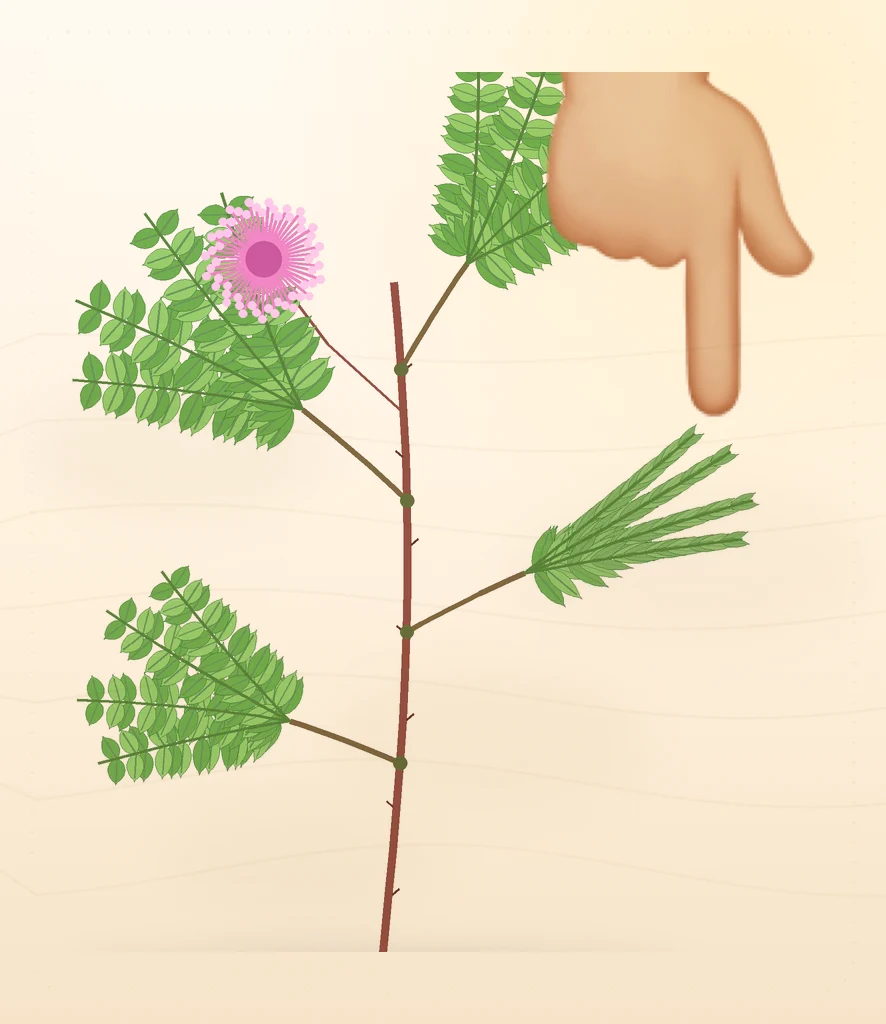
at the base of each leaf there's a little joint called a pulvinus. it works like a muscle, with no muscle. when something touches the leaf, potassium moves from one side of the joint to the other, and water follows it. cells on one side lose water and sag, the other side stays full, and the leaf folds. in seconds.
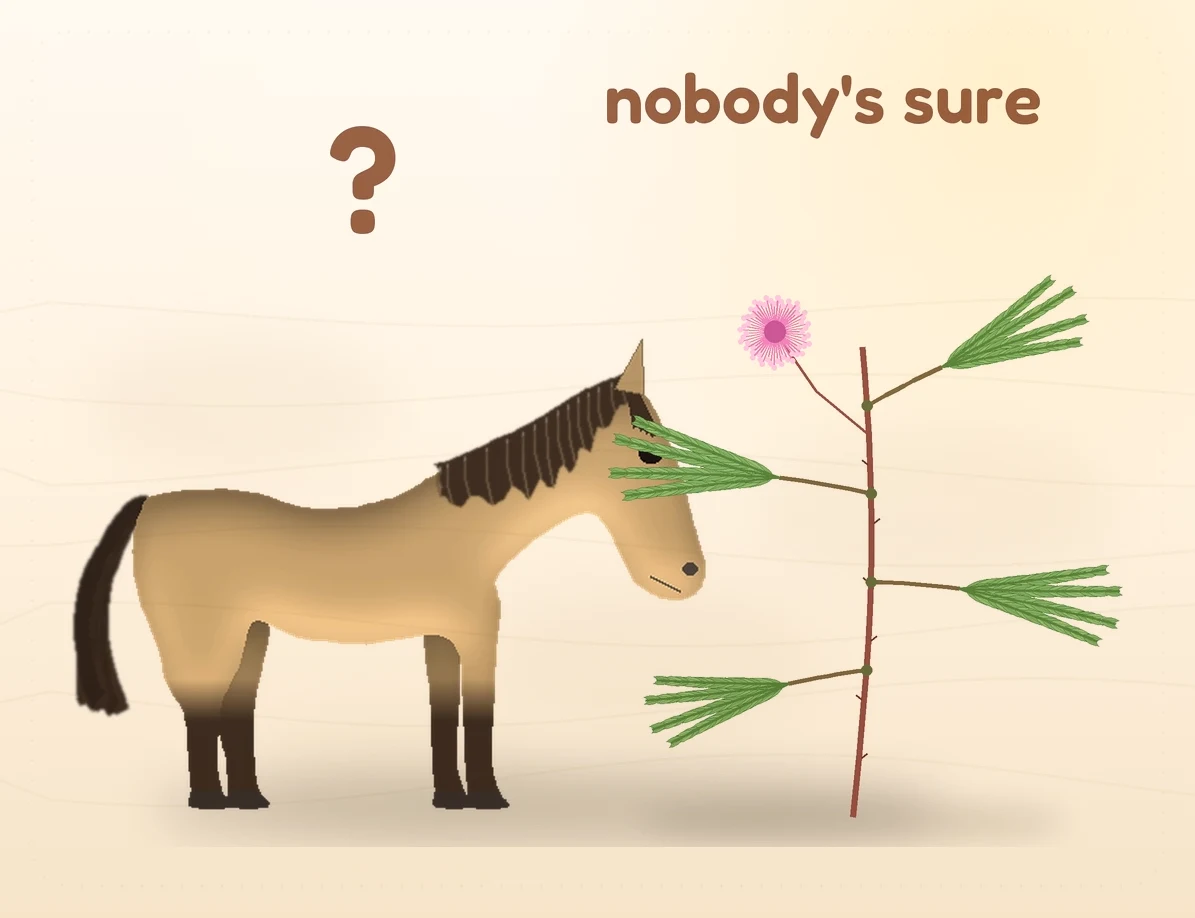
nobody's sure. one idea: a folded plant looks like a bunch of bare sticks, so a hungry animal might skip it. it isn't free, though. folding takes energy, and closed leaves catch less sunlight.
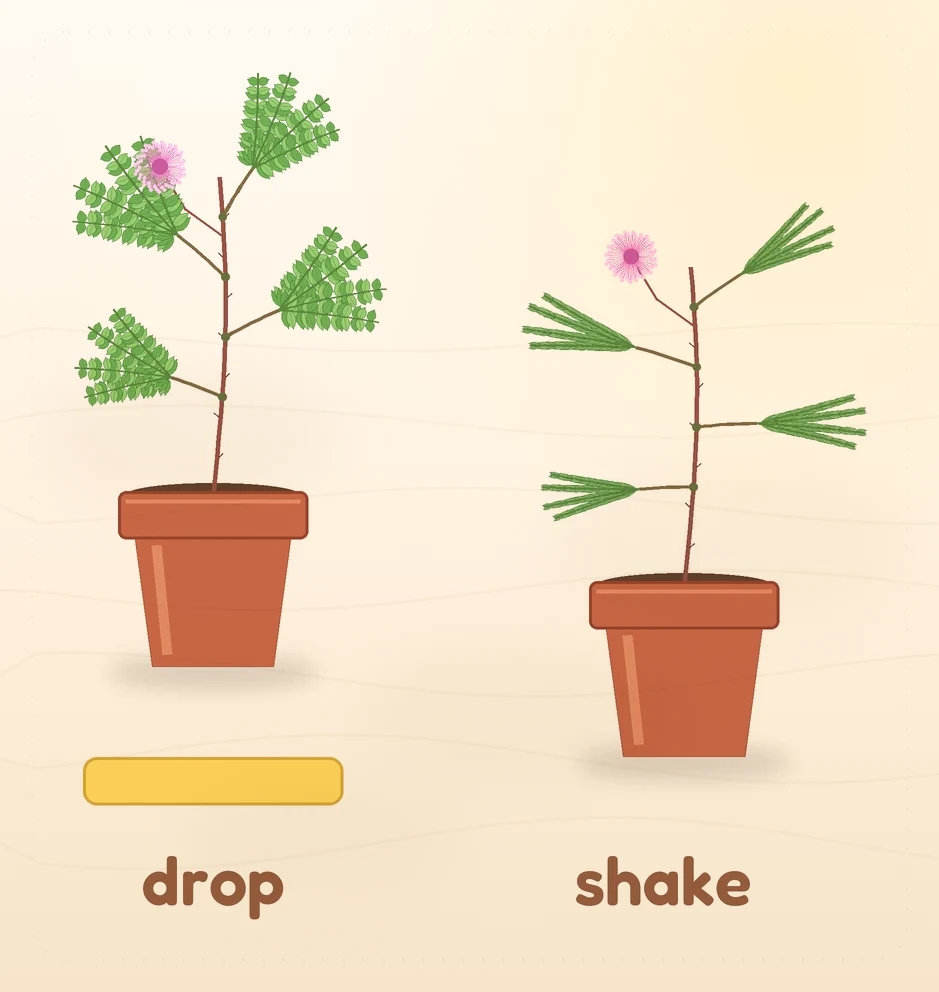
in 2014, scientists dropped potted mimosas 15 centimeters (6 inches) down a rail onto foam. 60 times in a row. at first they folded. after four to six drops, they kept their leaves open.
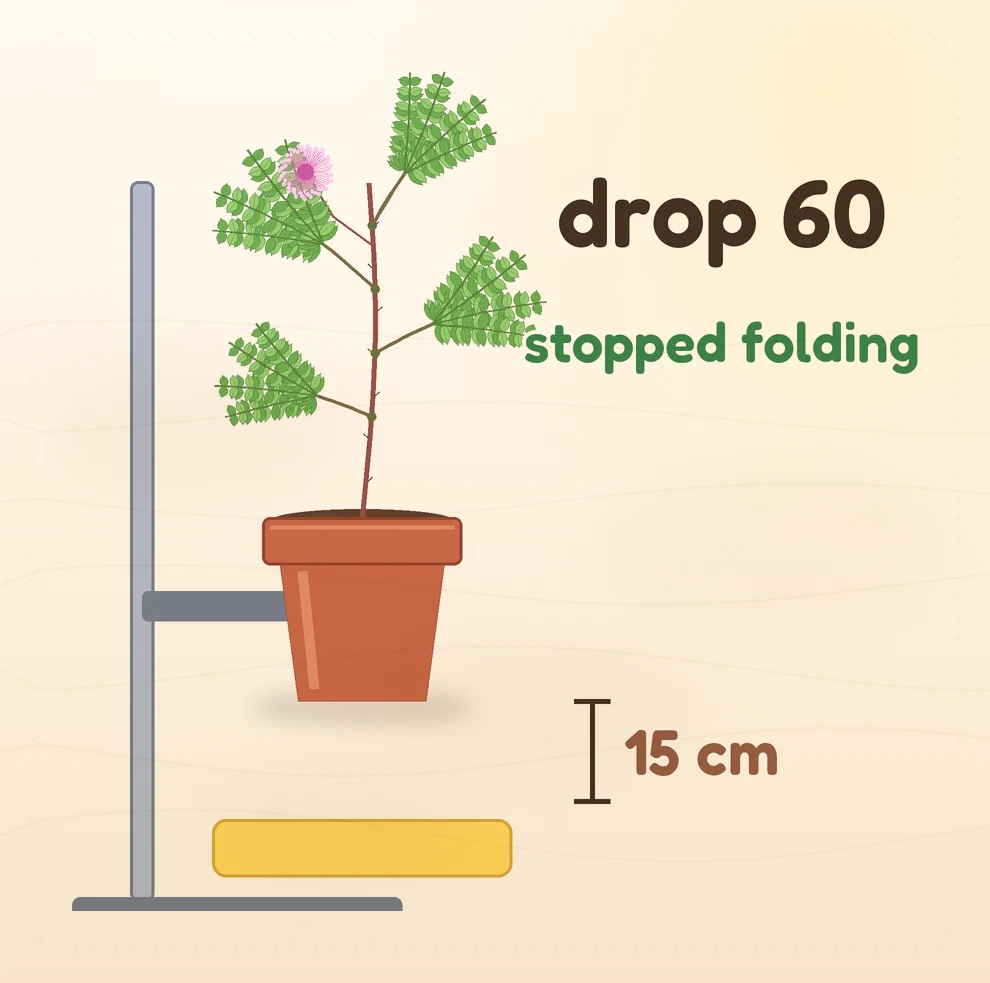
were they just tired? the scientists shook them instead, and they folded right away. so they could still fold. they'd stopped bothering for the drop.
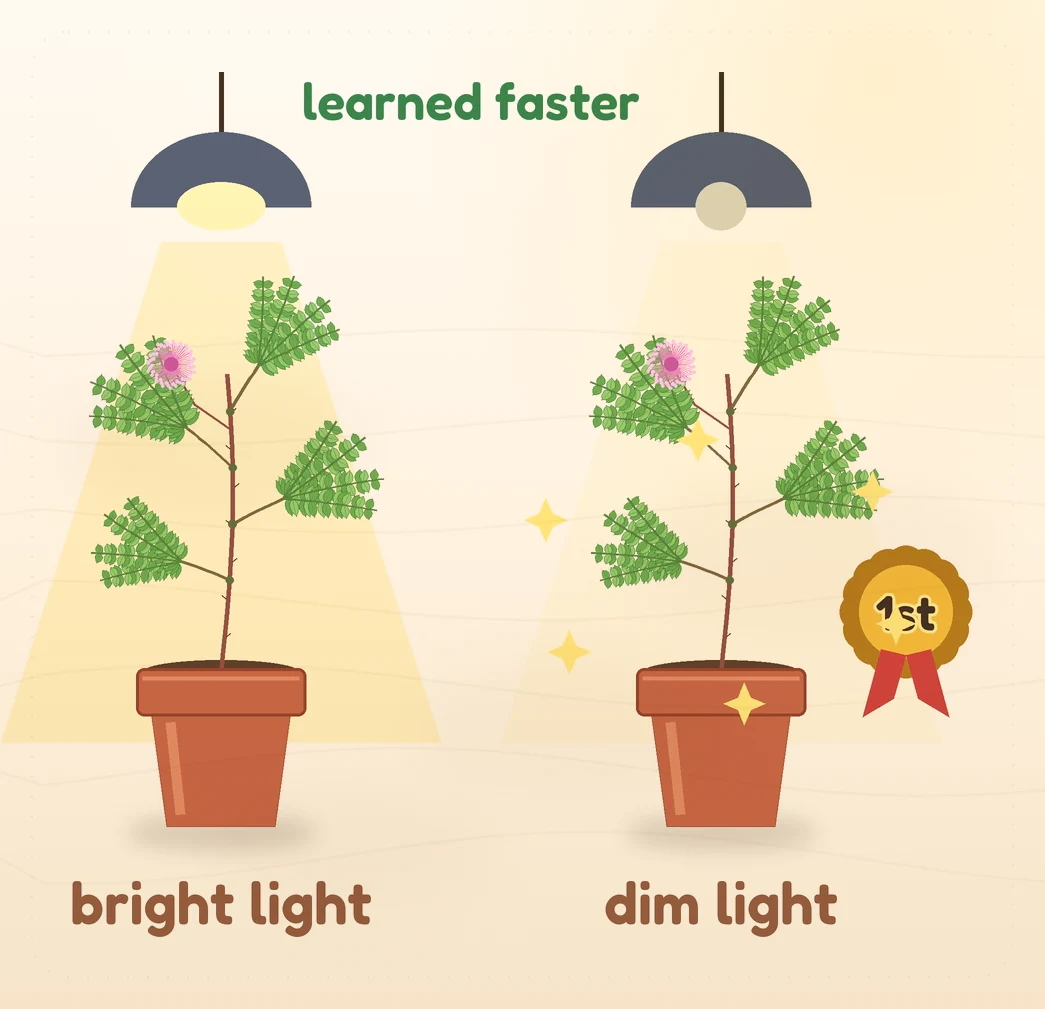
28 days later, they still ignored the drop. and plants kept in dim light learned faster. the scientists expected that: in dim light, every bit of sun counts.
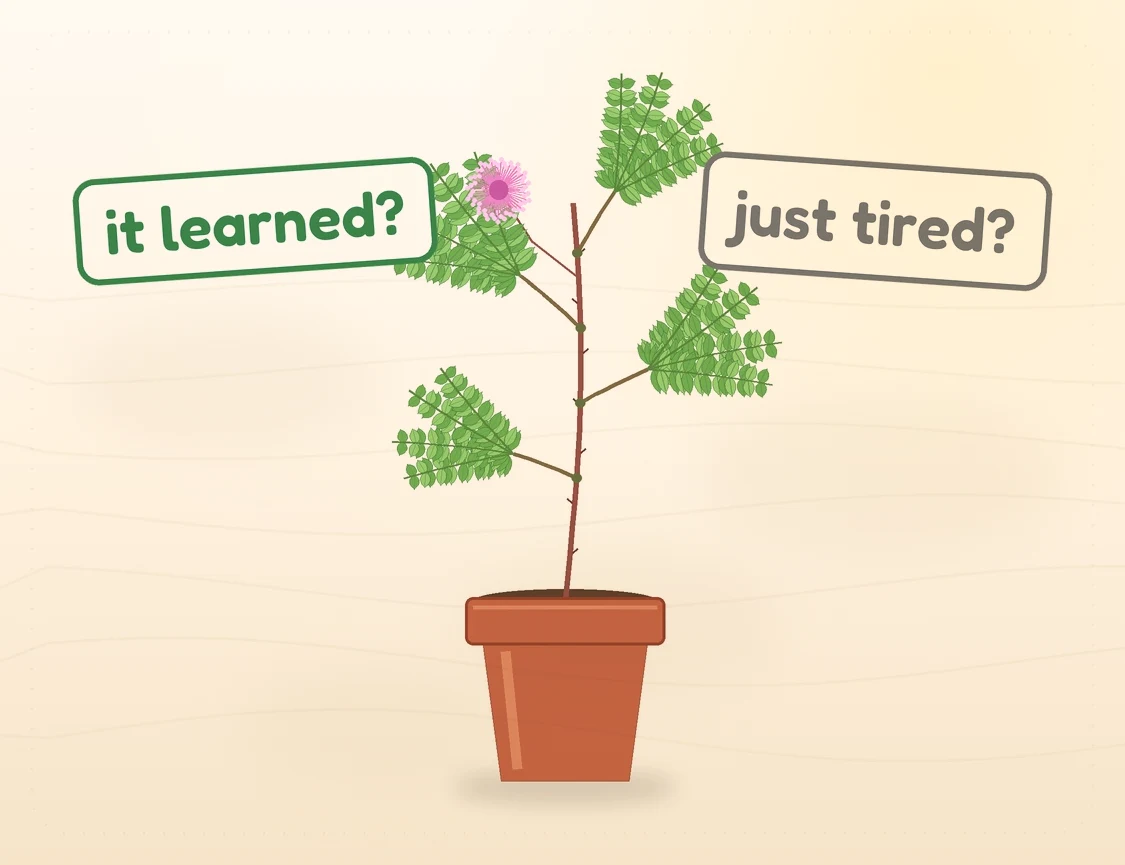
not every scientist is convinced it's learning. some think the plants may have just been worn out. gary isn't convinced either. i told him it learned he's harmless. he says he's very dangerous.
if you like little facts, i keep a field of them in spudnote. it's a notes app where every note grows into a sprout. i live there.
in seconds. the little leaves fold together within seconds of a touch or a shake, and they open again a few minutes later.
nobody knows for sure. the main idea is defense: a folded plant looks like bare sticks, which may put off grazing animals. folding costs the plant, though: it takes energy and closed leaves catch less light.
in a 2014 experiment, mimosas dropped over and over stopped folding for the drop but still folded when shaken, and still ignored the drop 28 days later. the scientists call that learning. others think the plants may have been worn out, so it's still debated.
sources checked nov 17, 2026.

spudnote
notes so simple a potato could use them