




A to-do list that doesn't make you feel behind
Gentle productivity means a to-do list that keeps you company instead of keeping score. Here's how I built spudnote around that idea, and how to use it.
Guides
The short answer
A brain dump means writing down every thought, task and worry, unsorted, until your head feels quieter. Then you sort the pile and pick one small next step. It's a popular trick for ADHD brains and busy ones alike.
Some days your head is like a browser with forty tabs open, and one of them is playing music you can't find. A brain dump is how you close the tabs. Here's how it works, and how I use spudnote for it.
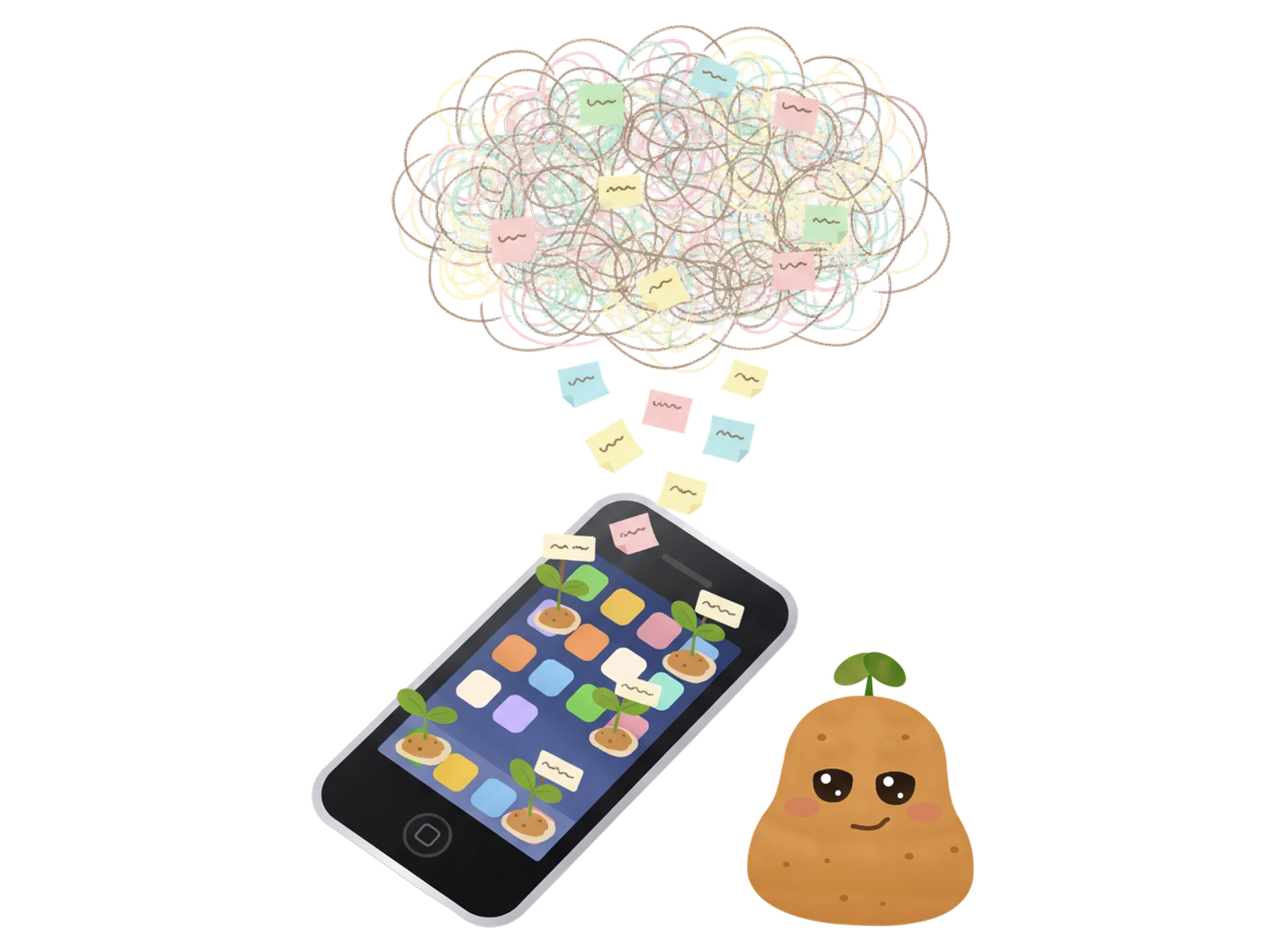
A brain dump is writing down everything that's on your mind, all of it, in no order: tasks, worries, half ideas, the song lyric that's been stuck since breakfast. You don't sort, you don't fix spelling, you don't decide what matters yet.
It works because your working memory is small. When it's full, every thought feels equally urgent and it's hard to start anything. Getting the thoughts out of your head and somewhere you trust gives you room to think again.
People with ADHD often describe the same thing: thoughts that arrive all at once, and a plain numbered list that makes everything look equally important. Organizations like CHADD suggest writing tasks down and breaking them into small steps, because it takes the load off memory.
I'm not a doctor, and spudnote isn't a treatment. But a brain dump is a simple habit that a lot of people find calming, ADHD or not.
Set a timer for five minutes and write down every single thing. One thought per line, or in spudnote, one thought per sprout. "Call mom." "Invoice." "Is the oven off?" Nothing is too small or too silly.
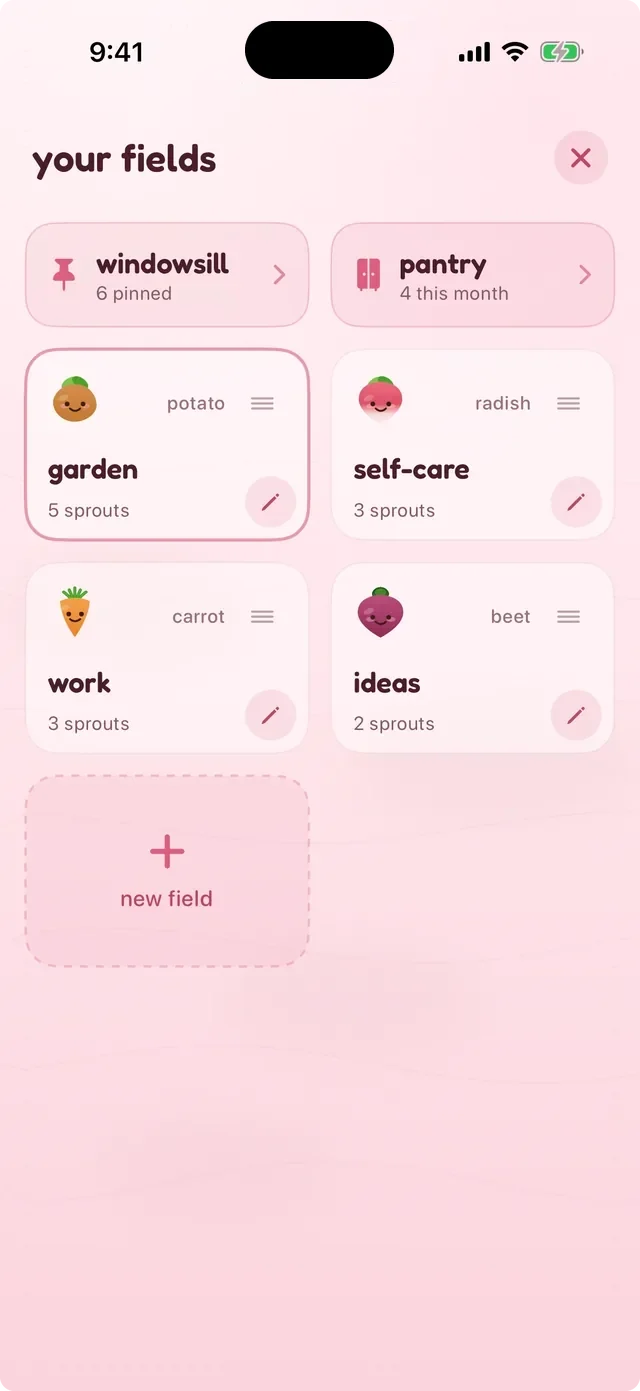
Now look at what you've got and give each thing a home. In spudnote that means a field: work, home, ideas, or whatever you like. You can drag a sprout to another field by its label, and you can have up to 12 fields.
Some things will turn out not to be tasks at all. Pull those up. They drop into the basket, and you can always restore them if you change your mind.
Don't plan your whole week. Pick one sprout, ideally the smallest, and do it. If something has to happen at a set time, give it a reminder. Everything else can just grow quietly in its field.
The best brain dump is the one you don't have to save up for. Thoughts arrive at awkward moments, so spudnote has a few ways to plant one fast:
If you open the field and it's a jungle, switch to the list view. It shows the same sprouts as simple rows, and you can still pull one up right there.
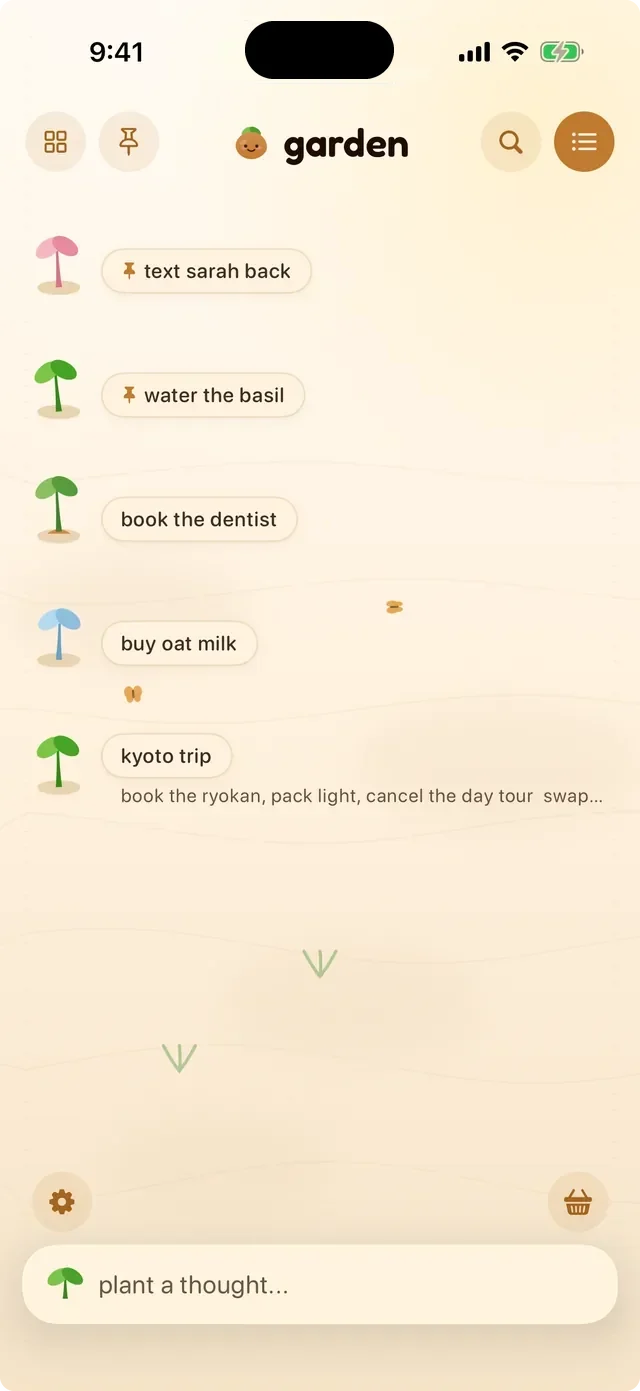
Some people brain dump every morning, some only when things get loud. There's no right rhythm, and spudnote won't keep a streak or tell you that you missed one. Leave a sprout too long and it just starts to look a little older, with its crop peeking out of the soil. Water it, or pull it up.
Or, as Spud puts it: "shh. a thought's growing."
spudnote is free on the App Store for iPhone, iPad and Mac.
Writing down everything on your mind, without sorting or judging it, so you don't have to hold it all in your head. Sorting comes after.
Whenever your head feels crowded. Some people do it every morning or evening, others only on busy days.
It's made for anyone whose head gets busy, and its quick capture and calm design suit brain dumps well. It isn't a medical tool or a treatment.
Yes. On iPhone you can tell Siri "plant a thought in spudnote", use the button in Control Center, or share text from another app straight into a field.

spudnote
notes so simple a potato could use them

Gentle productivity means a to-do list that keeps you company instead of keeping score. Here's how I built spudnote around that idea, and how to use it.
spudnote is a cute to-do list and notes app for iPhone, iPad and Mac, where every note grows into a sprout. The maker on why cute matters, and what's inside.
The maker of spudnote on wanting to build apps since 2009, finally doing it in 2026, and why your notes grow into little sprouts.