





how many kinds of potatoes are there?
more than 4,000 native kinds of potato grow in the andes of peru, bolivia and ecuador, according to the international potato center.
spud explains
 told by spud · · 1 min read
the short answer
500 year-old chuño, found in an inca jar
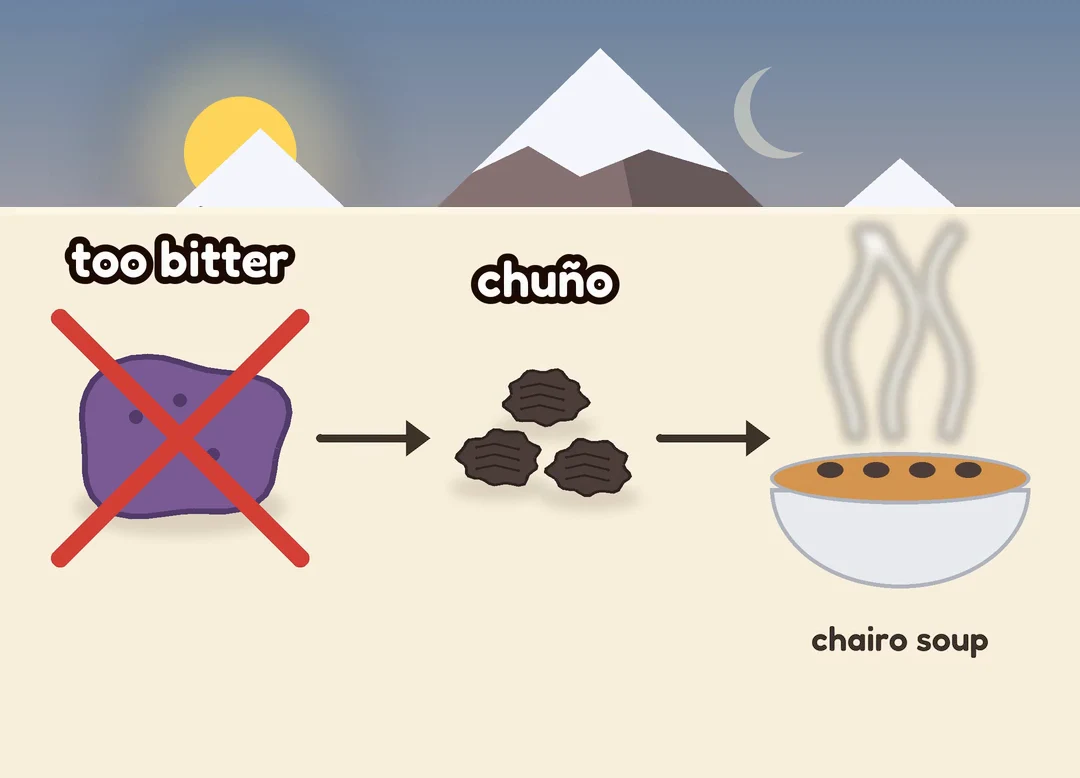
chuño is a freeze-dried potato from the high andes. farmers leave potatoes out to freeze at night and thaw in the sun for a few days, trample the water out with their feet, then dry them, which leaves a light food that keeps for years, even decades.
in the andes, people freeze potatoes. on purpose.

high on the bolivian altiplano, winter nights drop to about minus five (that's 23 °f). farmers spread potatoes out to freeze overnight, then the sun thaws them the next day. again. and again. one family near la paz does it for three nights.
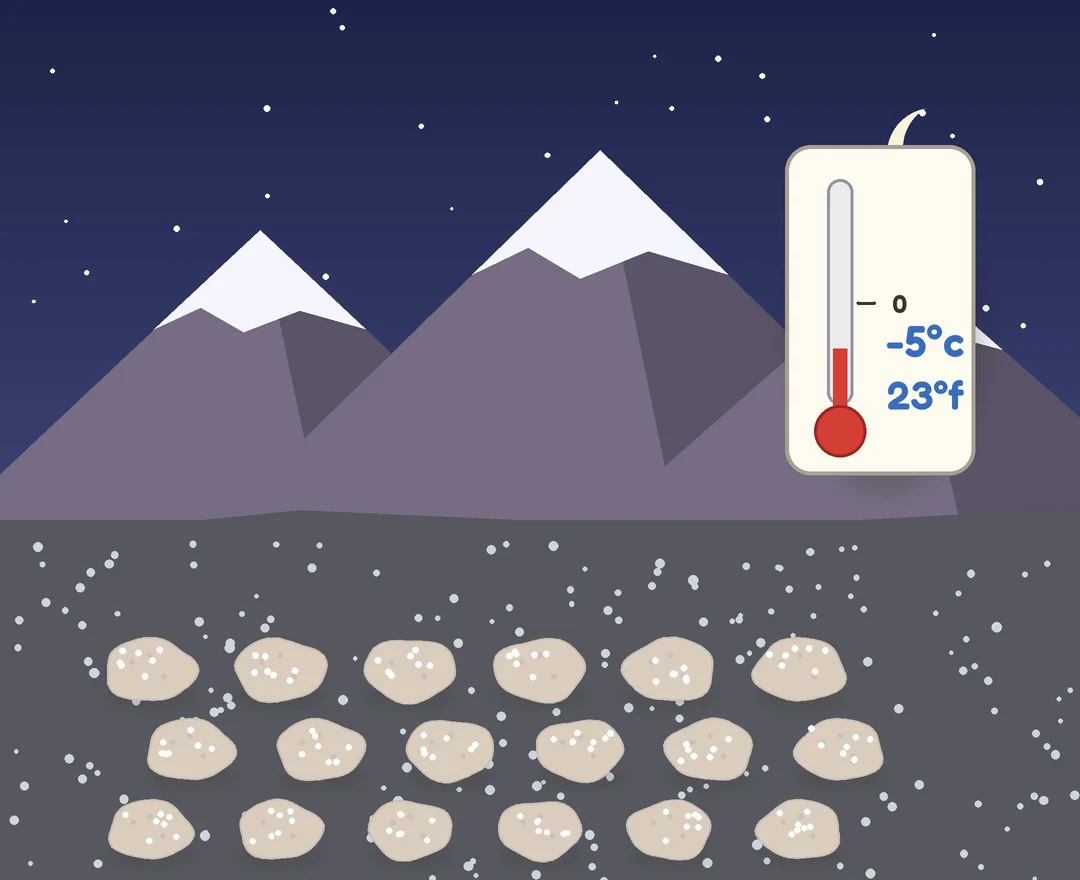
then they stand on them. with bare feet. it squeezes the water out, and with no water, nothing can rot. then the potatoes are dried, shrunk down to a fraction of their size.

what's left keeps for years, sometimes decades. so you're immortal? kind of.
archaeologists found two pieces near the bottom of a ceramic jar at tambo viejo, an inca site on peru's dry south coast. they're about 500 years old, from before the spanish invasion, and it's only the second time chuño has turned up at an inca site.
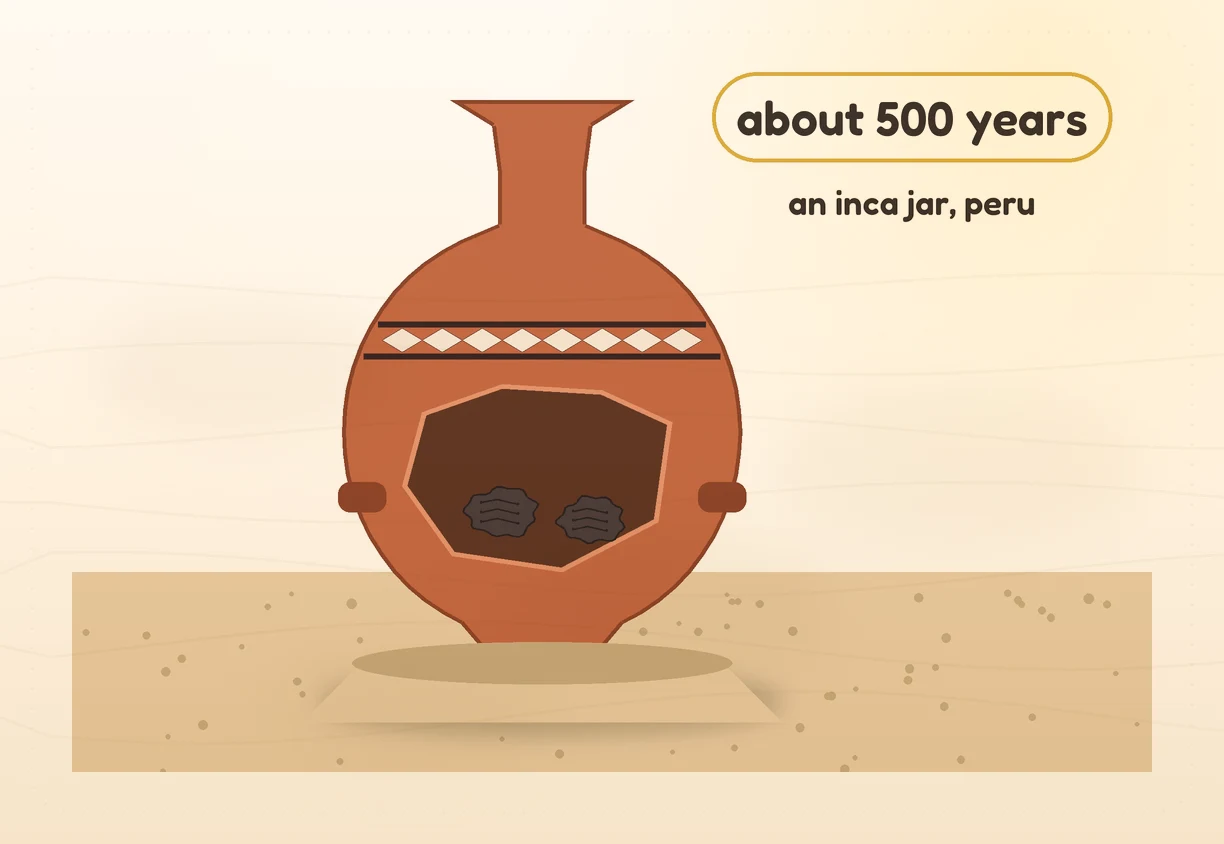
chuño can only be made up in the mountains, so finding it on the coast means the inca carried it a long way, probably by llama caravan.
fresh potatoes are mostly water and rot fast down in the warm lowlands. and some, like the ones in that jar, are naturally too bitter and toxic to eat fresh. freezing, soaking and drying turns them into food.
if you like little facts, i keep a field of them in spudnote. it's a notes app where every note grows into a sprout. i live there.
years, and it can be stored for decades. once the water is gone, there's nothing left to rot.
only high in the andes, above roughly 3,600 meters (11,800 feet), where hard frosts come regularly. it's still made there today.
fresh potatoes are about 80% water and rot within about a week at lower, warmer elevations. chuño is light, tough and lasts, so it can be stored and carried far.
sources checked nov 10, 2026.

spudnote
notes so simple a potato could use them

more than 4,000 native kinds of potato grow in the andes of peru, bolivia and ecuador, according to the international potato center.

push a zinc nail and a copper coin into a potato and you get a bit under a volt (about 0.76 v in lab tests).

they might be.