





are potato berries poisonous?
yes.
spud explains
 told by spud · · 1 min read
the short answer
unfinished goals keep popping back into your mind until something settles them. in a 2011 study by masicampo and baumeister, making a specific plan for an unfinished goal stopped the intrusive thoughts, even before the task was done. so give each one a when.
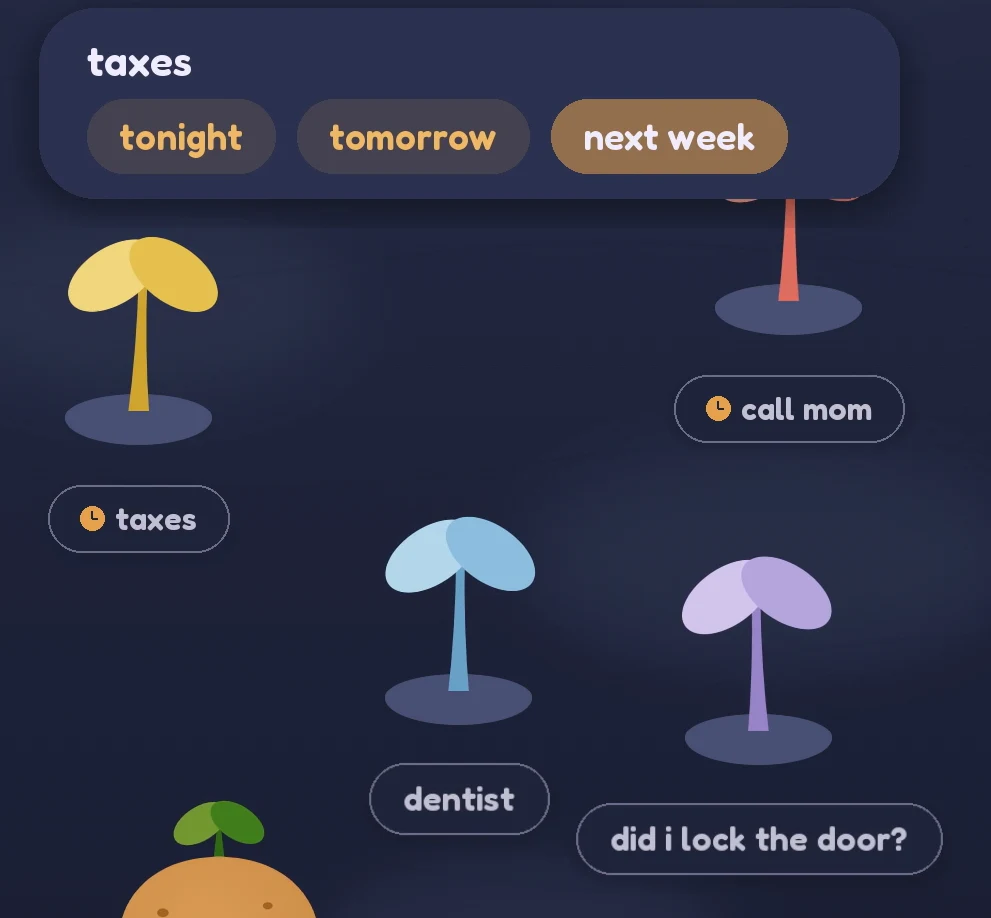
it's 2:07 am. taxes. call mom. dentist. did i lock the door?

it's not just you. unfinished goals hang around in your head (psychologists call it the zeigarnik effect). the old idea was that they keep nagging until you actually finish them.

yes, and you don't even have to do the thing first. in 2011, e. j. masicampo and roy baumeister ran a set of experiments. people with an unfinished goal on their mind had more intrusive thoughts and did worse on unrelated tasks. when they wrote a specific plan for that goal, those effects went away.
the plan has to be real, though. the people who went on to follow their plans were the ones whose minds stayed quiet. "dentist... never" is not a plan. "dentist, tuesday" is.
(to be fair, they tested people in a lab, not at 2am. my brain doesn't know that.)
give each nagging thought a when. call mom: tomorrow. taxes: next week. once it has a time, your brain can put it down.
it's how spudnote works, too. every thought is a sprout, and a reminder is one tap: tonight, tomorrow or next week. when it's done, you pull it out. it screams. that part's just for fun.

it's so quiet now. well, almost. gary's still awake asking if he locked his shell.
if you like little facts, i keep a field of them in spudnote. it's a notes app where every note grows into a sprout. i live there.
it might. in a 2018 sleep lab study, people who spent 5 minutes writing a to-do list fell asleep faster than people who wrote about what they'd already done, and the more specific the list, the faster they fell asleep.
not according to masicampo and baumeister. a specific plan for when and how was enough to stop the intrusive thoughts in their experiments, as long as the plan was one people meant to follow.
the idea that unfinished tasks stay active in your mind more than finished ones. it's named after the psychologist bluma zeigarnik, who studied it in the 1920s.
sources checked nov 10, 2026.

spudnote
notes so simple a potato could use them