




how does a venus flytrap know when to close?
it counts touches on the tiny trigger hairs inside the trap.
spud explains
 told by spud · · 1 min read
the short answer
10,000+ on one tongue
a garden snail has well over 10,000 microscopic teeth, set in rows on a tongue-like ribbon called a radula. one close count of the brown garden snail found about 140 to 150 rows of around 140 to 150 teeth each, roughly 20,000 in all. a great white shark has about 300.
he said over ten thousand. on his tongue. i did not believe him. i should have.
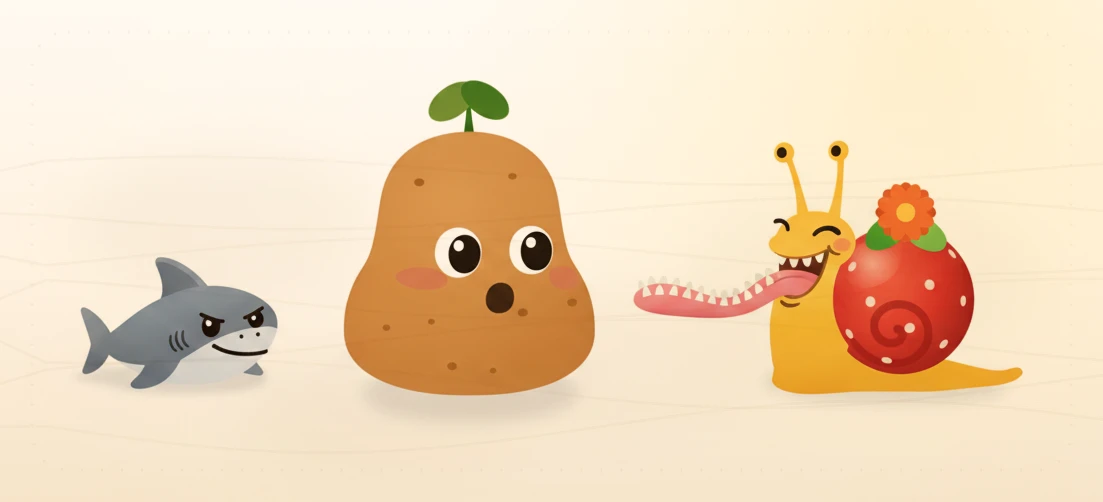
a garden snail's teeth sit in rows on a ribbon called a radula. scientists who looked at the brown garden snail under a microscope counted about 140 to 150 rows, each with around 140 to 150 teeth. that's roughly 20,000 teeth. on a snail. who eats lettuce.
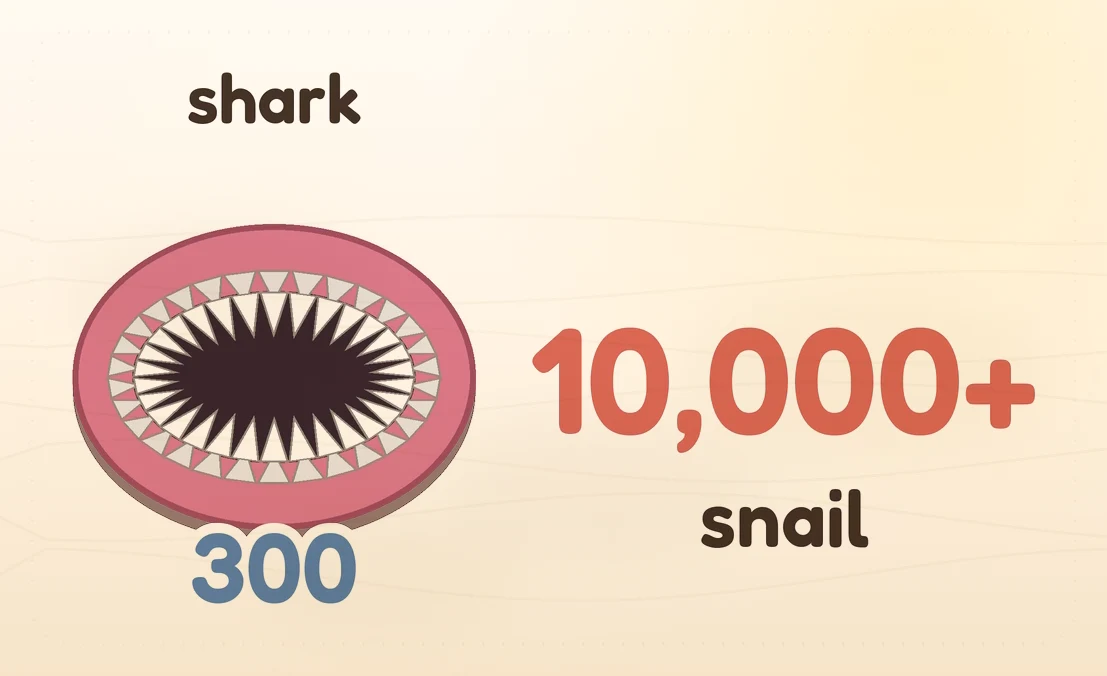
a great white shark has about 300 teeth in several rows. gary wins. by thousands. he has not stopped mentioning it.
because that's how he eats. the radula moves back and forth and scrapes and rasps food off, like a cheese grater. only the front rows touch the food, so they wear out. new rows are built at the back all the time and slide forward to replace them.
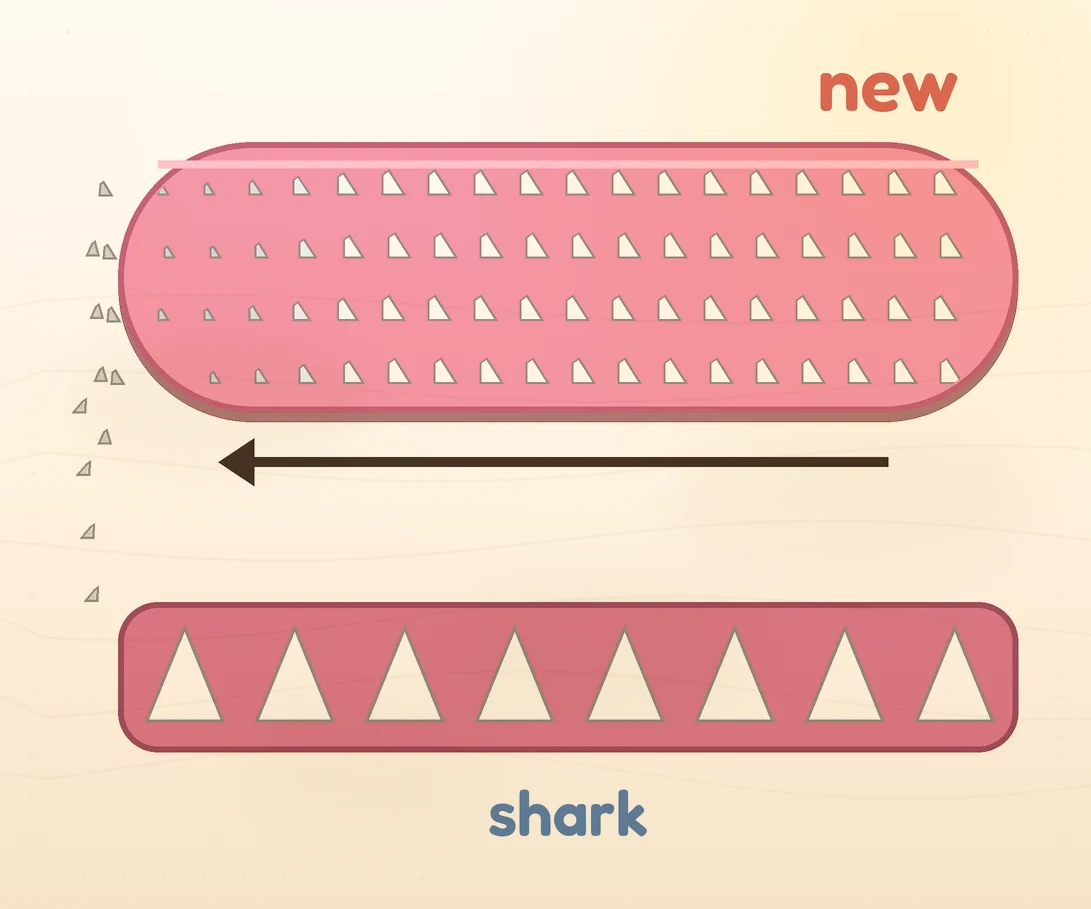
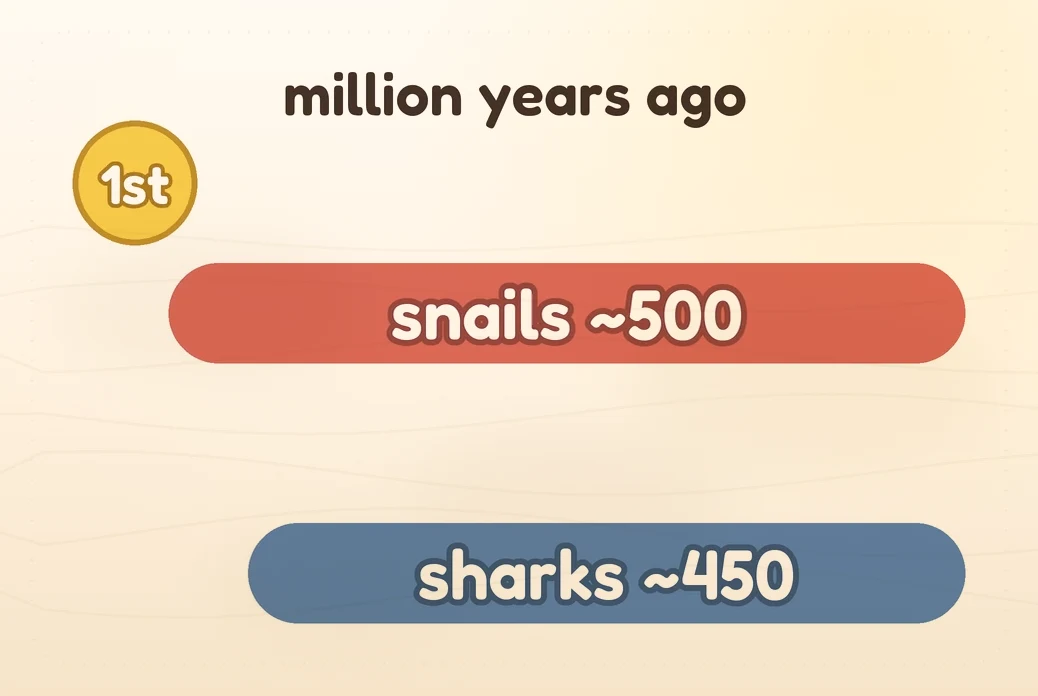
sharks do the same trick: national geographic calls their teeth a conveyor belt. but the snail side of the family got there first. a mollusk from the burgess shale, over 500 million years old, already had a radula that added new teeth at the back. the oldest possible shark scales are about 450 million years old.
if you like little facts, i keep a field of them in spudnote. it's a notes app where every note grows into a sprout. i live there.
about 300, in several rows. they work like a conveyor belt, with new teeth moving forward to replace the ones that fall out.
a flexible ribbon covered in thousands of microscopic teeth. snails and slugs use it, along with a jaw, to scrape and rasp their food.
yes, all the time. new rows form at the back of the radula and move forward as the front ones wear out. one study assumed garden snails add about 2 to 3 new rows a day.
sources checked nov 10, 2026.

spudnote
notes so simple a potato could use them