




how does the squirting cucumber shoot its seeds?
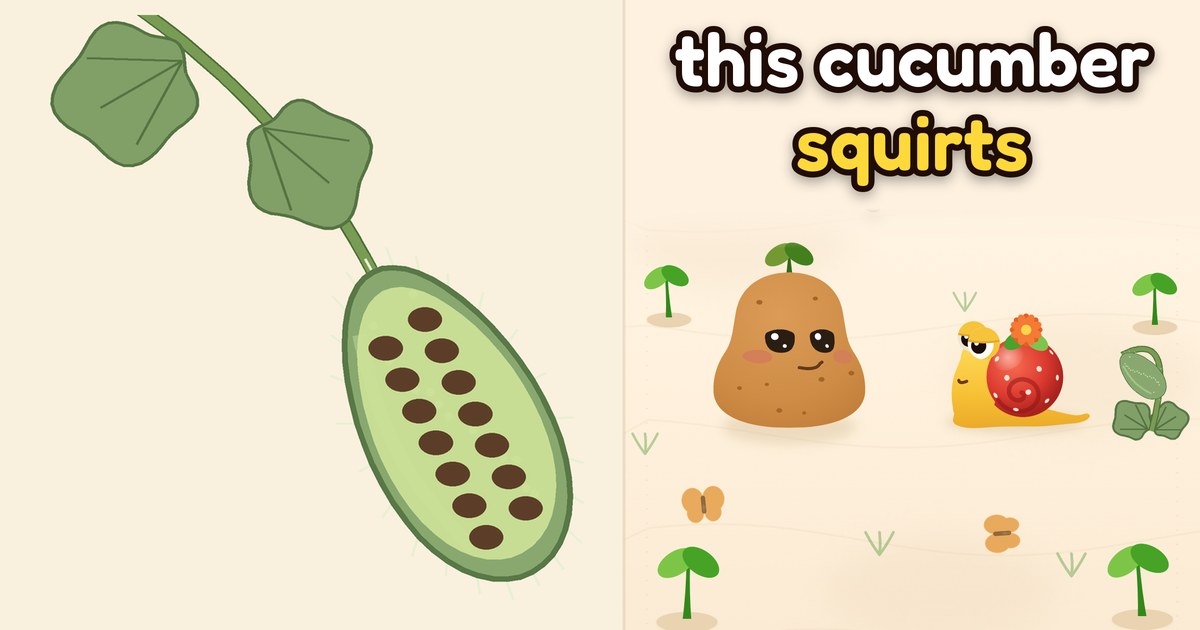
the squirting cucumber fills up with slimy, high-pressure juice.
spud explains
 told by spud · · 1 min read
the short answer
2 touches to close
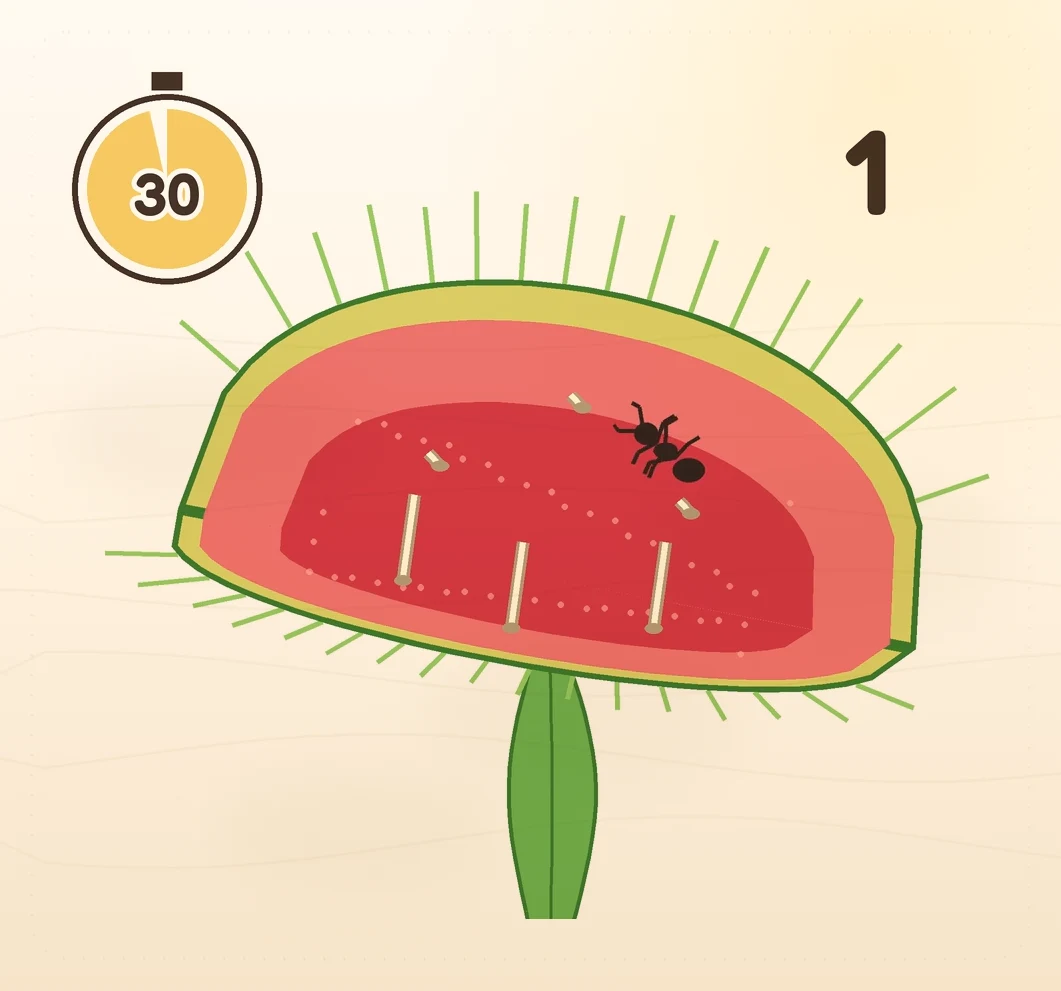
it counts touches on the tiny trigger hairs inside the trap. one touch does nothing. a second touch within about 30 seconds snaps it shut, and around five touches switches on digestion. so a raindrop doesn't fool it, and a wiggling bug seals its own fate.
it can. to five. it's a plant, gary.
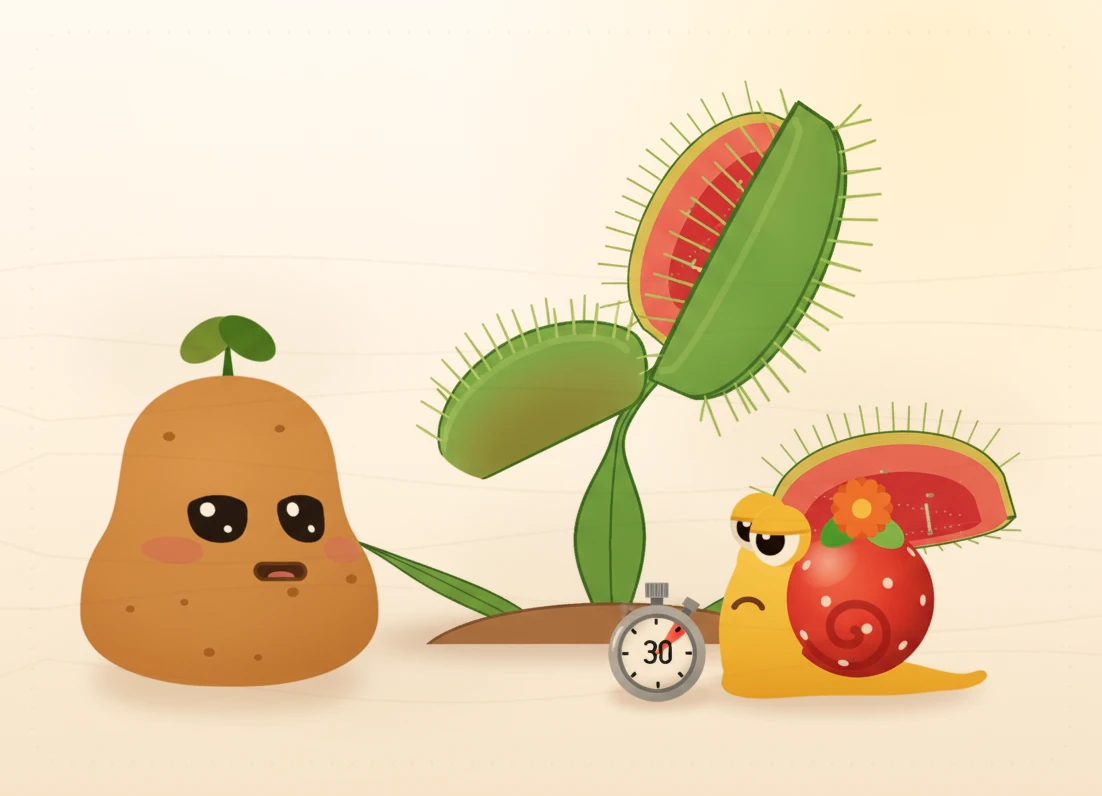
inside each trap are a few tiny trigger hairs. touch one and... nothing. the trap just remembers it. it's not lazy. it's counting.
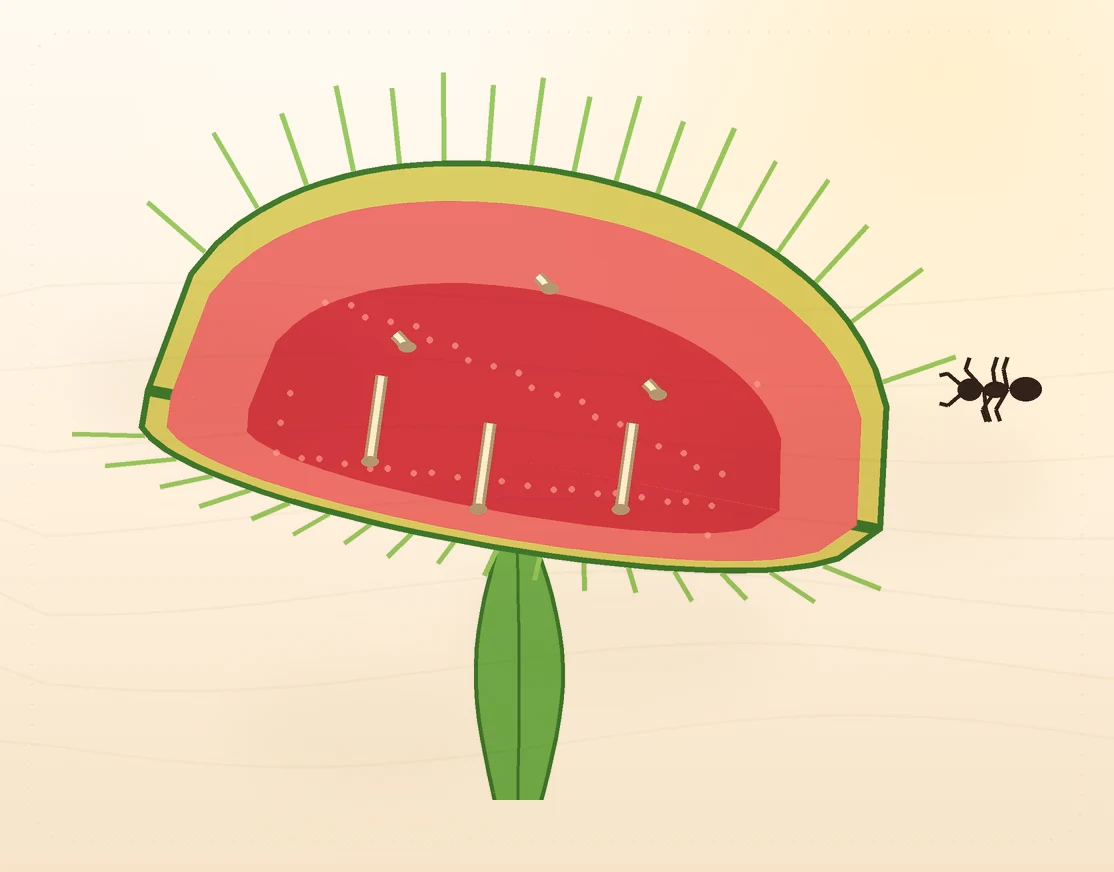
because one touch could be anything. a raindrop, a bit of grass, a leaf blowing past. snapping shut for nothing would be wasted effort, so it waits for proof.
the proof is a second touch within about 30 seconds. scientists in japan made flytraps that glow when calcium rises inside them, and watched it happen: the first touch raises the calcium, it slowly fades, and if a second touch comes before it's gone, the level crosses a line and the trap snaps.
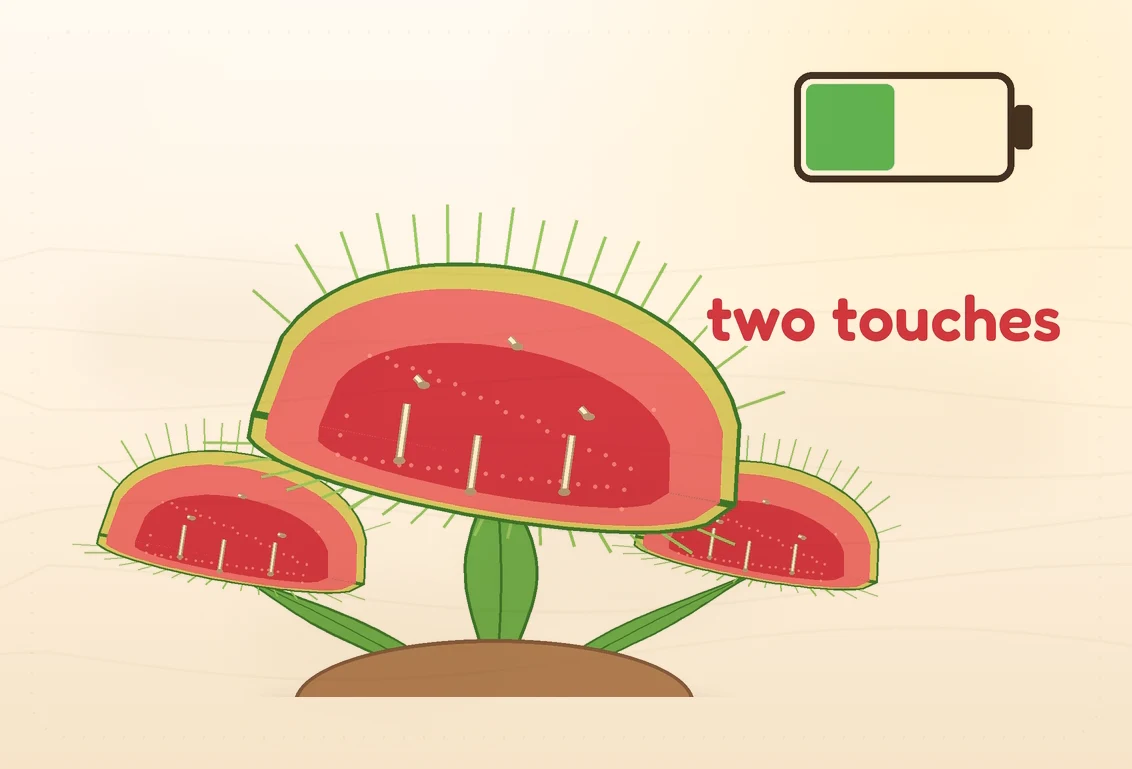
shut isn't dinner yet. the bug inside keeps wiggling, and every wiggle is another touch. three. four. around five, the trap switches on the genes for its digestive juices and starts soaking up what it catches. a struggling cricket in one lab study set off over 100 signals in six hours.
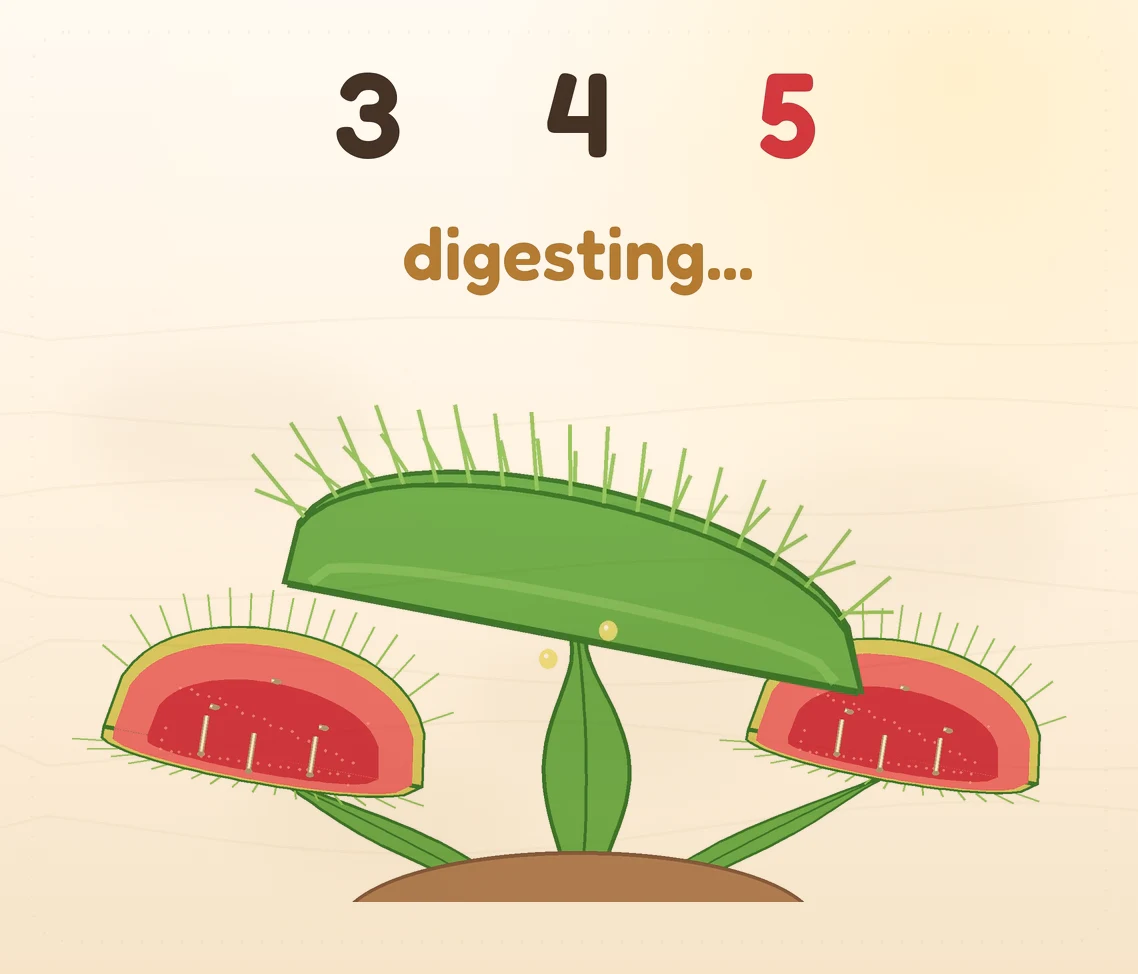
so the more the bug panics, the faster it's dinner. that's dark, gary. yes.
barely. in the video i said flies are about 5% of what it eats. the real studies don't give one neat number, but they agree it's very few. one team opened 580 closed traps in south carolina and found spiders (31%), ants (26%) and beetles (12%), and very few flies. another study found only 20% of the prey could fly at all.
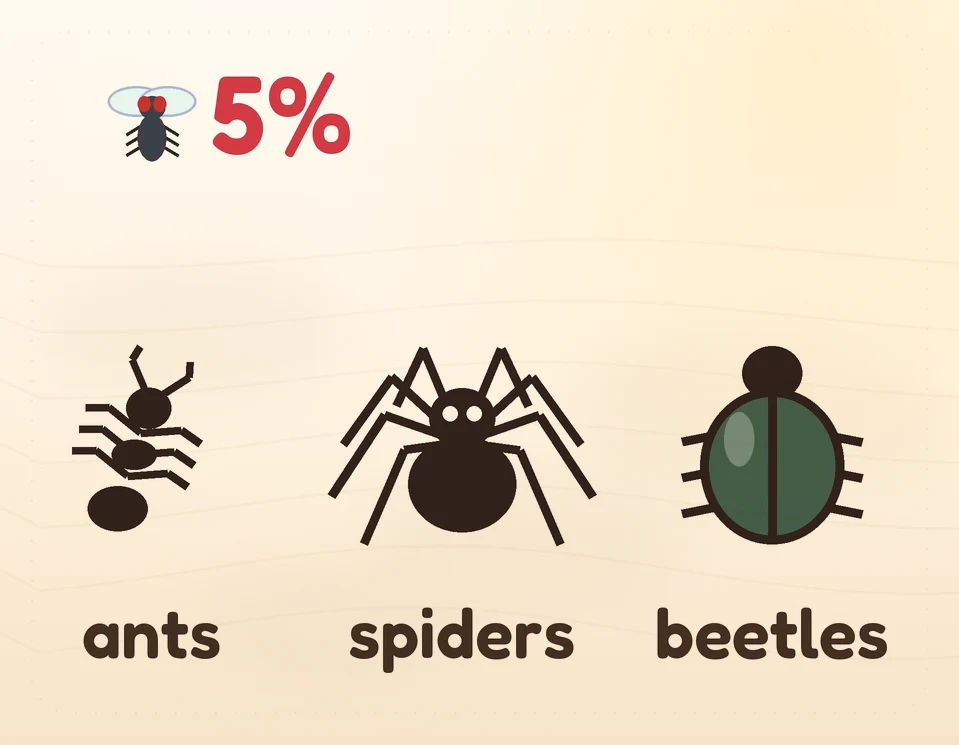
it crawls in, it counts, it stays. gary, you're a snail.
if you like little facts, i keep a field of them in spudnote. it's a notes app where every note grows into a sprout. i live there.
nothing you can see. one touch on a trigger hair is remembered, not acted on. if a second touch doesn't come within about 30 seconds, the trap forgets it and stays open.
now and then, but not many. field studies find mostly spiders, ants and beetles, things that crawl. in one, only 20% of the prey could fly.
with calcium. the first touch raises the calcium level in the trap, and it slowly drops. a second touch before it has dropped pushes it over the line, and the trap closes.
sources checked nov 10, 2026.

spudnote
notes so simple a potato could use them

the squirting cucumber fills up with slimy, high-pressure juice.
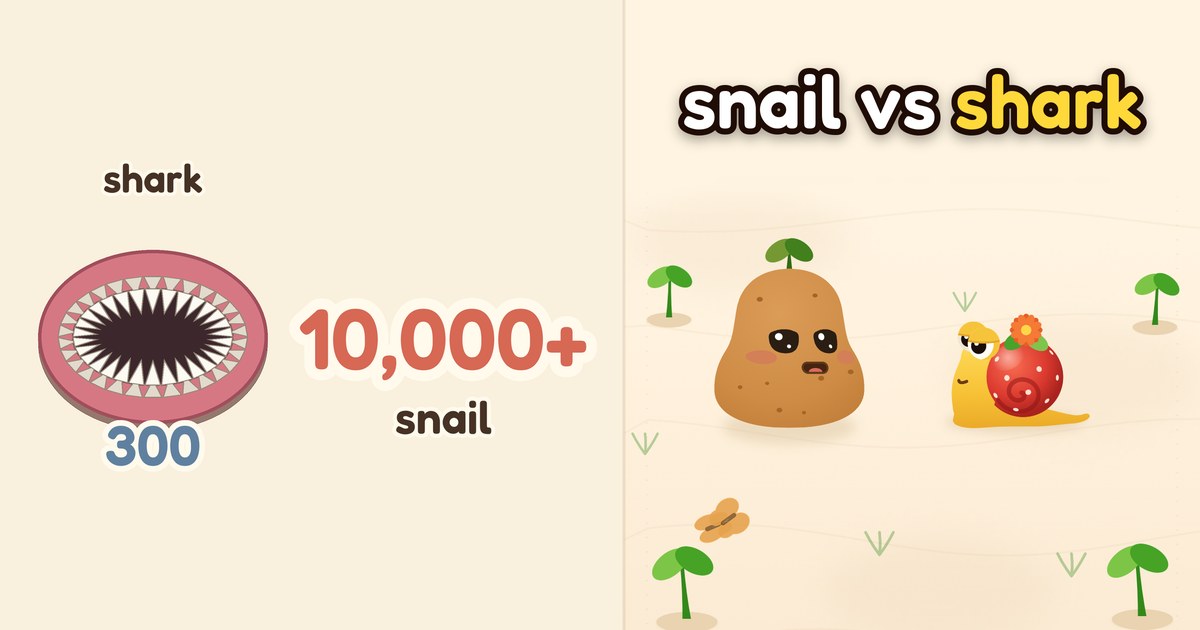
a garden snail has well over 10,000 microscopic teeth, set in rows on a tongue-like ribbon called a radula.
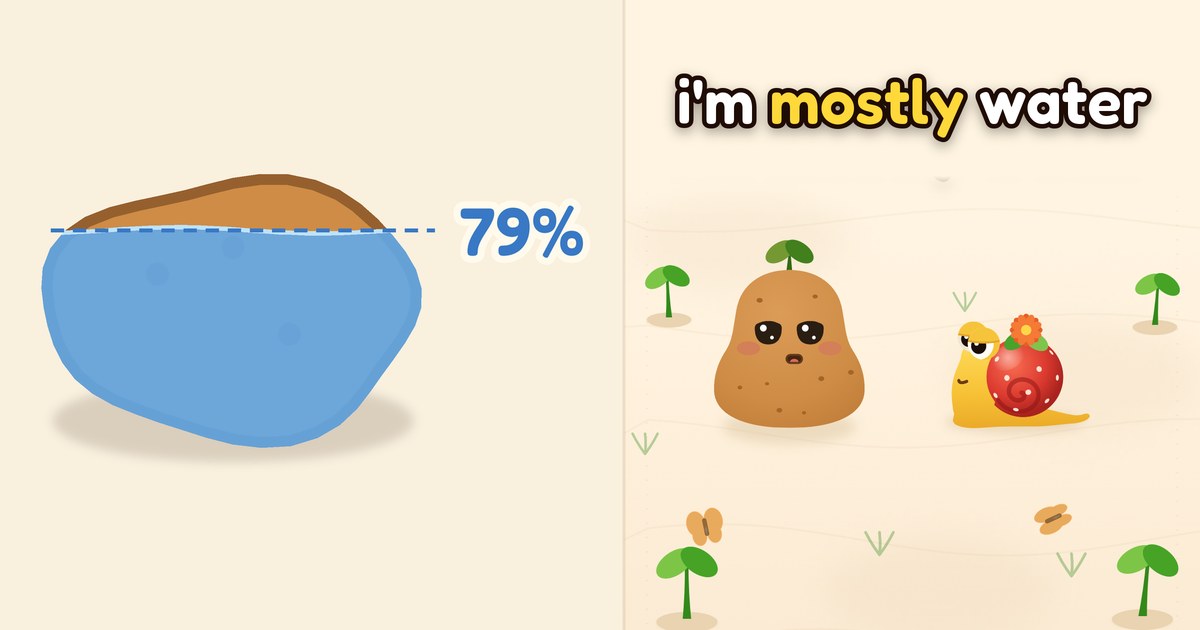
a raw potato with its skin on is about 79% water.