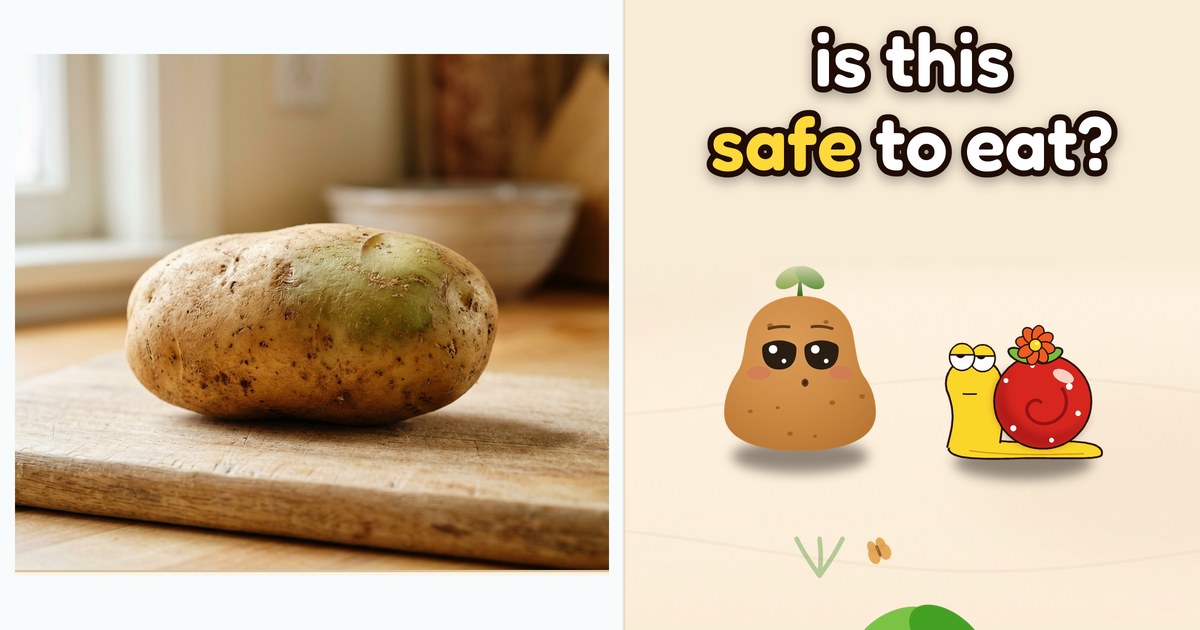





why do potatoes turn green?
potatoes turn green when they get light: they start making chlorophyll, which is harmless.
spud explains
 told by spud · · 1 min read
the short answer
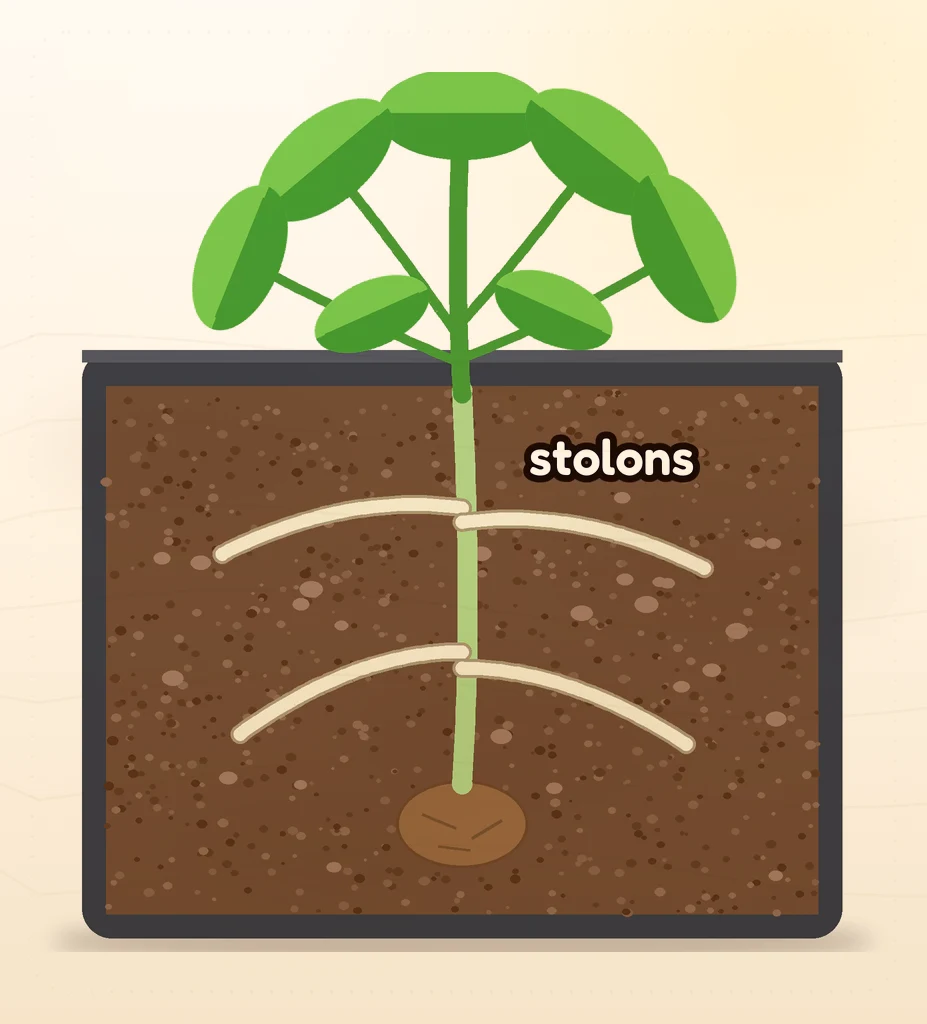
potatoes grow on underground stems called stolons. the tip of each stolon swells into a tuber, packed with starch made from sugar the leaves send down. every tuber is a clone of the plant it grew on.
up top, that's the plant. leaves, stem, very nice. but the action is down here.
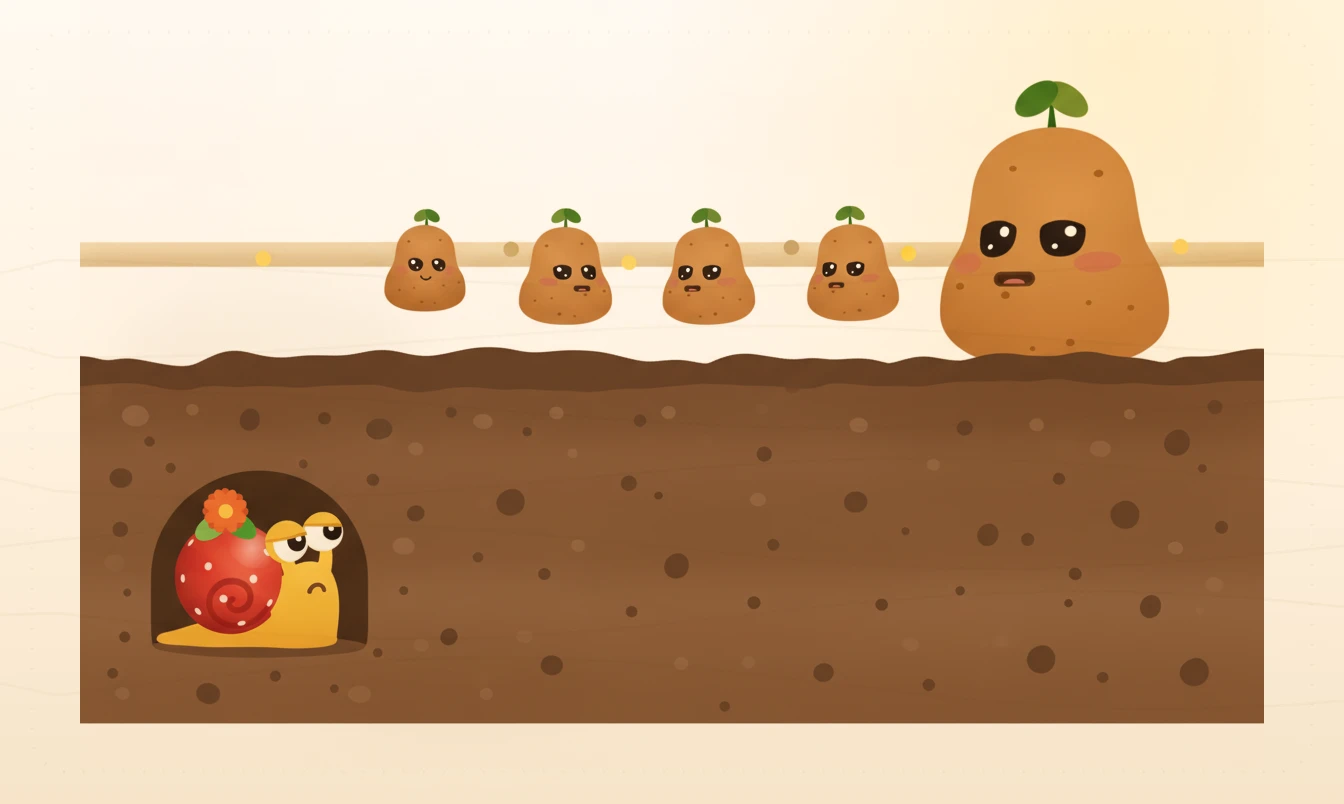
under the soil i grow stems sideways. they're called stolons. they look a bit like roots, but they're stems (the fancy kind).
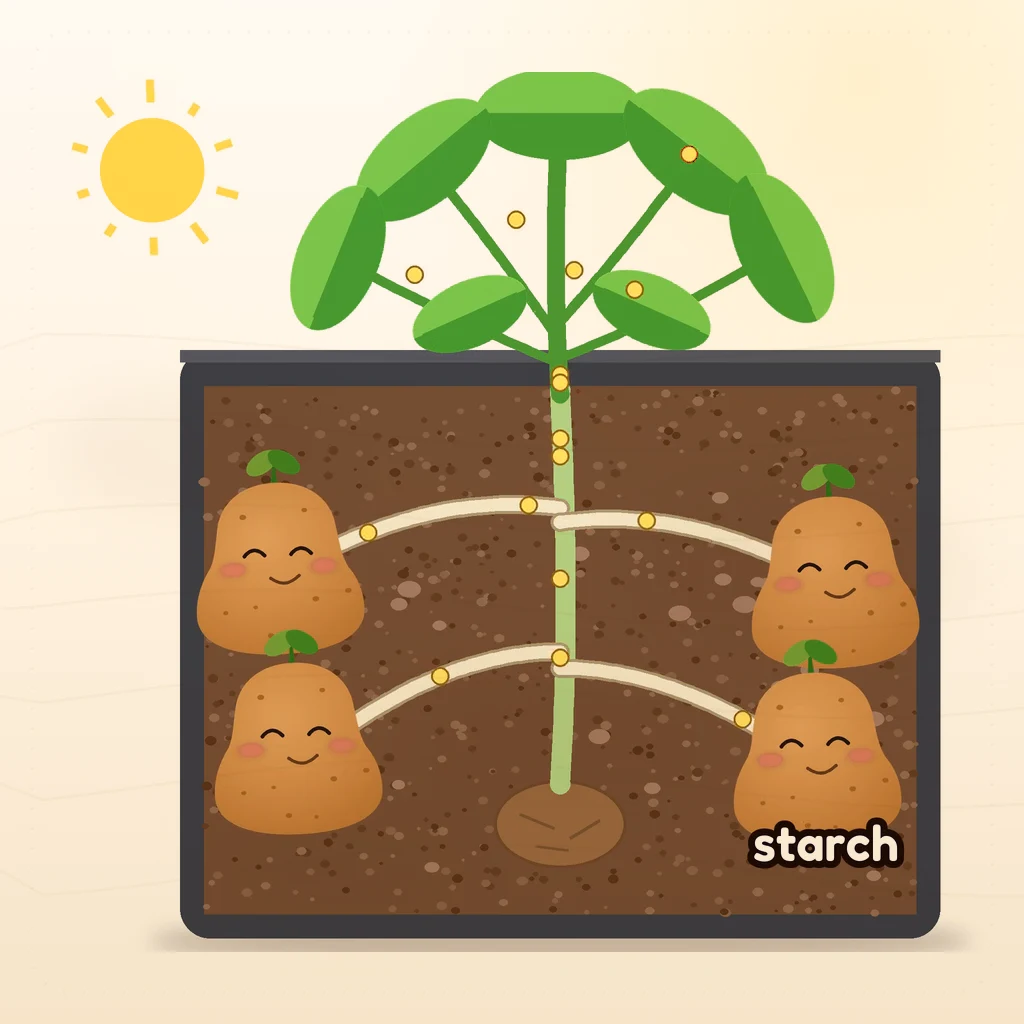
when the plant gets the signal, the tips of the stolons swell up. those swollen tips are the potatoes. scientists call them tubers.
no, gary. they're me. every single one is a clone of the plant, same genes, no surprises. that's why farmers plant pieces of potato instead of seeds.
the leaves work in the sun all day making sugar. they send it down the stem, and the tubers pack it away as starch. that's the bit you eat. it's also why i'm so filling. you're welcome.
heat slows the whole thing right down. in growth-room tests, potatoes did best around 16 to 20 °c (61 to 68 °f), and at 28 °c (82 °f) they made little or no potatoes at all.
so on hot days, water. you're not just giving a drink, you're keeping the soil cool. so humans are useful? don't tell them.
if you like little facts, i keep a field of them in spudnote. it's a notes app where every note grows into a sprout. i live there.
nope. they're stem tubers: the swollen tips of underground stems called stolons. that's why they have eyes, which are really buds.
cool-ish. in one study, yields peaked around 16 to 20 °c (61 to 68 °f), and tubers barely formed at 28 °c (82 °f).
a tuber is a clone, so planting a piece gives you the same variety every time. potatoes are very mixed up genetically, so seeds from the flowers can grow into something quite different.
sources checked nov 10, 2026.

spudnote
notes so simple a potato could use them